


By Caren Waraba, DevReporter, West Pokot County
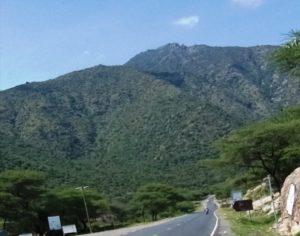
West Pokot County also known as the Land of Hidden Treasures has several mines. If the mines were to be well utilised, the County would grow economically, and hence reduce the level of poverty and illiteracy prevalent in the community.
However, there has been an increase in the number of school dropouts in the area as most of them are engaged in gold mining activities. Early child marriage, child labour, traditional norms such as female genital mutilation, pastoralism, etc., have immensely contributed to high level of illiteracy since they are the main drivers of the high rate of school dropout.
This DevReporter spoke to some of the youth who dropped out of school to venture into gold mining at River Marich. Cyrus Kalekem and Evans Juma said that it is the lack of land to plough and generate income for the household that forced them to venture into gold mining. And even here, they face challenges since middlemen have been harassing and exploiting them by buying their products at a lower price, they decry.
“You may be harvesting gold from Monday to Friday then on Saturday you travel to Ortum, where you can sell a point at Ksh 300 while a gram goes at Ksh 3000. From Marich to Ortum you will use around Ksh 200 on transportation. After arriving there, you may lack someone to buy your gold. You are then forced to stay there for one or two days and if you factor in the cost of living, already all the money you had is finished,” said Kalekem.
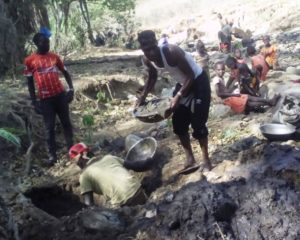
Young mothers have not been left behind in the gold mining activities. They are forced to carry heavy sand to river Marich to extract gold due to lack of financial support from their husbands. Noline Cheptoo, a mother of three, noted that she has no other alternatives for feeding her children other than engaging in gold mining.
“This work is very tedious, but I am forced to do it because we have no other alternative. Men do not come to help us. It is only us women who struggle to do this work. We always carry heavy sand but the harvest is little. We do not get large quantities of gold,” said Cheptoo.
Statistics on child labour
Research from the United Nations Children’s Fund (UNICEF) and Kenya National Bureau of Statistics (KNBS) indicate that 8.5 percent of children are engaged in child labour in Kenya with boys being sent out to herd livestock or harvest sand while girls are engaged in domestic work or married off early.
The National Council for Nomadic Education in Kenya, in collaboration with UNICEF also notes that girls and boys between the ages of 13-15 in five Sub Counties, with Kipkomo region being one of them, do not attend school.
“In Pokot North, approximately 11,400 girls and 11,520 boys do not attend school. In Pokot South statistics show that only 550 girls and 330 boys attend school,” said Mrs Carol Menach, the Chief Executive Officer, Perur Rays of Hope, an organisation that seeks to improve learning outcomes of disadvantaged children.
The latest global estimates indicate that the number of children engaging in child labour has risen to 160 million, an increase of 8.4 million children in the last four years. Sixty three million girls and 97 million boys were in child labour globally at the beginning of 2020, accounting for almost 1 in 10 of all children worldwide.
Retaining children in school
The level of school dropouts in Kenya will decrease if the Ministry of education continuously provides school meals, increase co-curriculum activities, free education and mentorship programmes. These interventions will greatly contribute to retaining children in school.
According to Mrs Edith Lorema, a child protection officer from the children’s department in West Pokot County, the Church needs to be involved in each and every step of a child’s up bringing to help curb illiteracy in the community.
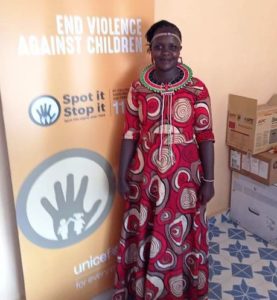
“Our main targets are both the children who are currently in school and also those who are not. The aim is to ensure that they know their rights as children and also become aware of the mechanisms they can use to respond to the issues that affect them as children.
“We are going to bring these children on board through the church. We are also going to use the church as an avenue for identifying and brining on board, all the pastors working in identified areas. Our target here will also be the school going children and the youths who have just completed form four’’ said Mrs Lorema.
 Radio Baraza