


By Emanuel Kipkorir Tarus, DevReporter, Uasin Gishu County

Key Highlights
- Lack of food kept learners out of school
- Tap to Eat has increased learners’ enrollment, improved nutrition and performance
- Teachers, learners and parents feel the impact of the initiative
- Over 25,000 meals served every day in Uasin Gishu
Up to early May 2026, lunchtime at Eldoret GK Prison Comprehensive School in Uasin Gishu County, was a difficult time for vulnerable learners. Many of them struggled to concentrate during afternoon lessons, while some missed school all together.
However, that is no longer the case.
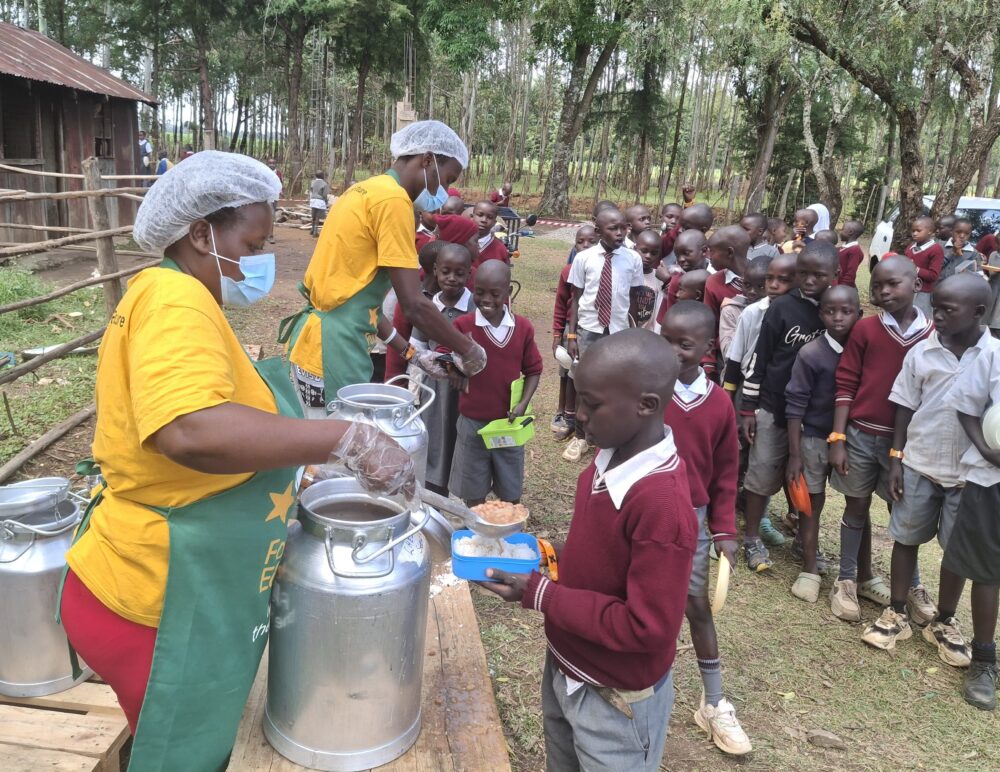
As the 12:40PM lunch bell rings, over 900 learners wearing orange Tap to Eat wristbands queue patiently for a hot meal of rice, beans and vegetables. For the majority of them, this is the only guaranteed meal of the day. This meal has become a reason to attend school consistently and focus on learning.
Tap to Eat Transforms Learning
This transformation was made possible by the Tap to Eat school feeding programme, implemented by Food for Education at a cost of KSh20 per meal.
For Grade Nine learners Lyneshon Jepkoech, Lihanda Pal, Pascal Karanja and Maxwell Abaito, Tap to Eat has restored their hope for a better future.
“We come to school every day because we know we will get lunch. We can now concentrate throughout the afternoon lessons,” Jepkoech said.
Hunger being one of the greatest barriers to education especially in informal settlements around Eldoret, this initiative has improved school attendance, academic performance and also the children’s overall well-being.
In an exclusive interview with Radio Baraza, school’s Head of Institution, Kenneth Kite, said the impact of the initiative is increased enrollment, improved academic performance and learners’ active participation in co-curricular activities.
“Before the programme began, we had just over 800 learners. Today, enrolment has grown to 914. This is largely due to the assurance of a daily meal,” Kite said adding that hunger is no longer undermining learning.
Initiative Addresses Malnutrition, Stomach Illnesses
Sally Chesach, the Deputy of Institution, revealed that cases of stomach-related illnesses have reduced allowing learners to be active in class. This programme supports Kenya Vision 2030, and the constitutional rights of every child to adequate food and free basic education
Parents led by Jane Nderitu, a mother of three from Ngomongo informal settlement, stated that the programme has eased the burden of feeding her children amid the rising cost of living.
Food for Education Programme Analyst, Lenin Kigen, revealed that the organization currently serves over 25,000 meals in 43 schools in Uasin Gishu County.
Tap to Eat to Serve 1 million Meals by 2027
They target one million learners in Kenya by 2027. This programme advances Sustainable Development Goals 2, 3 and 4 by reducing hunger, improving children’s health and promoting quality education.
Beyond improving learning outcomes, the initiative also creates jobs for cooks and delivery riders while supporting local food suppliers.
Moiben Constituency Member of Parliament, Prof. Phyllis Bartoo, described school feeding as both an enabler and a driver of education.
“This is investment in human capital. As a teacher, I know that hungry learners cannot achieve their full academic potential,” she said.
All the education stakeholders should pull together to ensure that the more than one million Kenyan children of primary school-age who are out of school, go back to school to chase their dreams.
Related Stories.



 Radio Baraza