



By Rebeccah Wangari, DevReporter, Murang’a county
For Jedidah Wanjiru, accessing regular medical care once meant travelling to the neighboring Nyeri County, a journey that came with a cost she could not always afford.
Wanjiru, a resident of Mathioya in upper Murang’a, used to travel to Othaya Hospital for her medical check-ups, this being the closest facility compared to the Murang’a Level Five Hospital.
On several occasions, Wanjiru missed her appointments because she could not raise the fare, putting her health at risk, given that she needed the regular medical reviews.
The introduction of telemedicine in Murang’a County has, however, brought a huge relief to her. She now only needs to walk to a nearby health centre, where she is connected virtually to a doctor for consultation and review.
“I used to skip some clinics due to lack of money, but now I just walk into the health centre, which is closer home, and have a virtual session with the doctor,” she said.
“I have also noted a lot of improvement in my health due to the timely reviews and advice by the medics,” added Wanjiru.
Eliud Kariithi, another resident benefiting from the programme says the virtual sessions feel almost like physical consultations because patients have ample time with the doctor to explain their conditions and receive feedback.
“This is such a good innovation and I just feel like I am talking to the doctor one-on-one, and explaining all my problems even if we are miles apart,” said Kariithi.
“With the services closer to home, it saves time and money that one would spend going to a higher facility for a check-up,” he added.
Telemedicine is the provision of remote clinical services through two-way communication between a patient and a healthcare provider, and is one of the growing concepts in the medical field.
In Murang’a, the programme has been running for the past one and a half years and is currently available in 35 health facilities. It has largely transformed healthcare delivery by making specialist consultations more accessible to residents, particularly those living far from referral hospitals.
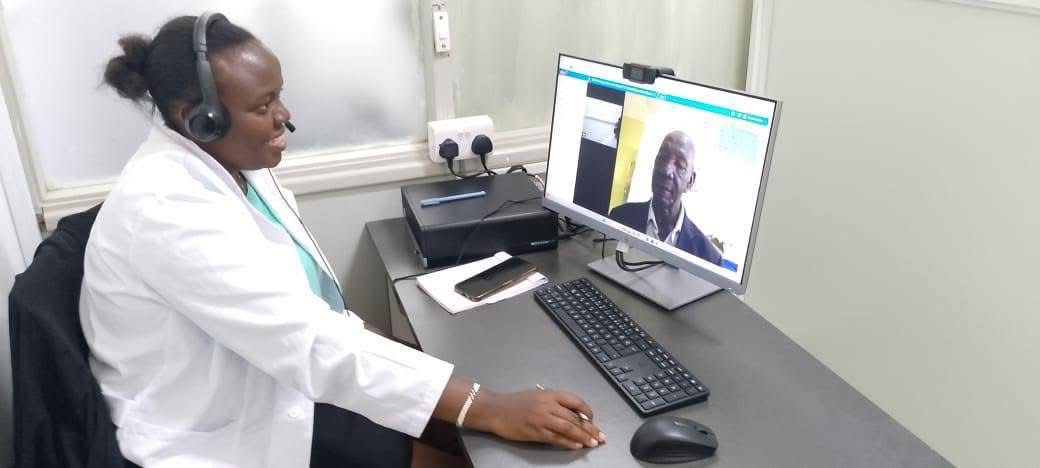
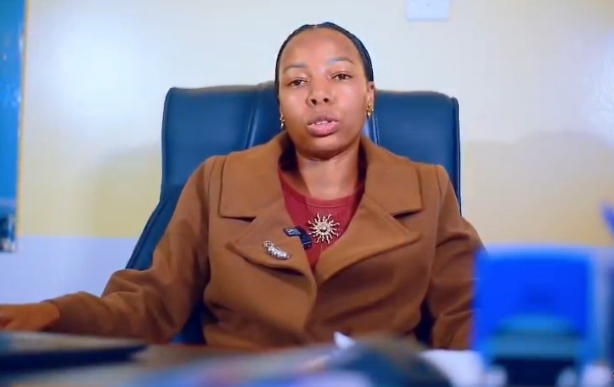
Wendy Githu, the telemedicine medical officer in charge of the programme, says that the initiative enables real-time consultations between patients and specialists through digital platforms.
Patients are supported by clinicians stationed at their local health facilities. The clinicians assist with examinations and follow-ups while the specialist conducts the consultation remotely.
“Telemedicine allows us to connect our patients with specialists in different hospitals using computers while our local doctors assist with examinations and follow-ups,” said Githu.
The system allows specialists to access a patient’s medical history, review their condition and provide advice without necessarily requiring the patient to travel to the referral hospital.
Githu explained that the services offered under the programme include the management of lifestyle-related diseases, cancer consultations, blood tests and interpretation, as well as diagnosis and treatment of bone and joint conditions.
“Once a patient reports to the facility, we register them and they give consent for their medical history to be accessed before they are examined,” she explained.
“The virtual session takes around ten minutes and the doctor gives the prescription for the patient and they are booked in for the next session,” she added.
Githu added that a patient only needs to visit the specialist physically when there is a procedure that cannot be conducted virtually.
“We are able to monitor the progress of the patients and under this programme we give them free medicine so they don’t have to struggle buying them,” she added.
Githu added that the medics are able to make timely referrals whenever they notice anything that requires physical examination or specialized treatment. Over 21,000 patients have been enrolled into the programme.
To ensure smooth running of the programme, the county government has partnered with Starlink to provide satellite Internet connectivity.
The satellite connection is considered more reliable in remote areas where terrestrial Internet services have traditionally been weak or unavailable. Reliable connectivity is critical to telemedicine because consultations depend on stable communication between patients, local clinicians and specialists based in other facilities.
Governor Irungu Kang’ata says that the introduction of telemedicine was geared towards decongesting major health facilities, which usually receive huge numbers of patients, overwhelming medics and affecting service delivery.
Kang’ata said that the programme was crafted to cater for people living with chronic illnesses such as diabetes, hypertension and arthritis, who are required to attend medical check-ups more frequently.
Such patients, he said, can now access routine reviews closer to their homes instead of travelling to referral facilities every time they need to consult a specialist.
He added that creating affordable access to medical care through telemedicine is a milestone in helping achieve universal healthcare for all residents.
“These patients will be attending their clinics at the facilities near them for virtual sessions with the specialists specifically assigned to that programme,” he remarked.
The model is particularly significant for residents in rural and remote areas, where distance, transport costs and limited access to specialists can become barriers to timely healthcare.
The introduction of telemedicine aligns with Sustainable Development Goal pillar 3, which aims to ensure healthy lives, promote wellbeing and provide access to quality healthcare for all. By improving access to medical services, telemedicine helps reduce deaths caused by delayed treatment.
For patients like Wanjiru, however, the impact of the programme goes beyond statistics, technology and policy. It means that she no longer has to choose between spending money she may not have on transport and missing an important medical appointment.
Instead, she can walk to a health facility closer home, sit with a local clinician and connect with a specialist through a screen.
For thousands of patients in Murang’a, telemedicine is therefore not just a digital innovation. It is a lifeline that is bringing medical services closer home and making timely healthcare more accessible to communities that have for years faced the burden of distance and cost.
Help us keep you posted! Join our community today!
 Radio Baraza
