



By Rebecca Wangari, DevReporter, Murang’a Country
Highlights
- Telemedicine brings health care services closer home
- Patients used to travel for long distances for routine check up
- The program enables timely review of patients thus saving lives
Jedidah Wanjiru from Mathioya, upper Murang’a, used to travel to Othaya Hospital in neighboring Nyeri County, for her medical check-ups.
On several occasions, she missed her appointments due to lack of money for transport, posing a risk to her health.
The introduction of telemedicine in the county has, however, brought a huge relief, as she now walks to a nearby health centre for virtual sessions with a doctor.
“I used to skip some clinics due to lack of money, but now I just walk into the health centre closer to home and have a virtual session with the doctor,” she said.
“I have also noted a great improvement in my health, due to the timely reviews and advice by the medics,” added Wanjiru.
Eliud Kariithi, another resident, says that the virtual sessions feel like physical consultations as he gets ample time to consult the doctor about his condition.
“With the services closer to home, it saves time and money that one would spend going to a higher level facility for a check-up,” he added.
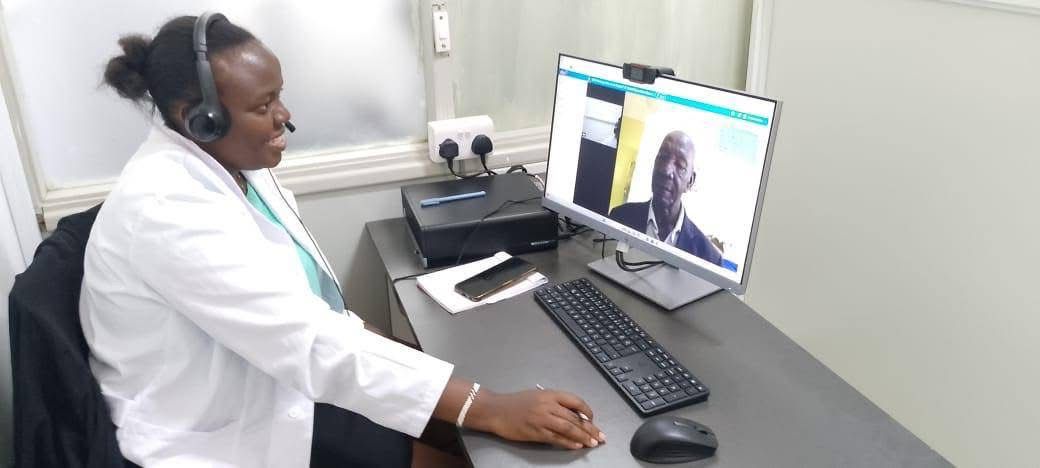
Telemedicine is the provision of remote clinical services through two-way communication between a patient and a healthcare provider, and is one of the growing concepts in the medical field.
The program has been running in the county for the past one and a half years, and has largely transformed healthcare delivery to residents.
Wendy Githu, the telemedicine coordinator and officer in charge of the programme, says that the initiative enables real-time consultations between patients and specialists based in other county referral hospitals through digital platforms, with patients supported by clinicians stationed at the facility.
Githu says that over 21,000 patients have been registered under the programme, adding that patients only need to visit the specialist physically when there’s a procedure to be performed.
“Telemedicine allows us to connect our patients with specialists in different hospitals using computers, while our local doctors assist with examinations and follow-ups,” said Githu.
“We are able to monitor the progress of the patients, and under this program, we give them free medicine so they don’t have to struggle buying them,” she added.
To ensure the smooth running of the program, the county government has partnered with Starlink to provide satellite internet connection, which is deemed more reliable even in remote areas where terrestrial internet services have been weak or unavailable.
Governor Irungu Kang’ata says that the introduction of telemedicine is aimed at decongesting major health facilities, which usually receive huge numbers of patients, overwhelming medics and affecting service delivery.
He further says that creating affordable access to medical care through telemedicine is a milestone towards achieving universal healthcare for all residents.
The introduction of telemedicine aligns with Sustainable Development Goal 3, which aims to ensure access to quality healthcare for all. By improving access to medical services, telemedicine can help reduce deaths caused by delayed treatment.
For patients like Wanjiru, telemedicine is not just a digital innovation, but a lifeline that has brought healthcare closer home for thousands of patients who can now access timely medical services through a screen.

 Radio Baraza

