


By Grace Wamaitha, DevReporter, Nakuru County
The advice is familiar to millions of mothers around the world: exclusively breastfeed the baby for the first six months.
But for Mercy, the recommendation came with an extraordinary challenge.
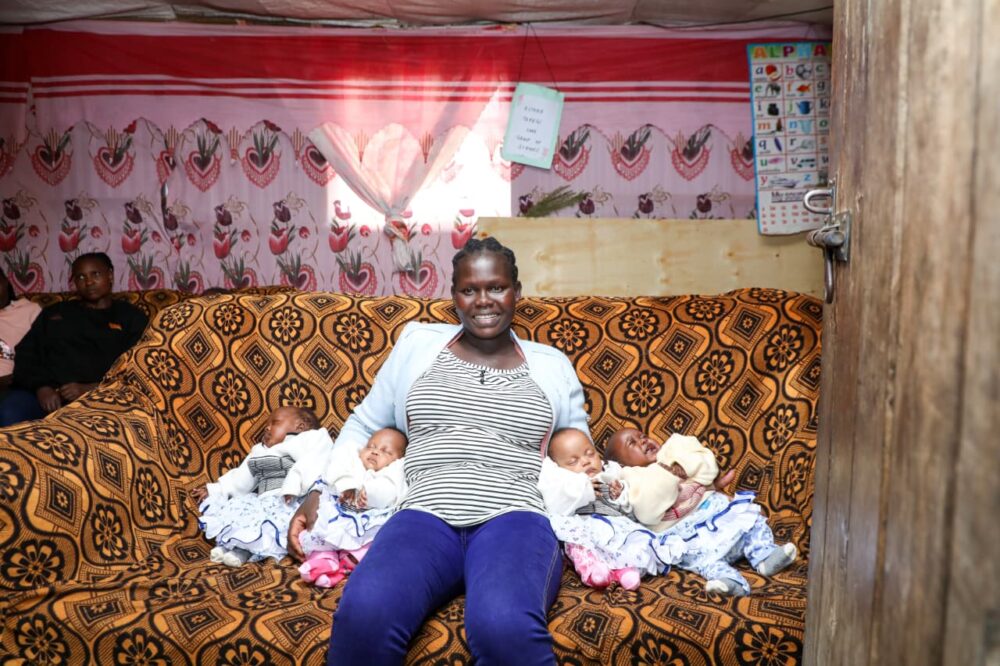
She had four babies to feed.
After giving birth to quadruplets at Nakuru Provincial General Hospital in Kenya, Mercy quickly learned that breastfeeding four newborns required more than the decision to breastfeed. It demanded time, strength, patience and support.
“I had a challenge, especially because I gave birth to four children at once. It was difficult to breastfeed because it was tiresome.”
With help from the hospital, Mercy was able to care for and breastfeed all four babies without using breast-milk substitutes.
Her experience raises a question often missed in discussions about breastfeeding: what happens when the realities of motherhood make the recommendation difficult to follow?
Four babies, four demands
For mothers of multiples, the demands of exclusive breastfeeding can be multiplied.
Each baby needs to be positioned and attached correctly. Every feed takes time, at a stage when the mother is also recovering from childbirth, and yet having to care for several newborns.
For Mercy, support made breastfeeding more manageable.
Her husband, Jonathan, says that the experience taught him that fathers and other family members have an important role to play.
He supports his wife by helping with household responsibilities, caring for the babies and ensuring she has time to rest and eat.
Learning to feed two
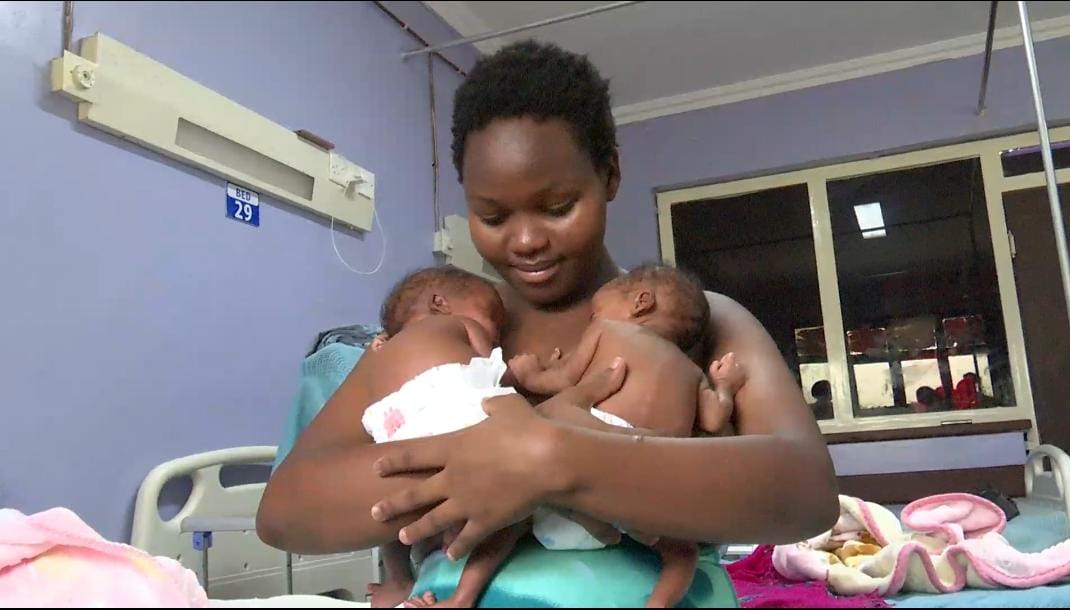
Twenty-two-year-old Mitchel Chepchumba from Mogotio also had to adjust to life with more than one newborn after giving birth to twins.
At first, breastfeeding two babies was difficult. She had to learn how to position and attach each baby properly and ensure that they breastfed safely.
Health workers guided her through the process and showed her suitable breastfeeding positions.
What initially felt overwhelming gradually became manageable.
Today, Mitchel says her twins are breastfeeding well.
Her experience shows that mothers need more than advice; they also need practical guidance and support.
When the milk seems not to be enough
For Maurine Mweni, breastfeeding brought a different kind of uncertainty.
As a first-time mother, she worried during the first month, that she was not producing enough milk.
Monitoring her baby’s growth helped reassure her. The baby’s weight increased from 1.4 kilograms to 1.7 kilograms, giving Maurine greater confidence in her breastfeeding journey.
Her experience shows why mothers need access to qualified health workers who can assess breastfeeding concerns and offer appropriate guidance.
What happens around the mother matters
At Nakuru Provincial General Hospital, breastfeeding support is part of maternal and newborn care through the Baby-Friendly Hospital Initiative, commonly known as BFHI.
Veronicah Ongwae, nurse manager at the hospital’s mother and Baby Wing, says that both clinical and non-clinical staff have received training on breastfeeding support.
“We have been able to sensitize the clinical and non-clinical team, and training our mothers has helped in reducing mothers requiring breast milk substitutes,” she says.
The initiative recognizes that breastfeeding is influenced not only by a mother’s intention, but also by the environment in which she gives birth and the support she receives afterwards.
Some mothers need help positioning their babies, while others need support caring for their newborns or guidance when breastfeeding becomes difficult.
The policy behind breast-milk substitutes
The discussion around exclusive breastfeeding also extends beyond individual mothers and hospitals.
Kenya has regulations governing the marketing and use of breast-milk substitutes. Under Regulation 3 of the Breast Milk Substitutes (General) Regulations, 2021, public health professionals, nutritionists, and healthcare advisors are statutory-bound to ensure Immediate Initiation, where breastfeeding must be initiated within one (1) hour of delivery.
Not forgetting that the Infants must be exclusively breastfed for the first six (6) months of life, and no other liquids or solids (including water) should be introduced unless medically indicated.
Health facilities therefore have a responsibility to promote and support breastfeeding, while ensuring that breast-milk substitutes are used according to medical and regulatory requirements.
For mothers facing difficulties, the question is not simply whether they should breastfeed.
It is also whether they have access to the information, care and support needed to make informed decisions about feeding their babies.
The mother needs care, too
A part of the breastfeeding conversation that is often overlooked is the mother herself.
A woman who has just given birth is recovering physically while adapting to the demands of caring for a newborn or, in Mercy’s case, four newborns.
Maternal nutrition and wellbeing are therefore important parts of breastfeeding support. Mothers need adequate food, fluids and a varied, nutritious diet.
For women breastfeeding multiples, practical support from families and communities can be especially important.
However, nutrition alone should not be presented as a solution to every breastfeeding difficulty. When a mother is concerned about low milk supply or her baby’s feeding, qualified health workers can help identify the problem and provide appropriate support.
The wider picture
Mercy’s experience is unusual because she had four babies to breastfeed. But the challenge of continuing exclusive breastfeeding is not limited to mothers of multiple babies.
According to the 2022 Kenya Demographic and Health Survey, about 6 in every 10 babies aged below six months in Kenya were exclusively breastfed.
The survey also showed that the number drops as babies grow. Among babies aged one month and below, about 8 in every 10 were exclusively breastfed. By four to five months, the figure had fallen to about 4 in every 10.
This means that while many mothers start exclusive breastfeeding, fewer are able to maintain it as their babies mature.
The findings raise an important question: what happens during those first few months that makes exclusive breastfeeding harder to sustain?
A recommendation and the reality
Kenya’s recommendation on exclusive breastfeeding is clear.
Mercy’s experience shows that following that recommendation can be very different for different mothers.
For Mercy, it means breastfeeding four babies.
For Mitchel, it means learning how to breastfeed twins.
For Maurine, it means overcoming the uncertainty that came with being a first-time mother.
Their circumstances are different, but their experiences point to the same reality; breastfeeding does not happen in isolation.
It happens in homes, hospitals and communities.
It happens when a partner steps in to help, when a nurse teaches a mother how to position her baby, when a health facility creates a supportive environment and when a mother has access to the information she needs.
The recommendation to exclusively breastfeed for six months may fit into one sentence:
Four babies. Two babies. One baby.
For every breastfeeding mother there is a story and sometimes what she needs most is not another instruction, but the support to make it possible.
Help us keep you posted! Join our community today!

 Radio Baraza
