



By Christine Wangoi, DevReporter Kajiado County.

Key Highlights
- Dorper sheep growth rate is faster compared to indigenous species
- Dorper require less grazing space than cattle
- Women and youth are finding new opportunities in the Dorper sheep value chain.
- Shrinking land and persistent drought is pushing farmers to Dorper farming.
- Limited access to veterinary services remains a key challenge in Dorper farming.
For generations, cattle keeping has been the backbone of the Maasai pastoralism in Kajiado County.
Changing weather patterns, prolonged droughts, land subdivision and competing land uses, are now putting pressure on the practice. Despite the change, the livelihood system still largely depends on animal keeping.
Dorper sheep keeping is now an emerging resilience adaptation.
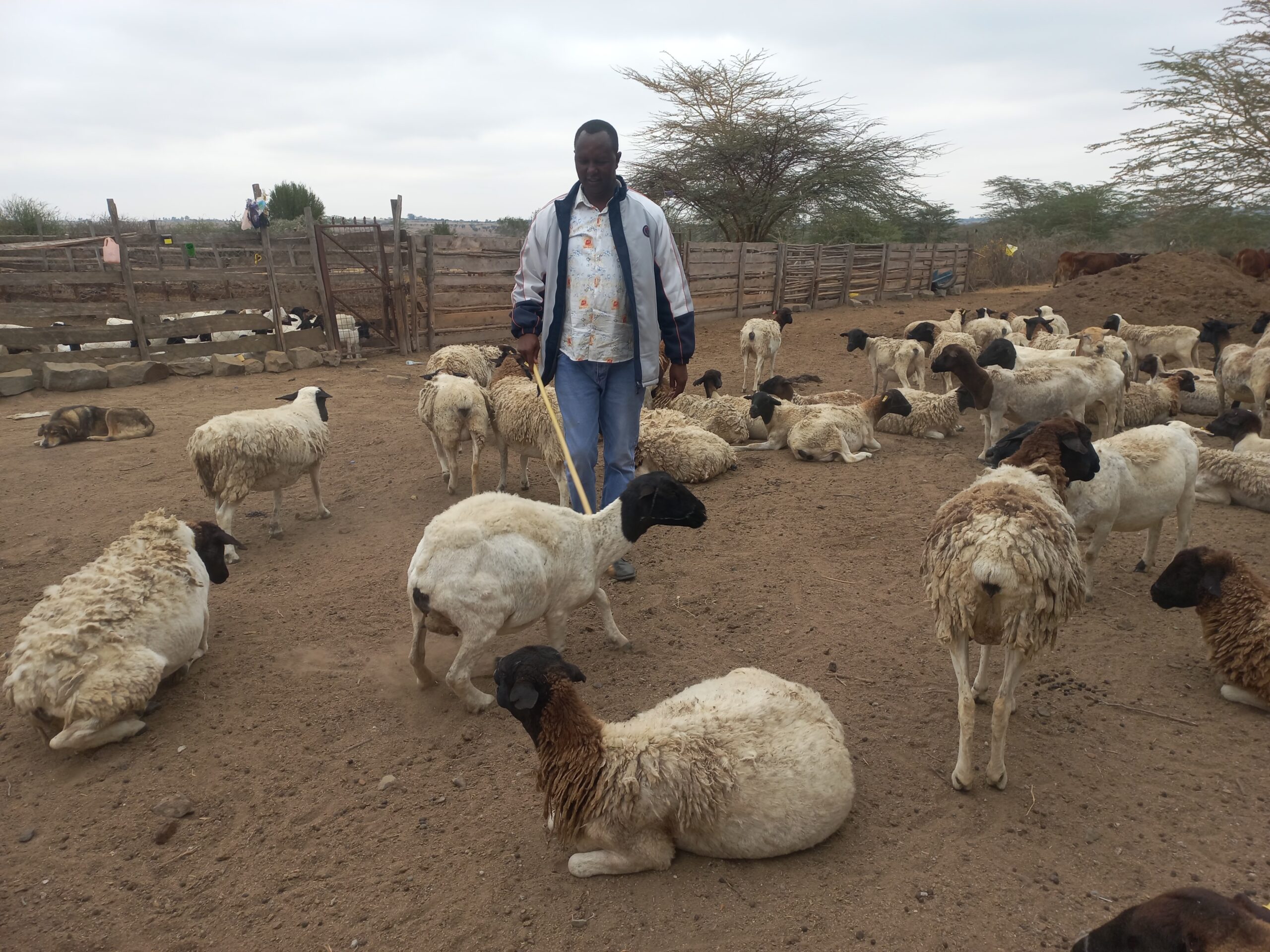
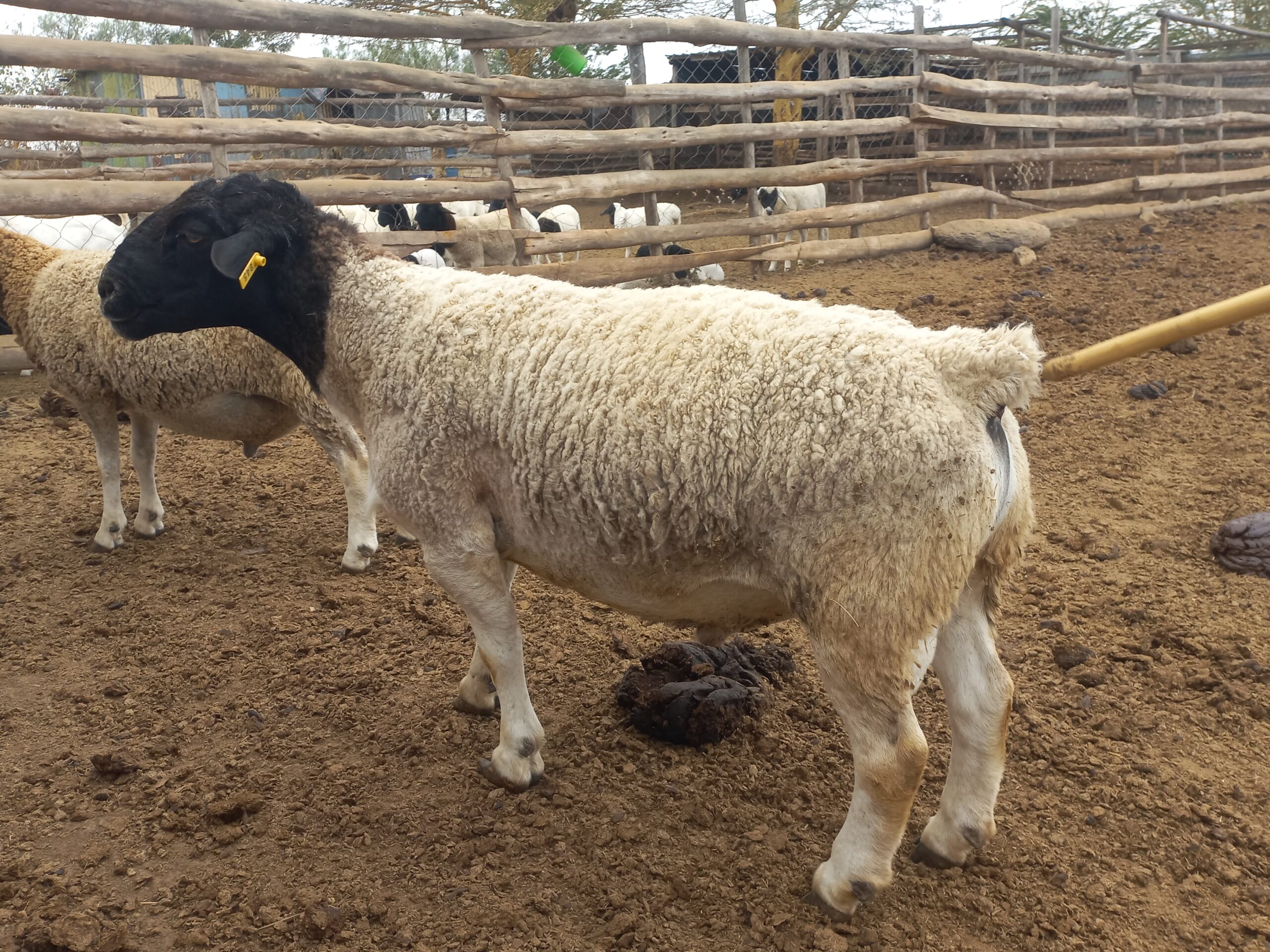
Herders say the Dorper sheep require less space than cattle. It grows and matures faster, guaranteeing income within a relatively shorter production cycle.
“In the past, we had huge chunks of land. The rain patterns were predictable. Not anymore. Drought has become persistent over a short period of time. The adverse effects of climate have forced us to adopt Dorper sheep. It is no longer about large herds but quality, productivity and animals’ resilience,” narrates Samuel Koisani, a farmer from Kimalat.
The impacts of drought have been severe. The National Drought Management Authority (NDMA) reported significant livestock losses in Kajiado during the prolonged 2022 drought. In This report NDMA says that the County lost 45 percent of its livestock population.
According to Moses Olum, an officer with Kenya Agricultural and Livestock Research Organization (KALRO), Dorper sheep offer advantages in mutton production and growth.
“Dorper sheep are a climate resilient breed. It can tolerate extreme heat and cold. They also require minimal water making maintenance affordable. The quality of the meat is also high standard,” says Olum.
For farmer Samuel Ole Tupet of Korompoi village, the animals are already changing the economics of his household.
“The sheep have helped us meet our family needs, including basic needs and paying school fees. The sheep has a ready market and fetches good money. A mature animal can sell up to Ksh30,000 compared to the indigenous red sheep which fetches an average of Ksh11,000.
The experiences of Ole Koisaini and Ole Tupet illustrate how livestock diversification can strengthen household resilience. United Nations Standard Development Goal (SDG) 1 advocates for Improved Livestock Productivity and SDG 2 on Zero hunger.
The growing Dorper value chain is also creating opportunities for women and young people, who are becoming involved in sheep rearing, trading and other livestock-related activities.
“Gender Equality in owning livestock is gradually being realized through dorper rearing. We are gradually seeing women adopt farming. Owing the same is affordable compared to expensive cattle,” says Joyce Naserian.
Access to veterinary services remains a major concern.
 “Controlling and treating foot and mouth decease is costly. The medicines are relatively expensive and not readily available in remote areas. The disease spreads faster and requires farmers to be on high alert to curb its spread,’’ adds Ole Koisani.
Eric Ahenda the County livestock director says that Dorpers’ population accounts for up to 800,000 animals.
“Dorper adoption has taken a faster growth trajectory in the last seven years. Farmers are keen to adopt the breed. As the County, we are supporting them through free training. Teaching them how to combine traditional knowledge and modern practices to curb and counter diseases is key. We are also sensitizing them to adhere to strict deworming schedules,’’ he says.
To the farmers, it is about breeds with the ability to sustain livelihoods, food security and create climate resilience as opposed to keeping large herds..

 Radio Baraza

