


By Makokha Hendric, Media Intern, DTM Africa
Civil Society Organisations (CSOs) have renewed calls for electoral reforms ahead of Kenya’s 2027 General Election after validating a report outlining ten priority reforms they believe are critical to strengthening the country’s electoral process.
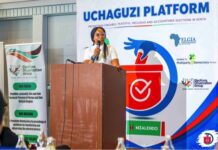
The reforms were discussed during the CSO Leadership Roundtable on the Validation of the Report on the 10 Minimum Electoral Reforms and Advocacy Strategy, held on Monday, August 3, 2026, at the Pullman Hotel in Nairobi. The meeting was convened by the Election Observation Group (ELOG) in partnership with the Electoral Law and Governance Institute for Africa (ELGIA).
Representatives from the Uchaguzi Platform, the Civil Society Technical Working Group (CSO-TWG) on Elections, The Youth Café and other organisations working on electoral governance attended the forum.
The meeting began with opening remarks from the Uchaguzi Platform, which outlined the purpose of the roundtable and the need for a common civil society position on electoral reforms. This was followed by a presentation on the proposed reforms by the technical team, after which participants examined each recommendation, raised concerns, suggested amendments and eventually endorsed the final proposals.
The reform agenda identifies ten key areas that stakeholders believe require attention before the next General Election. They include strengthening the voter register, improving election results management, enhancing election security, addressing electoral offences, reforming campaign financing, regulating election technology and digital campaigning, improving political party nominations, promoting inclusive representation and strengthening mechanisms for resolving election disputes.
Participants also considered a proposed advocacy and lobbying strategy to guide engagement with Parliament, the Independent Electoral and Boundaries Commission (IEBC), political parties and other institutions involved in implementing electoral reforms.
After the meeting, ELOG said on its official X account that “With barely a year to the elections, many critical electoral reforms remain unimplemented.” The organisation said the discussions reinforced the need for “timely action, stronger political will, and sustained collaboration to safeguard electoral integrity and strengthen public confidence in Kenya’s democratic process.”
ELOG further announced that one of the meeting’s key resolutions was a proposal to convene a National Electoral Reforms Conference. The conference is expected to bring together major electoral stakeholders to review and validate the proposed reforms before the 2027 General Election. The organisation also said the Uchaguzi Platform would continue coordinating advocacy efforts to build support for the adoption and implementation of the reforms.
In a separate post, The Youth Café said the discussions centred on ten priority reform areas, including voter registration, election results management, campaign financing, political party nominations, election security, electoral dispute resolution, inclusive representation and the regulation of digital campaigns. It reaffirmed its commitment to supporting policy dialogue aimed at promoting credible, inclusive and transparent elections in Kenya.
The validated reform agenda and advocacy strategy are expected to guide civil society’s engagement with key institutions over the coming months as stakeholders push for the reforms to be adopted before preparations for the 2027 General Election gather momentum.


 Radio Baraza