


By Makokha Hendric, Media Intern, DTM Africa
NAIROBI, August 10, 2026 — Kenya must address declining public confidence in elections if it is to build trust in the 2027 electoral process, Infotrak Research and Consulting has said.
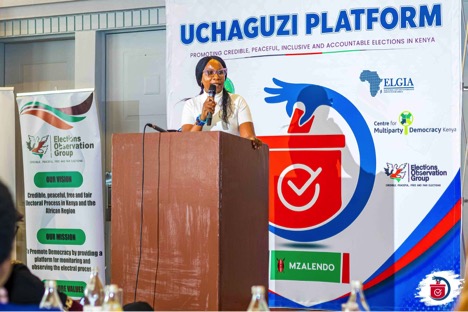
Speaking during a high-level meeting on electoral reforms in Nairobi, Angela Ambitho, Founder and Group CEO of Infotrak Research and Consulting, said Kenya has a significant trust deficit around elections and electoral institutions.
Ambitho said fewer than half of Kenyans trust elections to be free and fair, arguing that the lack of trust also contributes to the high cost of elections.
Her remarks came as civil society organisations under the Uchaguzi Platform unveiled a minimum electoral reforms package and a 12-month advocacy roadmap ahead of the August 2027 General Election.
Ambitho called for evidence, research and opinion polling to be used as an early warning system as the country prepares for the next election.
She said stakeholders should establish a baseline for measuring public confidence in several areas.
These include trust in the IEBC and its independence, confidence in the voters’ register and confidence in the management of election technology.
She also said public trust in other institutions involved in elections should be monitored, including the Judiciary, National Police Service, media and civil society organisations.
Election security was another area Ambitho said should be assessed, together with citizens’ willingness to accept the eventual outcome of the election.
The emphasis on public trust comes as other speakers at the meeting raised concerns about the independence and accountability of electoral institutions.
Diana Gichengo, Executive Director of TISA, called for an independent IEBC and a transparent voters’ register.
She said citizens must be involved in electoral processes from the beginning and should be able to understand how their views and concerns are handled.
The meeting also discussed voter readiness.
Ambitho said stakeholders need to understand which groups are experiencing voter apathy and disengagement.
She called for particular attention to young people and their understanding of Kenya’s electoral history, electoral processes and the importance of voting.
The National Gender and Equality Commission also raised concerns about youth participation.
NGEC Vice Chairperson Thomas Okoth Koyier said the absence of young people from elections would affect the future of the country.
He also called for greater preparedness to ensure persons with disabilities can participate in elections independently.
The issue of electoral violence was raised by Grace Wangechi Kahuria of IMLU, who called on security agencies to uphold constitutionalism and the rule of law.
Meanwhile, IEBC Acting CEO and Commission Secretary Ruth Kulundu said the commission was working on voter registration and planned to undertake another round of Enhanced Continuous Voter Registration in January.
She also called for stronger legal powers to address electoral insecurity throughout the electoral cycle.
The Uchaguzi Platform says its minimum reforms are intended to complement wider reforms being pursued by Parliament, IEBC and other stakeholders.
Sheila Masinde, Executive Director of Transparency International Kenya, said the platform had already begun work on its 12-month roadmap and called for stronger collaboration among stakeholders.
For Infotrak, however, the success of reforms will ultimately depend on whether citizens believe in the electoral process.
The call for regular research and monitoring therefore puts public confidence at the centre of preparations for the 2027 General Election, with stakeholders being urged to identify trust gaps early enough to address them before voting day.



 Radio Baraza