


By Makokha Hendric, Media Intern, DTM Africa
NAIROBI, August 10, 2026 — Civil Society Organisations (CSOs) under the Uchaguzi Platform have unveiled a 10-point minimum electoral reform package and a 12-month advocacy roadmap aimed at strengthening Kenya’s electoral process ahead of the August 2027 General Election.
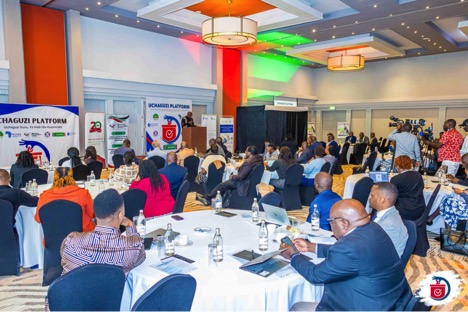
The reforms were presented on Monday during a high-level meeting at the Pullman Hotel in Upper Hill, Nairobi, bringing together CSOs, electoral institutions, political stakeholders and development partners.
The package focuses on areas including the integrity of the voter register, election results management, electoral security and violence, enforcement of electoral offences, campaign finance, election technology and digital campaigning.
It also addresses compressed and conflicting electoral timelines, regulation of political party nominations, inclusive representation and election dispute resolution mechanisms.
Presenting the package, Mulle Musau, Convener of the Uchaguzi Platform and CEO of the Elections Observation Group (ELOG), said the reforms were guided by five strategic principles: stabilising the legal framework, improving results transparency, strengthening continuous voter registration, promoting political party accountability and strengthening dispute resolution.
Musau said the package was not intended to cover every possible electoral reform but to identify priority measures that could be pursued within the limited time remaining before the 2027 election.
The advocacy strategy includes a legislative implementation roadmap focusing on immediate legislative action, electoral integrity reforms, and operationalisation and monitoring.
The platform has framed the strategy around a simple call to action: 12 months, 10 reforms and one shared commitment.
Felix Odhiambo, Executive Director of ELGIA and a member of the Uchaguzi Platform, said the proposals should not be treated in isolation from other reform initiatives being pursued by Parliament, the Independent Electoral and Boundaries Commission (IEBC) and other stakeholders.
He said the reforms were described as minimum because the platform had considered the time available and identified measures that could, at the very least, help guarantee a credible election.
The meeting also heard from IEBC Acting Chief Executive Officer and Commission Secretary Ruth Kulundu, who said voter registration was ongoing at the country’s 290 constituency offices.
Kulundu said the commission planned to launch a second round of Enhanced Continuous Voter Registration in January. She said the voters’ register would subsequently be compiled and made available for public inspection and verification, both physically and through an online portal.
She also called for legal reforms that would give the IEBC stronger powers to address electoral insecurity and violence throughout the electoral cycle.
The issue of political accountability was raised by the Political Parties Liaison Committee, which questioned whether political parties and Members of Parliament had the political will to support the proposed reforms.
The committee also called for stronger public participation and clearer feedback mechanisms to show how citizens’ views are considered during the reform process.
Electoral security was another concern. Grace Wangechi Kahuria, Executive Director of IMLU, said free and fair elections could not be achieved without addressing electoral violence and its prevention.
The National Gender and Equality Commission raised concerns about inclusion, particularly the participation of young people, women and persons with disabilities.
Thomas Okoth Koyier, Vice Chairperson of NGEC, said the absence of youth from elections could affect the future of the country and questioned whether Kenya was adequately prepared to ensure persons with disabilities could participate independently.
Public trust also featured prominently.
Angela Ambitho, Founder and Group CEO of Infotrak Research and Consulting, said Kenya has a trust deficit around elections and called for research and polling to be used as an early-warning mechanism ahead of the 2027 polls.
Meanwhile, Diana Gichengo, Executive Director of TISA, called for greater citizen participation, an independent IEBC and a transparent voters’ register.
The Office of the Registrar of Political Parties welcomed the proposals. Ken Kaniah, representing the ORPP, said the office was already undertaking legal reforms and remained committed to working with stakeholders to support credible elections.
The Uchaguzi Platform said its advocacy work would continue through engagements with Parliament, IEBC, political parties and other stakeholders.
Sheila Masinde, Executive Director of Transparency International Kenya, said stakeholders needed to agree on the minimum legislative reform package by September. She said some work was already underway, including engagements with IEBC on campaign spending and contribution limits.
Masinde also called for collaboration, warning that the country had limited time and many tasks to complete before the election.
Musau said the platform’s work had grown out of findings from the 2022 General Election and subsequent engagements with Parliament, IEBC and other stakeholders.
The meeting therefore marked the beginning of a 12-month push to advance electoral reforms, monitor preparedness and keep the public informed as Kenya moves towards the 2027 General Election.


 Radio Baraza