


By Edwin Wanjawa and Dommie Yambo-Odotte
Kenya’s democracy rests on a straightforward constitutional principle: sovereign power belongs to the people. Citizens elect Members of Parliament to represent them in law-making and oversight, and elect the President and Deputy President to exercise executive authority on their behalf. This is the essence of the social contract.
Yet Kenya’s democratic practice has increasingly reduced this contract to an electoral transaction. Political parties and candidates present manifestos promising jobs, affordable healthcare, better education, food security, infrastructure, security and accountable government. Citizens vote, governments are formed, and the political relationship changes. The citizen who was central to the campaign often becomes peripheral to governance.
The problem is that citizens have few organized mechanisms for determining what should be promised in the first place, translating promises into obligations, and systematically monitoring their implementation. Consequently, when governments depart from their manifestos, citizens often have little recourse beyond public protest, political pressure or waiting for the next election. By then, the cycle begins again.
This explains why merely changing leaders has not necessarily produced fundamentally different outcomes. Elections can change occupants of public office without changing the incentives, relationships and accountability structures through which power is exercised. If citizens vote primarily on personality, party loyalty, ethnicity, political mobilization or short-term inducements, rather than on a clearly articulated public agenda and evidence of performance, elections alone cannot guarantee responsive governance.
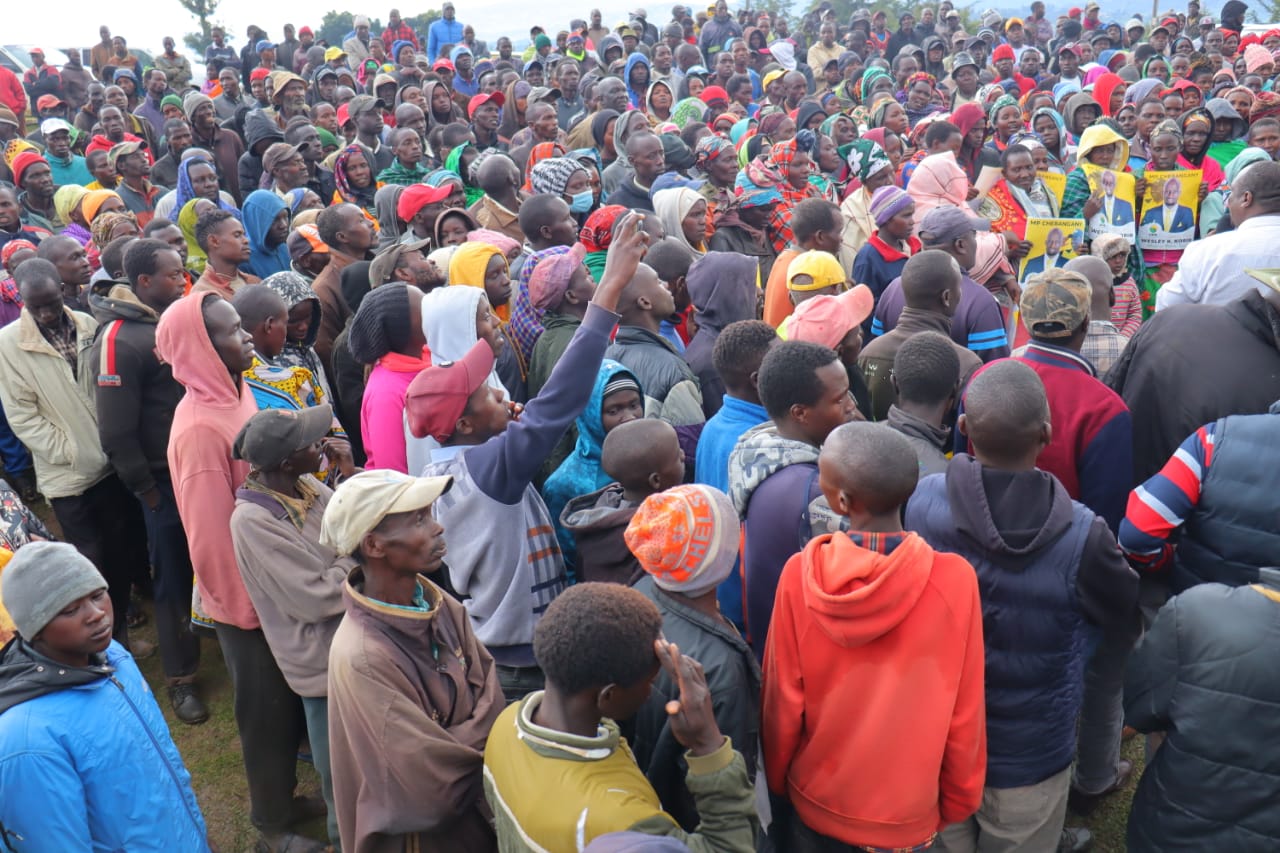
Kenya therefore needs to move from an election-centred democracy to a citizen-centred one. Citizens must become agenda setters, not merely voters. Before political parties write their manifestos, communities should deliberate on the issues that most affect their lives and determine what they expect the next government and Parliament to address.
Through village, ward, constituency and county conversations, citizens can identify and prioritise their most urgent concerns and progressively consolidate them into a national People’s Agenda. Such an agenda should be short, realistic. “Create jobs” is too vague to provide accountability. Citizens should ask how many jobs, for whom, in which sectors, through what interventions, financed from where and delivered by when. The same discipline should apply to healthcare, education, agriculture, housing, social protection and governance.
This is where Development Through Media (DTM) and other civil society organisations have a critical democratic role. DTM’s experience in media advocacy and amplifying the voices of marginalized communities provides a useful platform for taking these conversations beyond political elites and into communities. Radio, community dialogues, digital platforms, public forums and evidence-based communication can enable citizens to articulate priorities, compare experiences and build consensus.
Candidates should be asked to respond publicly: which priorities will they adopt, what targets will they pursue, what resources will be required, and how will citizens assess progress? The objective is to make the vote a considered choice about public priorities rather than simply a choice between personalities.
But securing commitments before an election is only half the task. The real test begins after power has been acquired. Civil society, media, academia and citizen networks should help establish continuous accountability mechanisms that track the journey from promise to outcome: promise, policy, budget, implementation and impact.
Citizens should know how their representatives vote in Parliament, what legislation they support, what questions they raise, what commitments they make and whether their conduct reflects the public agenda. Civil society can develop accessible citizens’ scorecards and public dashboards that distinguish between commitments delivered, those in progress and those abandoned.
This is particularly important because accountability is inseparable from public finance. A government can make impressive promises, but without corresponding budgetary allocations and effective implementation, a manifesto remains political advertising. Citizens therefore need to follow the money and connect political promises to actual expenditure and outcomes.
Such an approach would also change the role of civil society. Instead of mobilizing citizens mainly around crises, elections or protests, organisations such as DTM should invest in sustained civic education, citizen research, public-interest journalism and accountability platforms. Universities and research institutions can provide evidence; media organisations can investigate and amplify performance; civil society can convene citizens and build their capacity to engage; and community organisations can ensure that marginalized voices are not excluded.
Citizens should not have to wait five years to express dissatisfaction. They should have democratic tools to engage, question, monitor and demand correction throughout the electoral cycle.
The 2027 elections therefore offer more than an opportunity to choose new leaders. They offer an opportunity to change the terms of democratic engagement. The critical question should not only be, “Who should we elect?” It should be, “What is our agenda, which leaders will commit to it, and what mechanisms will we use to hold them accountable?”
Democracy becomes meaningful when citizens cease to be occasional voters and become continuous participants in governance. Kenya does not merely need better elections. It needs citizens with the power, organization and information to make the social contract real.
About the Authors
Edwin Wanjawa is a Sociologist, Media Scholar, Teaches at Pwani University, and is Programme Associate (Monitoring, Learning & Evaluation) at DTM
Dommie Yambo-Odotte is a media practitioner, Applied Psychologist and the Executive Director/Producer at Development Through Media (DTM).
Development Through Media (DTM) is one of the first non-profit Media-Focused Civil Society Organisation (M-CSO) to register in Kenya in 1996, where it has operated since 1997. It works at an individual organisational level, and especially through partnerships with both media and non-media entities based in Kenya and across the world.
Contact: Info (at) dtmafrica.com

 Radio Baraza