


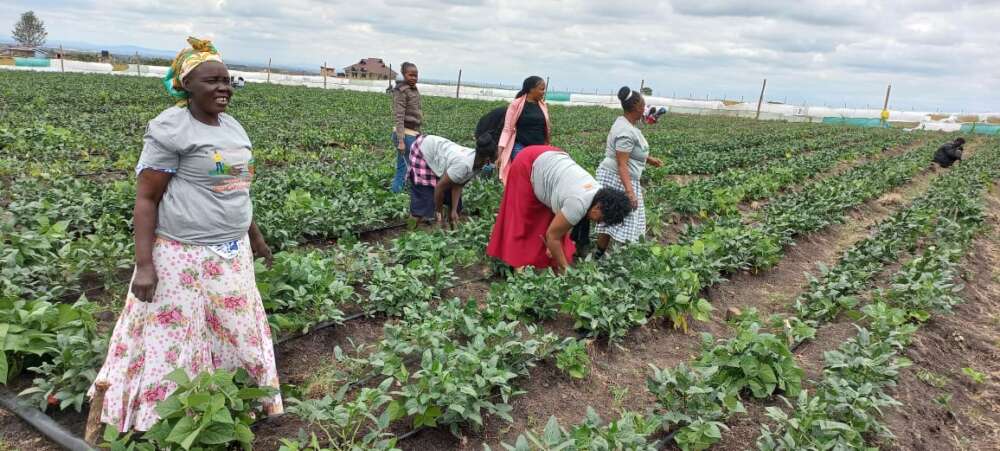
By Dommie Yambo-Odotte and Edwin Wanjawa
As the world commemorates World Environment Day 2026 under the theme “Climate Action,” humanity is once again confronted with an urgent truth: climate change is no longer a future threat. It is a lived reality shaping economies, politics, cultures, and everyday life across the globe.
In Kenya, the signs are unmistakable. Prolonged droughts continue to ravage pastoral communities in arid and semi-arid regions. Floods displace families and destroy infrastructure in both urban and rural areas. Food insecurity has become increasingly widespread, while environmental degradation threatens livelihoods that millions depend on for survival. From shrinking forests and polluted rivers to erratic rainfall patterns and rising temperatures, climate change is steadily redefining the country’s social and economic landscape.
Yet despite these realities, climate discourse in many parts of the world remains heavily framed as a scientific or environmental issue alone. While science remains critical in understanding climate patterns and informing policy, reducing climate change to merely an ecological problem risks overlooking its most profound dimension: climate change is fundamentally a social and cultural issue.
The environment is not separate from society. It is deeply intertwined with how communities live, govern themselves, preserve traditions, and organize economic life. When forests disappear, it is not only biodiversity that is lost; communities lose cultural heritage, medicinal knowledge, livelihoods, and spiritual identity. When rivers dry up, conflict over scarce resources intensifies. When climate shocks destroy crops, families fall deeper into poverty, children miss school, and social inequalities widen.
In Kenya particularly, climate vulnerability often mirrors social vulnerability. Marginalized communities, women, youth, persons with disabilities, and low-income households bear the heaviest burden of environmental degradation despite contributing the least to global emissions. This makes climate justice not only an environmental imperative, but also a governance, human rights, and equity issue.
The conversation on climate action must therefore move beyond carbon emissions and renewable technologies to include questions of participation, inclusion, accountability, and cultural resilience.
One of the greatest mistakes policymakers and development actors make is treating communities merely as beneficiaries of climate interventions rather than active agents of change. Across Kenya, local communities have for generations practiced forms of environmental stewardship rooted in indigenous knowledge systems and cultural values. Traditional water conservation methods, communal land management systems, indigenous farming techniques, and cultural taboos protecting forests and water sources all demonstrate that sustainable living is not a foreign concept imported through global climate conferences. It has always existed within communities.
Unfortunately, modernization and weak governance structures have often marginalized these local knowledge systems. Climate solutions are frequently designed in boardrooms far removed from the lived realities of ordinary citizens. As a result, many interventions fail to secure community ownership and sustainability.
Effective climate action must therefore be localized and people-centered. Communities must not only be consulted but meaningfully involved in environmental governance and decision-making processes. Public participation must become central to climate policy formulation, implementation, and monitoring. County governments, now constitutionally responsible for critical functions such as agriculture, water, and local development, have a particularly important role in ensuring climate governance is inclusive and responsive to local realities.
At the same time, climate change also exposes the urgent need for ethical and responsible leadership. Environmental degradation in Kenya cannot be divorced from broader governance challenges including corruption, poor urban planning, illegal land allocations, weak enforcement of environmental regulations, and unsustainable exploitation of natural resources. Floods become disasters not only because of heavy rainfall, but because drainage systems are neglected and riparian lands are unlawfully occupied. Deforestation persists because economic and political interests often override environmental protection.
Climate action therefore requires political will and accountability.
Civil society organizations (CSOs) and the media equally have a critical role to play. Environmental advocacy must move beyond symbolic tree-planting ceremonies and ad hoc awareness campaigns. There is need for sustained civic education that empowers citizens to understand the connection between climate change, governance, development, and social justice.
The media in particular remains one of the most powerful tools for shaping public consciousness. Through storytelling, investigative journalism, and public dialogue, the media can amplify marginalized voices, expose environmental injustices, combat misinformation, and hold institutions accountable. Climate reporting should not only focus on statistics and disasters, but also on human experiences, community resilience, and local innovations that offer sustainable solutions.
Youth engagement is also indispensable. Kenya has a predominantly youthful population whose future will be profoundly shaped by today’s environmental decisions. Young people must therefore be empowered as innovators, advocates, researchers, and leaders in climate action spaces. Climate education should become an integral part of civic learning and public discourse.
Importantly, climate action must avoid becoming an elitist global conversation detached from ordinary citizens. For many struggling households, environmental sustainability competes with immediate concerns such as unemployment, hunger, and rising living costs. Policymakers must therefore ensure that climate responses are socially just and economically inclusive. Green transitions should create opportunities, not deepen inequalities.
As Kenya joins the world on this fifth day of June 2026, in marking World Environment Day, there is need for a paradigm shift in how we understand environmental protection. Climate action is not simply about protecting trees, reducing emissions, or attending international summits. It is about protecting people, cultures, livelihoods, and future generations.
The climate crisis is ultimately a crisis of how humanity relates with nature, power, development, and one another.
If sustainable solutions are to emerge, they must be grounded in communities, informed by culture, driven by accountable governance, and sustained through active citizen participation. The future of climate action will not be determined solely in global conferences, but in villages, towns, schools, media spaces, churches, county assemblies, and everyday community life.
The environment is, first and foremost, a social issue. And unless society itself becomes central to climate action, meaningful sustainability will remain elusive.
————————–
About the Authors
Dommie Yambo Odotte, a media practitioner and Applied Psychologist, is the Executive Director/Producer at Development Through Media (DTM). Edwin Wanjawa, a Sociologist and Media Scholar, Teaches at Pwani University, and is Programme Associate at DTM.
Development Through Media (DTM) is one of the first non-profit Media-Focused Civil Society Organisation (M-CSO) to register in Kenya in 1996, where it has operated since 1997. It works at an individual organisational level, and especially through partnerships with both media and non-media entities based in Kenya and across the world.
Contact: Info (at) dtmafrica.com



 Radio Baraza