


By Dommie Yambo-Odotte and Edwin Wanjawa
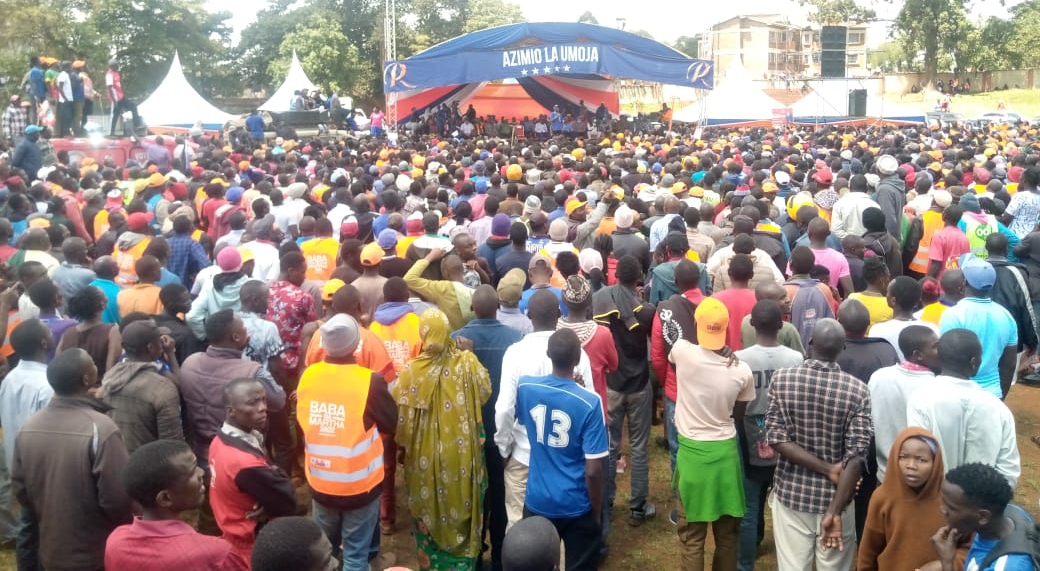
As Kenya marks the International Day of Democracy, we should pause and ask a fundamental question: Who is at the centre of our democracy? As the country moves towards the 2027 General Election, the answer must be clear — the people.
For too long, our political conversations have been dominated by personalities, political formations, ethnic arithmetic and the calculations of political elites. Yet democracy is ultimately about citizens. Elections should provide an opportunity for Kenyans to articulate the kind of country they want to live in and to demand leadership capable of responding to their aspirations, protecting their rights and advancing inclusive and sustainable development.
Democracy cannot be reduced to the casting of a ballot once every five years. Voting is important, but it is only one expression of citizenship. A healthy democracy requires citizens who are informed, engaged and able to influence decisions that affect their lives. It requires meaningful public participation, access to information, accountable leadership, and institutions that listen to citizens beyond election seasons.
This is why, as we approach 2027, Kenya needs to move from political agendas to a People’s Agenda. The starting point should not be who wants to become president, governor, senator, member of Parliament or MCA. The starting point should be what Kenyans want. What are the issues that concern them? What kind of economy do they want? What opportunities should be available to young people? How can public services be improved? How should government address inequality, unemployment, poverty and exclusion? What kind of leadership and accountability do citizens expect?
These questions should drive the national political conversation.
The 2027 election should therefore be a competition of ideas, programmes, records and solutions rather than simply a contest of personalities and political numbers. Political leaders should be required to explain what they intend to do, how they will do it and how citizens can hold them accountable. Kenyans should not merely be asked to choose between political personalities; they should be empowered to make informed choices about competing visions for the country.
This conversation must particularly recognise the role of young people. Kenya’s youth are often treated as voters, campaign crowds and political foot soldiers, yet they are much more than this. They are citizens, innovators, entrepreneurs, professionals, community leaders and agenda setters. Their participation in democracy must extend beyond social media commentary, political rallies and election-day voting. Young people should be part of shaping policy, influencing public debate and determining the priorities that political leaders must address.
The media also has an important responsibility. At a time when political communication is increasingly shaped by social media, misinformation, disinformation and manipulation, journalism must help citizens make sense of the choices before them. The media should interrogate policies, examine leadership records, fact-check claims, explain complex issues and amplify voices that are often absent from national political conversations. It should help shift public attention from political theatre to the real issues affecting citizens.
Democratic participation must also be inclusive. Women, persons with disabilities, older persons, rural communities, informal workers, minorities and other vulnerable and marginalised groups must not become visible only when their votes are required. Their experiences and priorities must form part of the national agenda. A democracy that does not hear the voices of all its citizens remains incomplete.
The People’s Agenda 2027 should not be understood as a political party manifesto or an endorsement of any candidate. It should be a citizen-centred conversation about the issues that should matter to Kenya as it approaches another electoral cycle. It should provide a platform through which citizens can articulate their aspirations and challenge political leaders to respond to them.
Development Through Media (DTM) believes that democracy becomes stronger when citizens move from being spectators of politics to active participants in shaping their future. Through media, civic engagement and grassroots networks, DTM will continue to support conversations that place citizens at the centre of democratic governance.
As we celebrate the International Day of Democracy, therefore, the question before Kenya should not simply be who will win in 2027? It should be what kind of Kenya do we want after 2027, and how will we ensure that those seeking our votes are committed to building it?
The 2027 election should belong to the people. The agenda should too.
About the Authors
Edwin Wanjawa is a Sociologist, Media Scholar, Teaches at Pwani University, and is Programme Associate (Monitoring, Learning & Evaluation) at DTM
Dommie Yambo-Odotte is a media practitioner, Applied Psychologist and the Executive Director/Producer at Development Through Media (DTM).
Development Through Media (DTM) is one of the first non-profit Media-Focused Civil Society Organisation (M-CSO) to register in Kenya in 1996, where it has operated since 1997. It works at an individual organisational level, and especially through partnerships with both media and non-media entities based in Kenya and across the world.
Contact: Info (at) dtmafrica.com
 Radio Baraza