


By Dennis Gadhi, DevReporter, Nakuru County

At a Glance
Eight years after Kenya’s polythene bag ban, Nakuru’s Wakulima Market traders continue using outlawed carriers hidden beneath counters. The persistent use undermines Article 42 of the Constitution of Kenya on environmental rights and threatens public health—revealing a shadow economy where smugglers profit while residents bear the costs.
When Mary Wanjiru (not her real name) reaches for her purse at Wakulima Market’s butchery section, she knows exactly what to expect. The fresh chicken she purchases will emerge wrapped in a thin, transparent polythene bag—quickly concealed beneath brown paper before leaving the counter.
“Everyone knows they’re banned, but what choice do we have? The alternatives tear easily, and my meat ends up exposed. We store these bags at home for leftovers because they seal better than anything else we can afford.” States the Nakuru resident
Her experience mirrors that of hundreds of Nakuru residents navigating the murky terrain between Kenya’s 2017 polythene bag prohibition and daily survival needs. What began as landmark environmental legislation has evolved into a cat-and-mouse game where enforcement meets economic reality.
The Hidden Trade
Otieno (not his real name), a vegetables vendor at the market’s entrance, admits keeping a stack of polythene bags hidden in his storage crate. The penalties are severe—Kshs2 million to Kshs4 million fines or one to two years imprisonment. Yet the practice continues.
“Customers demand them, especially for wet produce. The fine is money I don’t have, so we’re careful. But these same bags block our drainage systems during rains. The streets flood with plastic-contaminated water that reaches our food stalls.”
While NEMA reports 80 percent national compliance, ground realities tell a different story. Enforcement blind spots have created informal supply chains where banned bags circulate through smuggling networks from neighboring countries.
Constitutional Promise vs. Economic Reality
Article 42 of the Kenyan Constitution guarantees every citizen the right to a clean and healthy environment. Yet for vendors like Otieno and consumers like Wanjiru, this constitutional promise collides with daily economics. Vision 2030’s environmental sustainability goals and SDG 12’s push for responsible consumption sound good on paper, but mean little when eco-friendly alternatives cost three times more than illegal polythene bags.
The Health Cost
Public health experts warn that reused polythene bags pose serious contamination risks. The materials aren’t designed for multiple uses and can harbor bacteria causing foodborne illnesses. Wangechi (Not her real name), a mother of three, stores vegetables in recycled polythene bags retrieved from the market.
“I wash them thoroughly, but sometimes they develop an odd smell. My youngest had a stomach infection last month and the doctor asked about our food storage methods,” share shares.
Who Profits, Who Pays?
Evidence suggests a shadow economy where smugglers, unscrupulous manufacturers, and some traders profit from persistent demand. Meanwhile, ordinary residents and county sanitation systems bear the costs: clogged drainage, contaminated streets, and mounting health risks.
Ms. Salome Macua, NEMA’s director of enforcement, confirmed that at least 10 traders were arrested in 2023 within Njoro market after being found selling merchandise in banned plastic bags. NEMA continues calling on the public to desist from using banned plastics. The authority acknowledges enforcement challenges due to sophisticated smuggling rings. Their strategy now focuses on promoting biodegradable bags manufactured by local MSMEs while maintaining intensified surveillance.
Homegrown Solutions
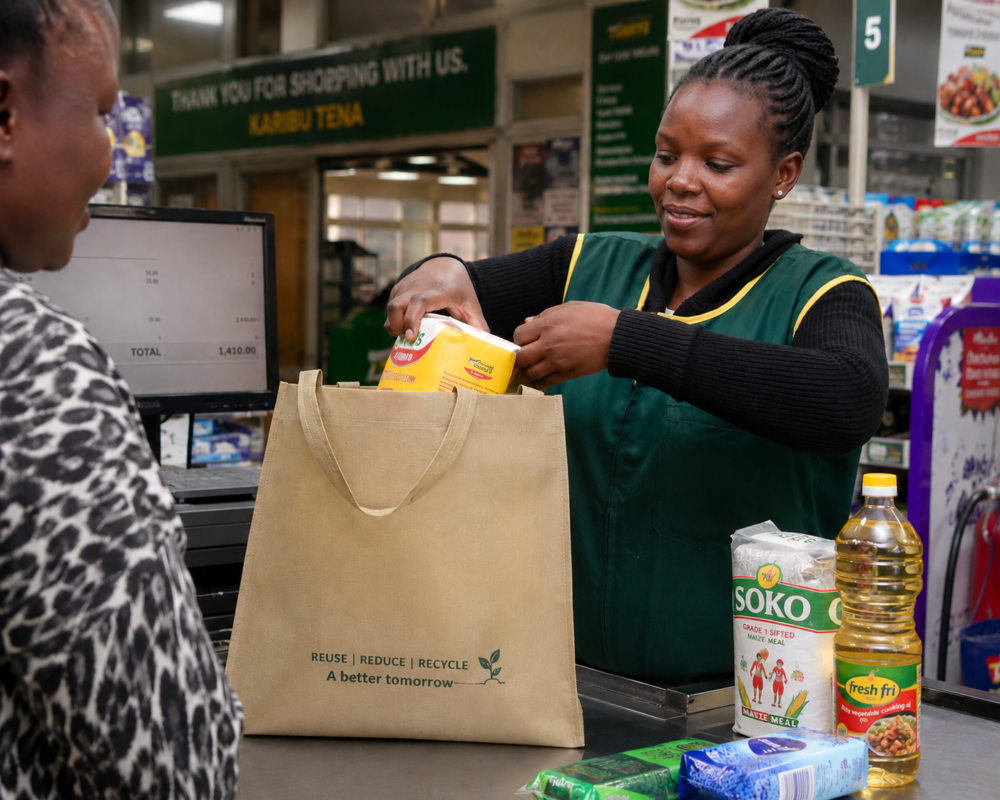
The alternative strategy shows promise. Royal Ecobags, a Nakuru-based company, produces khaki and non-woven bags in multiple sizes. They are durable and eco-friendly. Dan Mwaura, founder of Royal Ecobags Ltd., says he has employed at least 25 people since starting in 2017. He distributes products countrywide, and demand keeps growing.
Learning from Neighbors
Rwanda’s experience offers instructive lessons. Following its comprehensive 2008 polythene ban, the country achieved 90 percent waste reduction through strict enforcement combined with sustained community education. Kenyan authorities could adapt this model, particularly the emphasis on behavioral change campaigns targeting both traders and consumers.
The Question Remains
For residents like Wanjiru and Otieno, caught between law and livelihood, the question persists: Is Kenya winning or losing the battle against banned bags? The answer lies not just in confiscation tonnage or compliance percentages, but also in closing enforcement gaps, making alternatives affordable, and ensuring that constitutional environmental rights translate from policy documents to market realities.
Until then, the paper chase continues—one hidden polythene bag at a time.
Your Voice Matters
Have you encountered banned polythene bags in your local market? Share your experience in the comments below.
Related Resources:
National Environment Management Authority – Plastic Bag Ban Guidelines
Environmental Management and Coordination Act (EMCA)
Kenya Vision 2030 Environmental Sustainability Pillar
United Nations Sustainable Development Goal 12: Responsible Consumption and Production.



 Radio Baraza