


By Dommie Yambo-Odotte and Edwin Wanjawa
Summary:
As the world marks the International Day of Older Persons, Kenya must move from reacting to ageing to deliberately planning for longer lives.
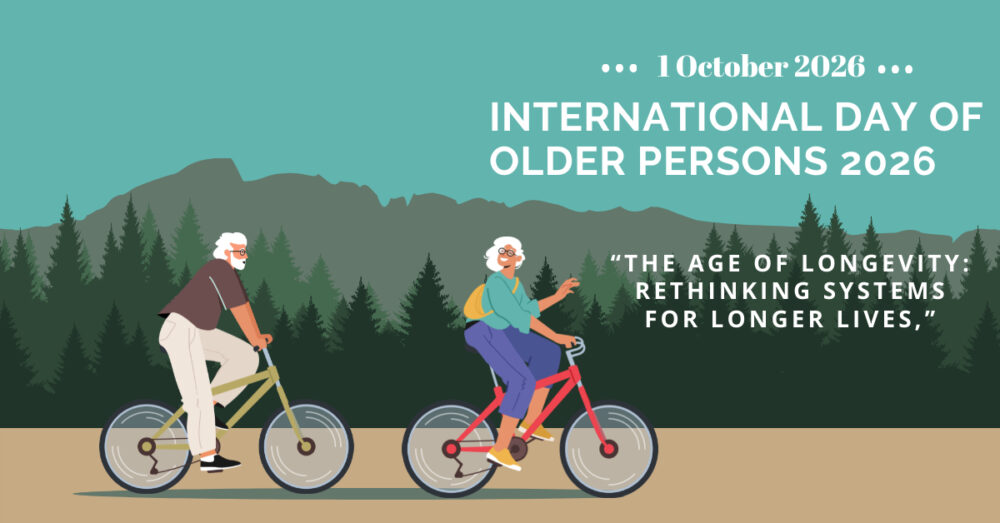
Every 1 October, the world pauses to recognise older persons and reflect on their place in society. This year’s theme, “The Age of Longevity: Rethinking Systems for Longer Lives,” presents Kenya with an important question: Are our systems ready for a society in which people are living longer?
Longevity is one of humanity’s significant achievements. But living longer does not automatically mean living better. The real challenge is to ensure that additional years are accompanied by health, dignity, economic security, meaningful relationships, independence and participation in society.
An Important Conversation
For Kenya, this conversation is increasingly important. Government itself recognises the growing importance of ageing and has placed older persons and ageing within the mandate of the State Department for Social Protection and Senior Citizen Affairs.
Yet having policies is only one part of the equation. The real test is whether systems work for older people in their everyday lives.
An older person should be able to access healthcare without navigating unnecessary barriers; receive social protection in a timely and dignified manner; move safely within their community; access information and digital services; participate in community decisions; and live free from abuse, neglect, discrimination and exploitation.
The challenge is therefore much bigger than healthcare. We must stop seeing ageing only through the lens of disease. One of the most important shifts required is moving from a purely medical understanding of ageing to a whole-person approach.
An older person is not simply a collection of illnesses. Their wellbeing is shaped by their physical health, psychological wellbeing, family relationships, income, housing, social networks, culture, environment and sense of purpose.
This means that an effective response to ageing cannot be left to hospitals and health professionals alone. It requires coordinated action across health, social protection, housing, transport, employment, education, technology, justice and local government.
From policy to implementation
Kenya has important foundations on which to build. The country has policies and programmes aimed at supporting older persons and protecting their dignity and participation in society.
But implementation must remain at the centre of the national conversation.
An older person living in an informal settlement in Nairobi may experience ageing differently from one living in a rural village in Turkana, Kilifi or Kakamega. A retired professional, a smallholder farmer, an informal-sector worker and an older person living with disability may have very different needs.
There can therefore be no one-size-fits-all approach to ageing.
County governments must take the lead
Because many of the services that determine quality of life are delivered locally, counties have a particularly important role to play.
Kenya needs age-friendly counties where public spaces, transport, health facilities, housing, information systems and community programmes take the needs of older persons into account.
County governments should also create meaningful platforms through which older persons participate in planning and decision-making. Older persons should not merely be consulted after decisions have been made. Their lived experiences should inform decisions from the beginning.
Older persons are contributors, not burdens
Perhaps the most important change Kenya needs is a change in attitude.
Too often, ageing is associated with dependency and decline. Yet older persons remain caregivers, farmers, workers, entrepreneurs, community leaders, mentors, peacebuilders, custodians of culture and repositories of knowledge.
The question, therefore, should not simply be “What can society do for older persons?”
We should also ask:
“What can society do to enable older persons to continue contributing?”
That shift—from dependency to participation—is fundamental to the age of longevity.
A national agenda for longer lives
Development Through Media calls on the National Government, county governments, Parliament, civil society, the private sector, communities and the media to make longevity a deliberate development priority.
Kenya must strengthen person-centred healthcare, expand effective social protection, prevent elder abuse, promote age-friendly communities, improve digital inclusion, support lifelong learning and create opportunities for older persons to participate in economic, social and civic life.
The media too, has a responsibility.
We must challenge stereotypes that portray older persons as helpless or irrelevant and, instead, tell stories that reflect their agency, resilience, knowledge and continuing contribution.
Most importantly, Kenya must recognise that preparing for longer lives begins long before old age. The foundations of healthy ageing are built throughout the life course—in education, employment, nutrition, housing, financial security, healthcare and social relationships.
The Age of Longevity is therefore not simply about older people. It is about all of us, and the kind of society we are building for our future selves.
Kenya must now move from reacting to ageing, to planning for longevity. Longer lives are an achievement. Our collective responsibility is to ensure that those additional years are lived with dignity, health, security, purpose and belonging.
Development Through Media (DTM) calls on Kenya to begin designing today for the longer lives of tomorrow.
About the Authors
Dommie Yambo Odotte, a media practitioner and Applied Psychologist, is the Executive Director/Producer at Development Through Media (DTM). Edwin Wanjawa, a Sociologist and Media Scholar, Teaches at Pwani University, and is Programme Associate (Monitoring, Learning & Evaluation) at DTM.
Development Through Media (DTM) is one of the first non-profit Media-Focused Civil Society Organisation (M-CSO) to register in Kenya in 1996, where it has operated since 1997. It works at an individual organisational level, and especially through partnerships with both media and non-media entities based in Kenya and across the world.
Contact: Info (at) dtmafrica.com


 Radio Baraza