


By Brian Gitonga, DevReporter, Meru County
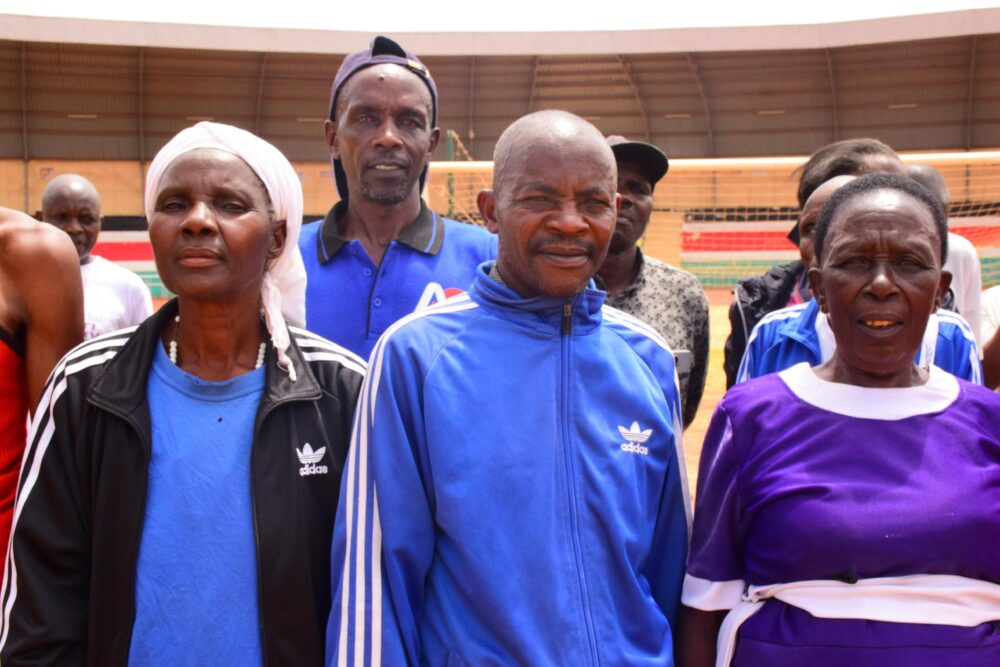
At 82, Wanjiru Kamau is not ready to stop running, even if some people think she should.
Every Monday, Wednesday and Saturday, she joins a group of older athletes in Meru County, eastern Kenya, for training, covering about five kilometres each session.
Her decision to take up running was not always understood. Some people laughed at her, questioning why a woman her age would put herself through regular training.
But Kamau had her reasons.
She had been struggling with high blood pressure and muscle spasms in her legs when a friend introduced her to the Meru chapter of Masters Athletics, Kenya. She decided to join, and has kept returning to the training ground.
“A friend told me about the athletics group, and I decided to give it a try. At first, people laughed at me, saying what I was doing was foolish. Since I began exercising and drinking water, my blood pressure is now normal, and I no longer get muscle spasms,” Kamau said.
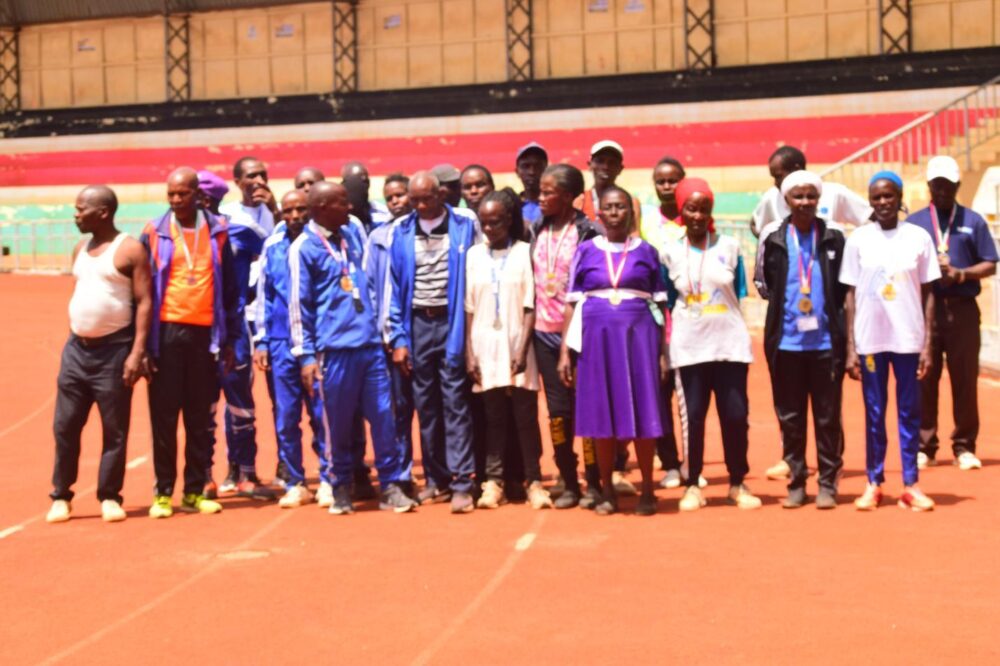
Kamau is one of about 80 members of the group, which was established in 2015. Its members have different reasons for showing up. Some want to remain active as they grow older. Others value the company of fellow runners. A few have taken their athletics beyond Meru, to international competitions.
Their experiences offer a glimpse into how a group of older Kenyans is using sport to navigate health, disability and the challenges that come with staying active later in life.
Ageing and staying active
While Kamau’s account of improved health may be personal, evidence also points to broader benefits of physical activity among older people.
The World Health Organization says that regular physical activity can benefit cardiovascular, mental and cognitive health, and, also help prevent falls. It recommends at least 150 minutes of moderate-intensity physical activity a week for adults aged 65 and above.
The issue is particularly relevant as Kenya confronts health challenges affecting its older population.
According to the Kenya National Bureau of Statistics’ Kenya Vital Statistics Report 2024, people aged 60 and above accounted for 43.4 percent of registered deaths in Kenya in 2024. Cancer and cardiovascular diseases were among the leading causes of deaths registered in health facilities.
For members of the Meru group, however, staying active is not always straightforward.
A runner who needed a guide
For years, Protasio Mutuma Lichoro wanted to run, but there was one thing he could not easily find: someone to run beside him.
The 52-year-old is visually impaired and needs a sighted guide when running. Before joining the group in 2017, finding one was difficult.
“Since I joined this group, I have benefited so much. Before, I could never find a guide when I needed one. Now, training with such a crowd, I even help train others to be guides. I cannot run alone; I always need the assistance of a sighted guide,” Lichoro said.
His involvement has had an unexpected effect. Some members are now learning how to become guides, giving him more people with whom he can train.
Stephen Michubu Linguya, the group’s founder, says creating that kind of community was part of the reason he established the chapter.
Michubu had seen older people struggling with health problems and, in some cases, alcohol. He believed athletics could offer them something else to do while bringing them together.
When we formed this group, we looked for older adults who used to love running before age became a challenge, so that even their children and younger generations could follow in their footsteps and transform their lives,” Michubu said.
The long journey to training
For James Mworia, running has taken him much further than the training grounds of Meru.
The 73-year-old competed in Tunisia in 2019 and returned with medals. Yet he and his teammates still face challenges at home, including getting to training.
Members meet three times a week, but Mworia says some travel between 10 and 50 kilometres to reach the training ground. The group has no team transport, meaning they have to pay their own fares.
“During our training days, which are three times a week, we use our own means to get to the training ground, which can vary between 10 kilometres and 50 kilometres, and we pay the fare ourselves. In 2019, I went to Tunisia and brought back medals. I encourage older people to join this group for their health and fitness,” Mworia said.
The members note that while some have managed to compete internationally, getting to an ordinary training session remains a challenge.
Recognition without an easy road
The group’s achievements have attracted the attention of the Meru County Government, with Elias Murega, the County Executive Committee Member for Youth, Sports, Gender and Social Development, noting that some athletes from the group have progressed to international competition.
“In Meru County, we have seen many successful athletes who have gone all the way to the international level,” Murega said.
He also sees their participation as part of a broader effort to encourage physical activity among older people.
“Sports is the way to go. We have seen that most of these diseases, which we call lifestyle diseases, as well as other conditions, are linked to a lack of exercise. For those of us who are over 50, 60 and even over 70, we have people here in those age groups who are able to deal with such diseases at an early stage,” Murega said.
The county government says it intends to support the group by creating platforms where the athletes can showcase their talents.
For now, however, the runners continue to shoulder the everyday costs of keeping themselves on the track.
For some members, simply getting to training means travelling dozens of kilometres. Lichoro needs a sighted guide whenever he runs, while Wanjiru Kamau continues to show up three mornings a week, years after people laughed at her decision to start running.
At 82, she says she has no plans to stop.
 Radio Baraza