


By Dommie Yambo-Odotte and Edwin Wanjawa
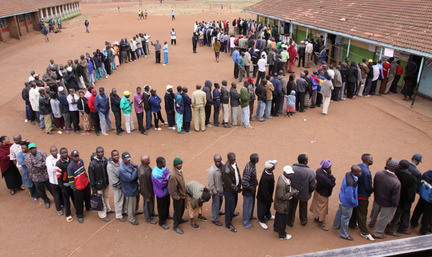
Every year on 1st June, Kenya pauses to commemorate Madaraka Day — the historic moment in 1963 when the country attained internal self-rule from British colonial administration. It is a day wrapped in patriotic symbolism, military parades, national speeches and public celebrations. Yet beyond the pomp and ceremony, lies a deeper national question: What became of the dream that inspired the struggle for self-rule?
For Kenya’s founding generation, Madaraka was never simply about replacing colonial administrators with African leaders. It represented the aspiration for dignity, justice, inclusion and shared prosperity. The liberation struggle was fundamentally about restoring power to ordinary citizens and creating a nation where freedom would be meaningful in the social, political and economic lives of the people.
More than six decades later, Kenya stands at a critical crossroads. On one hand, the country has made undeniable progress. On the other, many citizens increasingly feel alienated from the very promise of independence.
To appreciate the significance of Madaraka today, we must first acknowledge the gains Kenya has achieved since self-rule.
The country has built strong institutions, expanded educational opportunities and developed one of the most vibrant media and civic spaces in Africa. The promulgation of the 2010 Constitution marked a transformative moment in Kenya’s democratic journey by entrenching devolution, public participation, human rights and checks on executive power.
Devolution, despite its imperfections, has brought services and resources closer to the people. Counties have become important centers of local governance and development. Citizens are now more aware of their rights and increasingly willing to question authority, demand accountability and participate in governance processes.
Technology and digital communication have also transformed civic engagement. Young people, CSOs, activists and media practitioners continue to use online platforms to mobilize communities, expose corruption and shape national conversations. Kenya’s creative economy, entrepreneurship culture and innovation ecosystem demonstrate the resilience and ingenuity of its people.
Yet these achievements coexist with deep contradictions.
A growing number of Kenyans feel excluded from economic opportunities. Youth unemployment remains alarmingly high despite an increasingly educated population. Many households are burdened by rising living costs, economic uncertainty and limited access to quality healthcare and social protection.
Corruption continues to erode public trust and weaken service delivery. There are fears that Public resources meant for development are too often diverted for private gain while ordinary citizens bear the burden through increased taxation and deteriorating public services. Political competition frequently revolves around ethnic mobilization, personality cults and short-term populism rather than issue-based leadership and long-term national vision.
Equally concerning is the shrinking civic and democratic space in some sectors. Journalists, activists and civil society organizations increasingly face intimidation, misinformation campaigns and political hostility whenever they hold power accountable. Public discourse has become polarized, emotional and vulnerable to manipulation through digital propaganda and disinformation.
In many ways, Kenya risks celebrating political independence while neglecting social and economic liberation.
This is where civil society organizations must reclaim their historic responsibility.
Civil society has always played a central role in Kenya’s democratic evolution. From resisting authoritarianism in the one-party era to advocating for constitutional reforms and human rights, CSOs have often stood as the conscience of the nation. Today, that responsibility is even more urgent.
Organizations such as Development Through Media (DTM) must move beyond reactive activism and embrace transformative civic leadership rooted in evidence, public engagement and ethical communication.
First, civil society must reinvest in civic education. Democracy cannot thrive where citizens are politically mobilized but civically uninformed. Kenyans need accessible, community-based civic education that explains governance structures, constitutional rights, public budgeting, electoral processes and citizen responsibilities. An informed citizenry is less vulnerable to manipulation and more capable of demanding accountability.
Second, organizations must defend truth and responsible media practice. The digital era has democratized information, but it has also amplified misinformation, hate speech and propaganda. Civil society and media institutions must collaborate to strengthen media literacy and promote fact-based public discourses. The future of democracy depends not only on freedom of expression but also on the integrity of information ecosystems.
Third, civic actors must intentionally create platforms for youth participation. Kenya is a youthful nation, yet many young people remain excluded from formal political processes and decision-making spaces. Young people should not only be mobilized during elections or protests; they must be integrated into governance conversations, leadership development and policy engagement throughout the year.
Fourth, civil society must promote inclusive development and social justice. The dreams of the founding fathers cannot be realized while sections of society remain marginalized due to gender, disability, ethnicity, class or geography. Organizations must amplify the voices of vulnerable communities and advocate for equitable access to opportunities and public services.
Finally, civic organizations must rebuild public trust through integrity, transparency and community-centered programming. Civil society must demand accountability from government and also be seen to practice it internally. Credibility remains one of the most powerful tools for social transformation.
Madaraka Day should therefore not merely be an anniversary of historical memory. It should be a national moment of reflection and recommitment.
The true measure of self-rule is not the existence of African leadership alone, but whether ordinary citizens experience justice, dignity, opportunity and hope in their daily lives.
Kenya’s founding generation handed us political freedom. Our generation must now deepen democratic culture, strengthen institutions and secure economic and social justice for all.
The work of nation-building remains unfinished.
As Kenyans celebrate Madaraka Day this year, the challenge before us is clear: to move beyond symbolic independence and build a society where freedom is lived, shared and protected.
That is the Kenya the founding fathers dreamed of. That is the Kenya we must continue to fight for.
About the Authors
Dommie Yambo Odotte, a media practitioner and Applied Psychologist, is the Executive Director/Producer at DTM. Edwin Wanjawa, a Sociologist and Media Scholar, Teaches at Pwani University, and is Programme Associate at DTM.

 Radio Baraza