


Belinda Arika, DevReporter, Nairobi County

Key Highlights
- Waste as everyday reality
- Health and Livelihood risks
- The governance gap
Waste as everyday reality
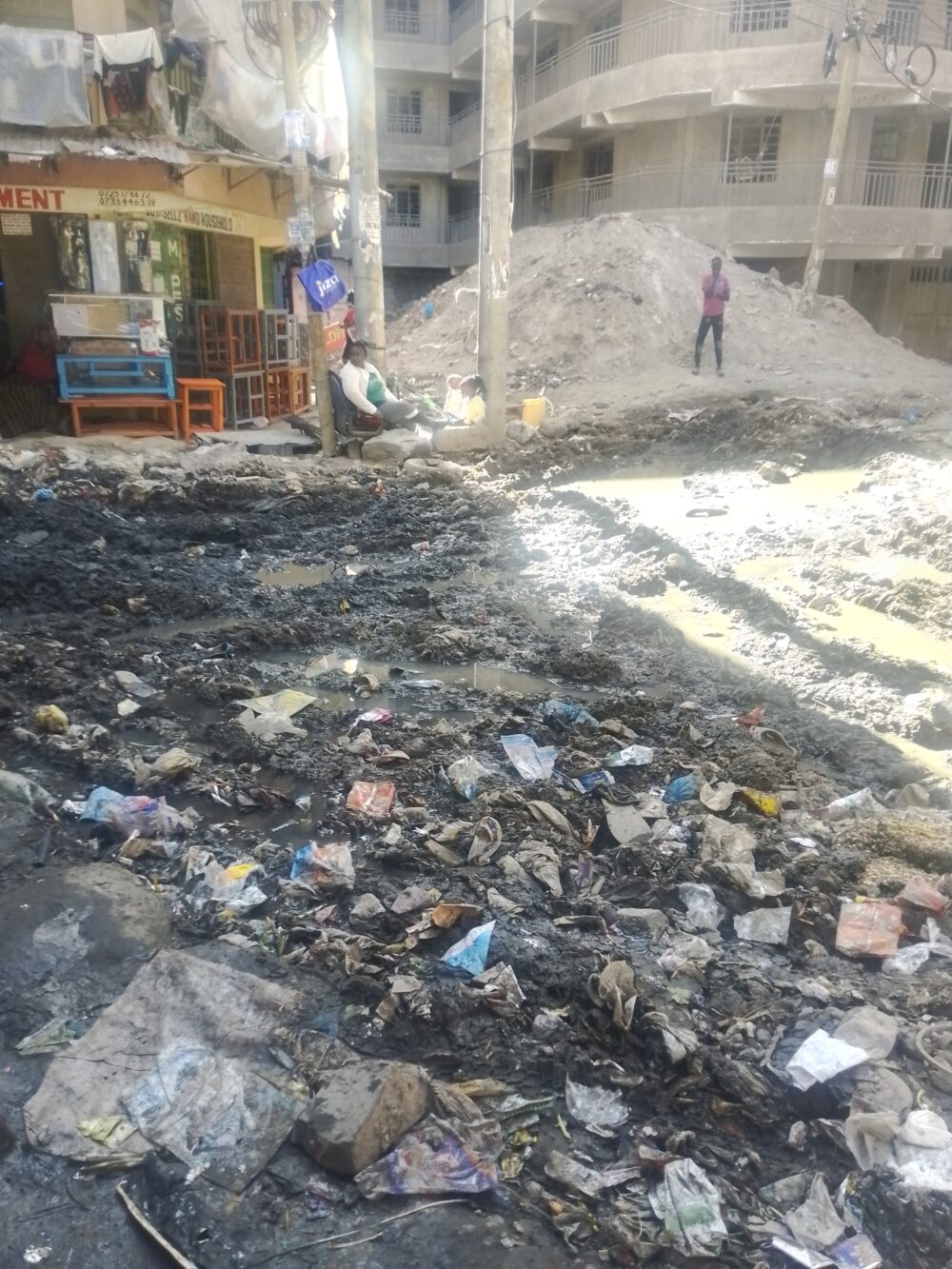
Embakasi’s Pipeline estate generates thousands of kilograms of household waste each week, yet consistent collection and drainage management remain irregular in parts of the neighbourhood. For residents, unmanaged waste is no longer an occasional disruption it is part of daily living.
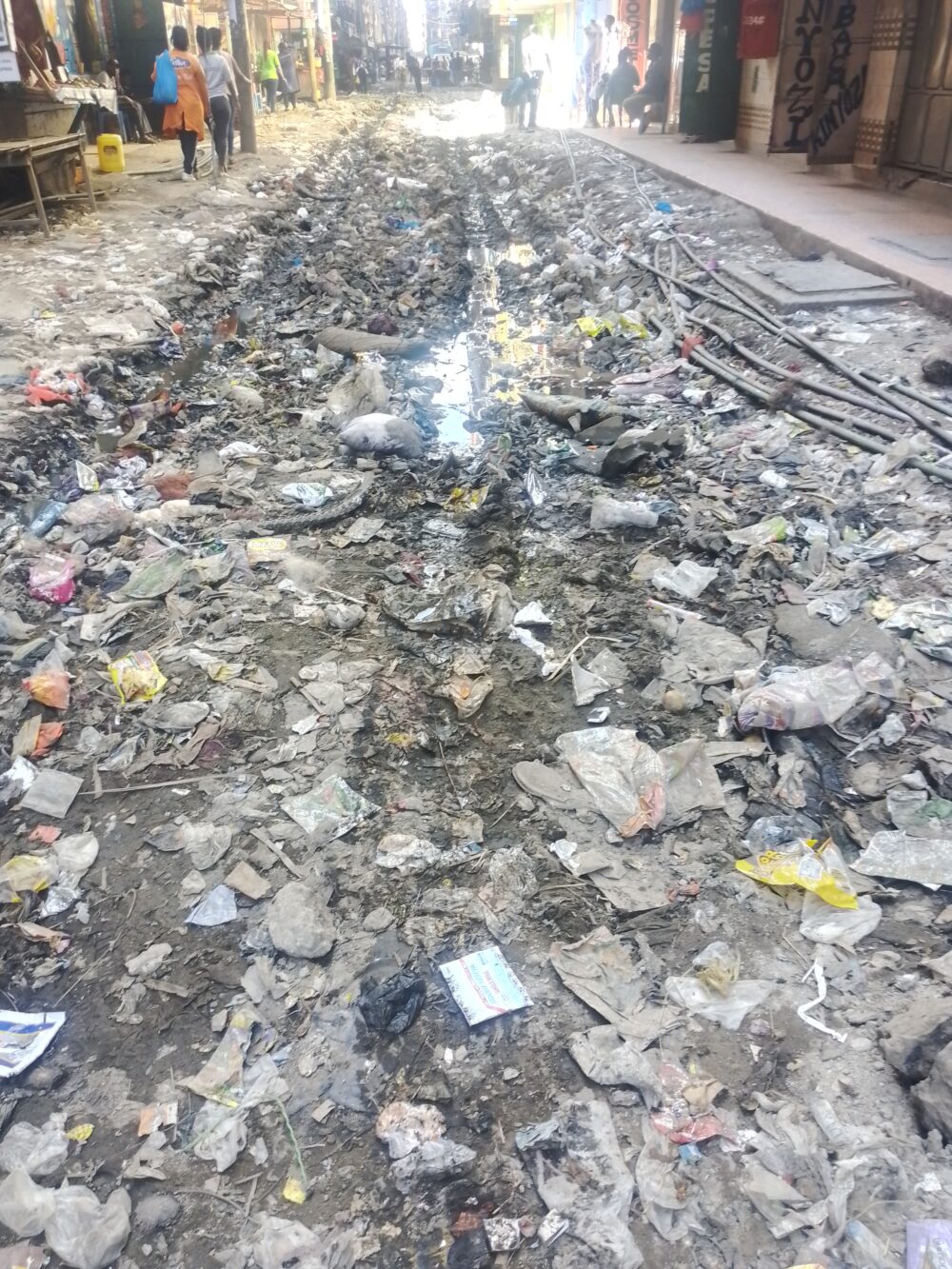
Garbage spills onto sidewalks, road edges and drainage channels between tightly packed residential blocks. Mixed refuse; food remains, plastic packaging, construction debris, accumulates in corners and alleyways. What appears to be scattered dumping reflects a structural strain: rapid population growth without proportional investment in sanitation infrastructure and enforcement.
Health and Livelihood Risks
In one narrow alley, Eunice, a long-time resident who runs a roadside stall, points to a heap of waste metres from where she sells food.
“The living conditions we experience are difficult,” she says. “Sewage sometimes passes right in front of your door. This is where we live and raise children.”
Her concern is medical. She says her children frequently fall ill after playing near contaminated areas.
“Most of the time, I’m in hospital,” she explains. “They get infections from the dirt around where we live.”
A few blocks away, John Simba who owns an electrical appliance shop says that the problem worsens during heavy rains.
“When it rains, the drainage gets blocked and sewage flows into the shop,” he says. “Customers don’t come. Business goes down, yet this is how we earn our daily bread.”
For small traders operating within narrow margins, disrupted access and health-related absences translate directly into reduced income. In this way, waste management becomes not just a sanitation issue but also an economic one.
A Public Health Concern
Environmental health expert, Tobias Muguse, describes the situation as a predictable public health risk. Uncollected waste and stagnant drainage create breeding grounds for disease-causing organisms, with children particularly vulnerable.
“These conditions increase exposure to sewage,” he says. “They lead to preventable illnesses such as diarrhoeal diseases, skin infections and respiratory problems.”
Over time, he warns, communities may adapt to these risks. When environmental hazards become routine, urgency declines, yet the health burden continues.
This normalisation of risk has broader development implications. Sustainable urban growth, as envisioned in Kenya Vision 2030 and reflected in Sustainable Development Goals 3, 6 and 11, depends on safe living environments.
The Governance Gap
The Constitution of Kenya guarantees every person the right to a clean and healthy environment under Article 42, yet in Pipeline, unmanaged waste remains woven into everyday life. Kenya’s Vision 2030 envisions, ssustainable urban development, but estates like Pipeline illustrate the strain between rapid housing growth and service delivery.
In July 2025, Nairobi County officials announced enforcement measures targeting illegal dumping in Pipeline. They warned landlords and caretakers to comply with waste management by-laws requiring cleanliness around buildings. The official said the challenges in Pipeline are linked to rapid population growth and increasing pressure on existing infrastructure. He noted that enforcement and collection efforts are ongoing and emphasized the importance of cooperation between the county, property owners, and residents, in improving waste management practices.
Some sections saw temporary cleanup efforts. However, residents report that enforcement has been uneven. Large parts of the estate continue to experience blocked drainage and irregular waste collection.
Beyond Garbage: A Development Question
Pipeline’s situation highlights a broader development concern. As Nairobi expands, housing density has increased faster than infrastructure upgrades. Where sanitation systems fail to keep pace, environmental risk concentrates in lower-income, high-density settlements.
Waste management, therefore, is not only about collection trucks. It reflects governance capacity in service delivery. For residents like Eunice, constitutional guarantees matter less than whether garbage trucks arrive consistently. Until that gap narrows, the promise of a clean and healthy environment remains written on paper, not visible on the ground.
Until that gap closes, waste will remain more than a sanitation problem it will remain a visible marker of uneven urban development in Nairobi.



 Radio Baraza