


By Dennis Gathi, DevReporter, Nakuru County

At a Glance
- The Crisis: Up to 86% of Nakuru County residents suffer from dental fluorosis – brown, stained teeth caused by excessive fluoride in volcanic soils
- The Solution: Joel Kariuki Kamau, a self-taught herbalist, uses traditional plant medicine to permanently restore white teeth for Kshs 600 per tooth
- The Impact: 600 clients treated monthly over 16 years, transforming lives of job seekers, travelers, and community members
- The Response: County governments implementing defluoridation projects and water blending to meet WHO standards
- The Future: Combining indigenous knowledge with modern interventions to tackle Kenya’s widespread fluorosis crisis
Imagine a smile that holds you back—brown, stained teeth dimming your confidence in a job interview or a new country.
In Nakuru County, Kenya, where fluoride-laced groundwater taints grins, one man is rewriting this story.
Joel Kariuki Kamau, a self-taught herbalist, is startling residents into seeing their smiles in a new light, merging ancestral wisdom with modern needs to battle fluorosis. His journey, paired with county innovations, offers a fresh perspective on a decades-old challenge.
A Personal Mission Born from Pain
Joel’s story begins in his childhood, where fluorosis—a condition caused by excessive fluoride in water—left his teeth discolored.
“Growing up in Rift Valley, stained teeth were common,” he recalls, though for him, it also attracted ridicule that in the end, eroded his self-esteem.
At seven, his mother’s herbal remedy, rooted in his grandfather’s teachings, restored his smile. This family legacy ignited a mission. After college, Joel saw peers facing the same stigma. Some job seekers were rejected, and prospective travelers feared judgment abroad.
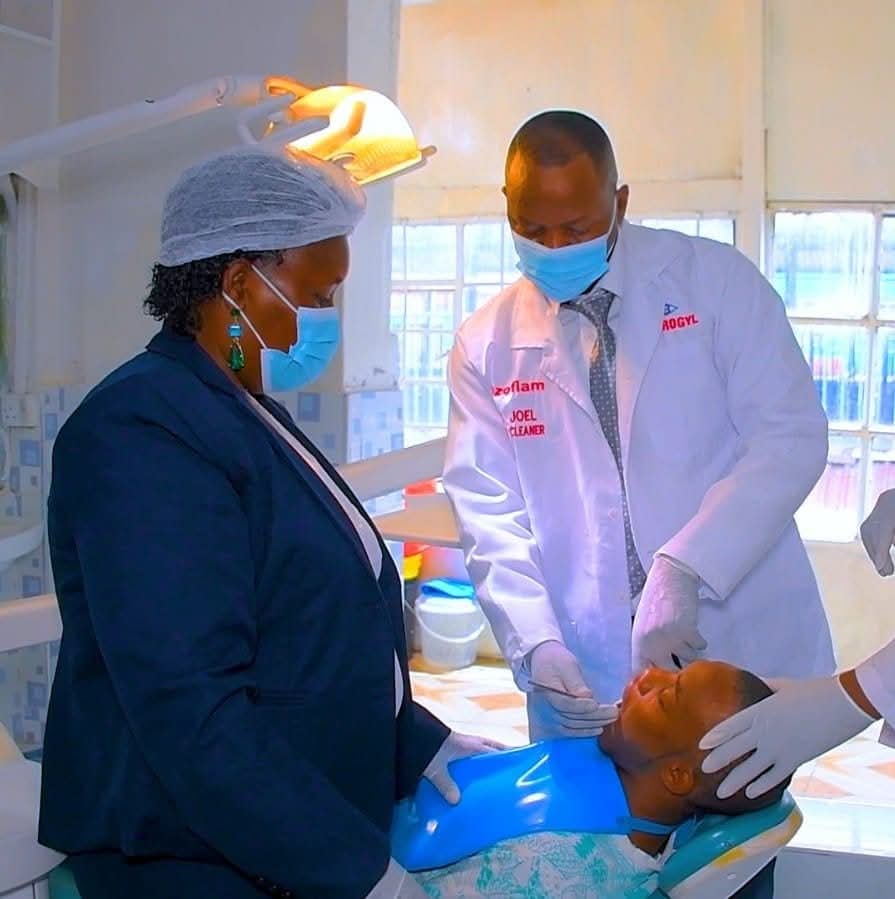
“That’s how Dr. Joel Tooth Cleaner was born,” he says, his clinic now a beacon in Nakuru’s Biashara Centre.
The Hidden Cost of Fluorosis
Fluorosis isn’t just cosmetic. In Nakuru, where volcanic activity spikes groundwater fluoride levels to 2,800 mg/L, it affects up to 86% of residents in some areas. Teeth chip, gums weaken, and skeletal issues emerge as a result of high fluoride levels.
Around Lake Elementaita, 51.99% of people show signs, with adolescents hit hardest. Nationally, 23.7% of adults have enamel fluorosis, often unnoticed locally but a barrier elsewhere.
“Ladies felt more vulnerable,” Joel notes, echoing stories of women shying away from smiles.
Clients flock to Joel’s clinic every day, including job seekers prepping for army or police recruitment, travellers to Dubai or Qatar, and even Sudanese visitors seeking “neutralization” before settling in fluoride-heavy zones. His work restores not just teeth but dignity.
Nature’s Answer to a Modern Problem
Joel’s method is elegantly simple: he grinds local herbs, which includes lemons, oranges, and plants from Naivasha, Baringo, Kericho, and Bomet, into a powder applied for 15 minutes. The treatment is tailored to each client’s stain type. This mixer sees to erase discoloration permanently. He charges Kshs 600 per tooth, with and additional Kshs 700 for maintenance medicine.
He serves close to 600 clients monthly, and his business thrives on word-of-mouth.
“We’ve helped so many,” he says.
However, there is still a need to consult a dentist in some cases. As nurse, Emily Makokha notes,
“Herbal remedies address aesthetics, but structural damage needs professional care.”
Joel’s herbs were recently approved by Kenyatta University and certified by the Ministry of Culture and Heritage. This is a step in the right direction for herbal medicine usage in Kenya.
County Steps Up: Science Meets Strategy
Nakuru County is tackling the root cause of this problem. Dr. Nelson Maara, County Executive for Water, partners with the Aquaya Institute to map fluoride belts in Naivasha, Njoro, and beyond.
“Naivasha is the worst,” he says, with boreholes exceeding safe limits. The county blends river water with borehole supplies, serving over one million through Nakuru Water and Sanitation Services Company (Nawassco). Naivasha Water and Sanitation Company (Naivawasco), under Engineer Nahashon Wahome, uses German synthetic bone char for large-scale defluoridation.
Tanzania’s models whose success offer a much-needed inspiration for Kenya. The Kilimanjaro concept uses rainwater harvesting and low-cost biochar filters, reducing fluoride to acceptable levels. These scalable solutions could transform Kenya’s Rift Valley.
A Brighter Future
Joel’s herbal craft and county innovations weave tradition with modern ideas, crafting a future where no smile is dimmed by fluoride’s shadow. His work, backed by Kenya’s Oral Health Strategic Plan 2022-2026, empowers communities, proving that local solutions can spark global inspiration. Ready to learn more? Explore defluoridation techniques and also share this story to spread hope.
Further Reading and Resources:
- Kenya National Oral Health Strategic Plan 2022-2026
- Tanzania’s Defluoridation Innovations
- Aquaya Institute’s Water Quality Research

 Radio Baraza