


By Amondi Arika, DevReporter, Siaya County

Key Highlights
- Families in Ugenya are embracing biogas, a renewable energy source derived from cow dung and organic waste.
- Biogas is produced by mixing cow dung and water in an anaerobic digester, where fermentation generates methane gas.
- According to Kenya’s Ministry of Energy, over 80,000 households now use biogas across the country.
In Siaya’s Ugenya sub-county, the morning air is noticeably clearer—not just due to the absence of wood smoke, but as a result of a transformative shift in energy use.
Families in Ugenya are embracing biogas, a renewable energy source derived from cow dung and organic waste. This cleaner, safer, and more sustainable alternative, replaces traditional charcoal and firewood.
From Charcoal Struggles to Clean Cooking
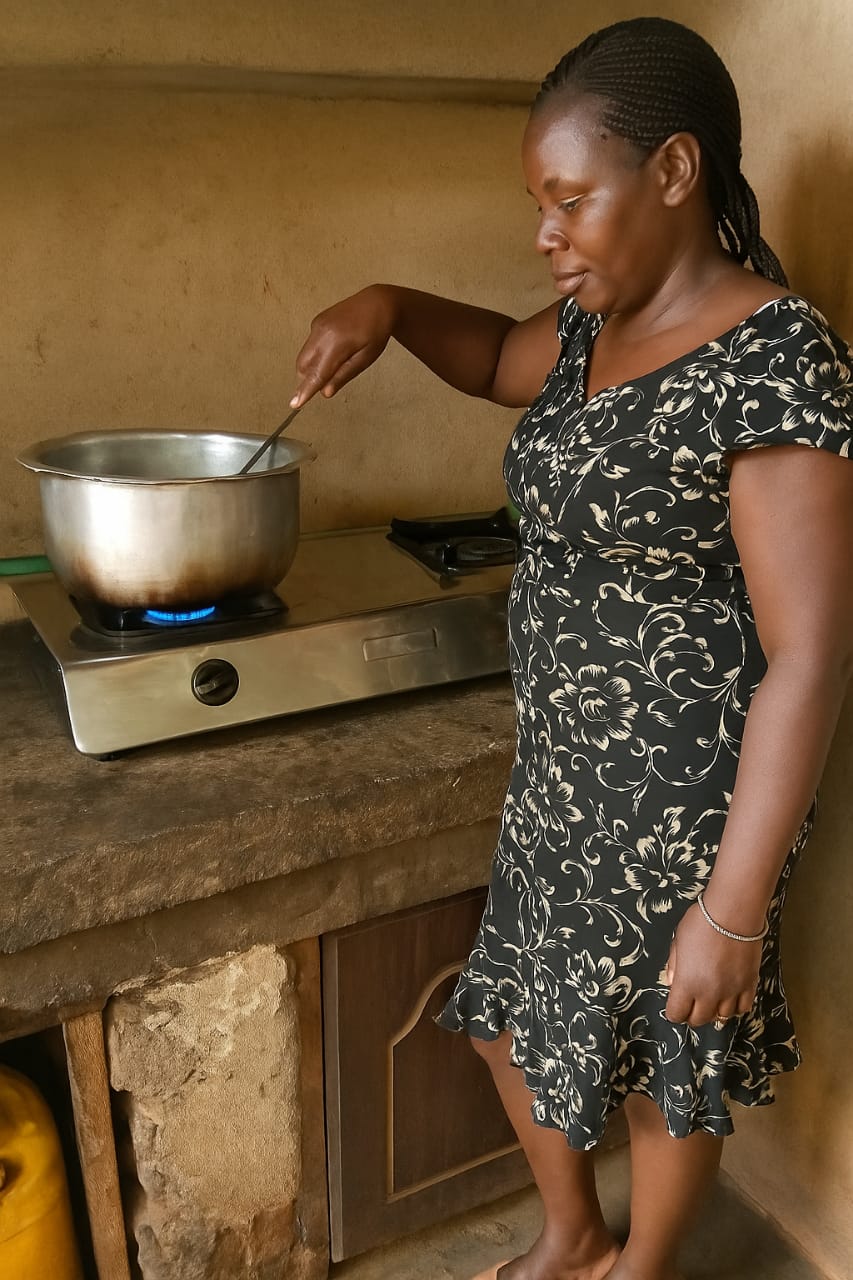
For years, Veronica Achieng’, a mother of four, would wake before dawn to gather firewood or buy expensive charcoal, often costing over KSh. 800 per sack.
During the rainy season, the task of collecting firewood or purchasing charcoal became a daily struggle, with muddy paths and wet logs turning cooking into a survival challenge.
“Sometimes I borrowed a wheelbarrow or paid someone to transport wood. I could not afford to miss a day; we needed to cook,” Veronica recalls.
Now, her mornings are smoke-free and stress-free, thanks to a biogas unit installed behind her home.
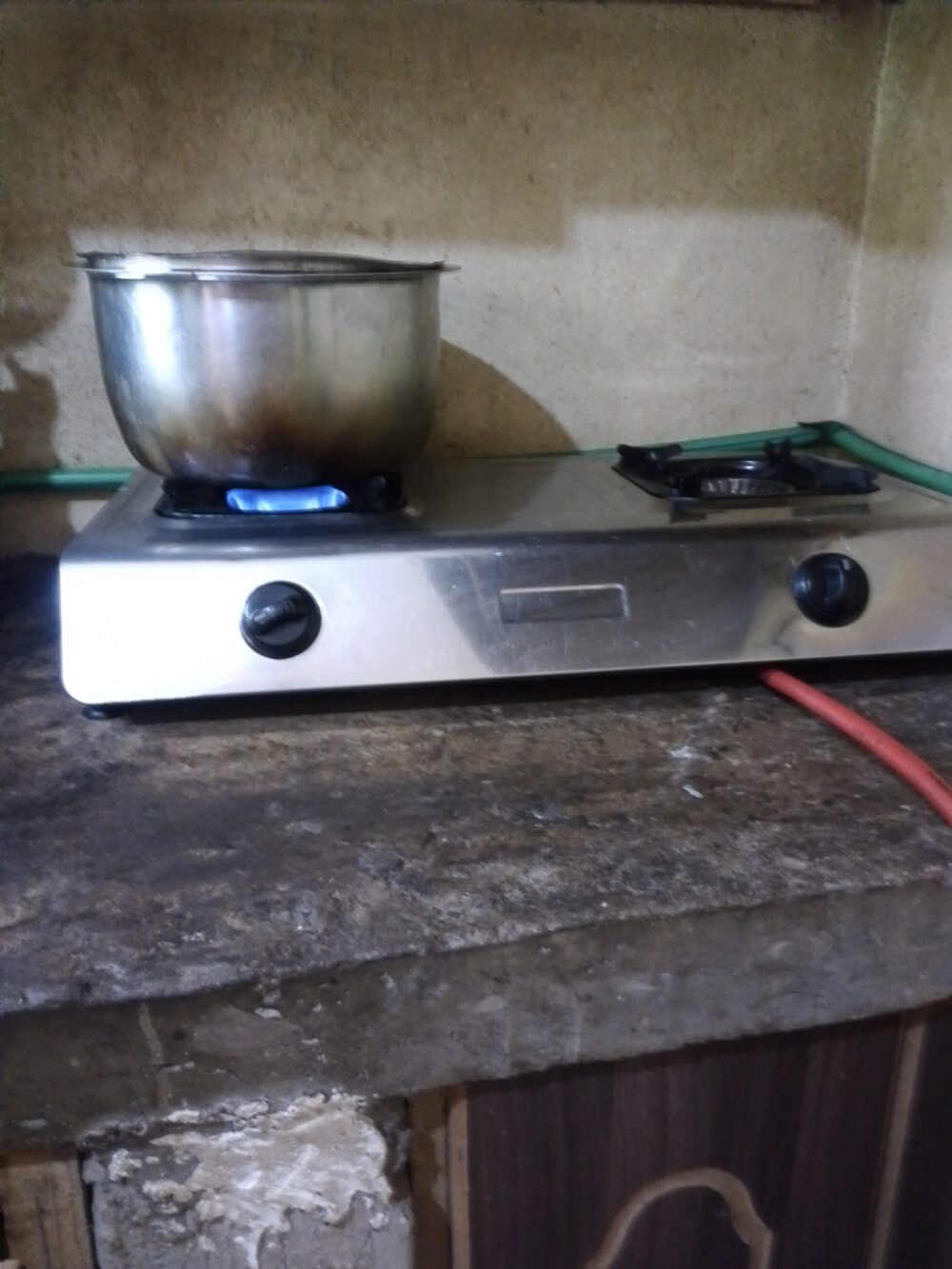
A biogas flame in Veronica’s kitchen is smokeless, efficient, and quiet. Photo/Amondi Arika.
Anaerobic Digester
Biogas is produced by mixing cow dung and water in an anaerobic digester, where fermentation generates methane gas. This gas is then piped directly to a cooking stove.
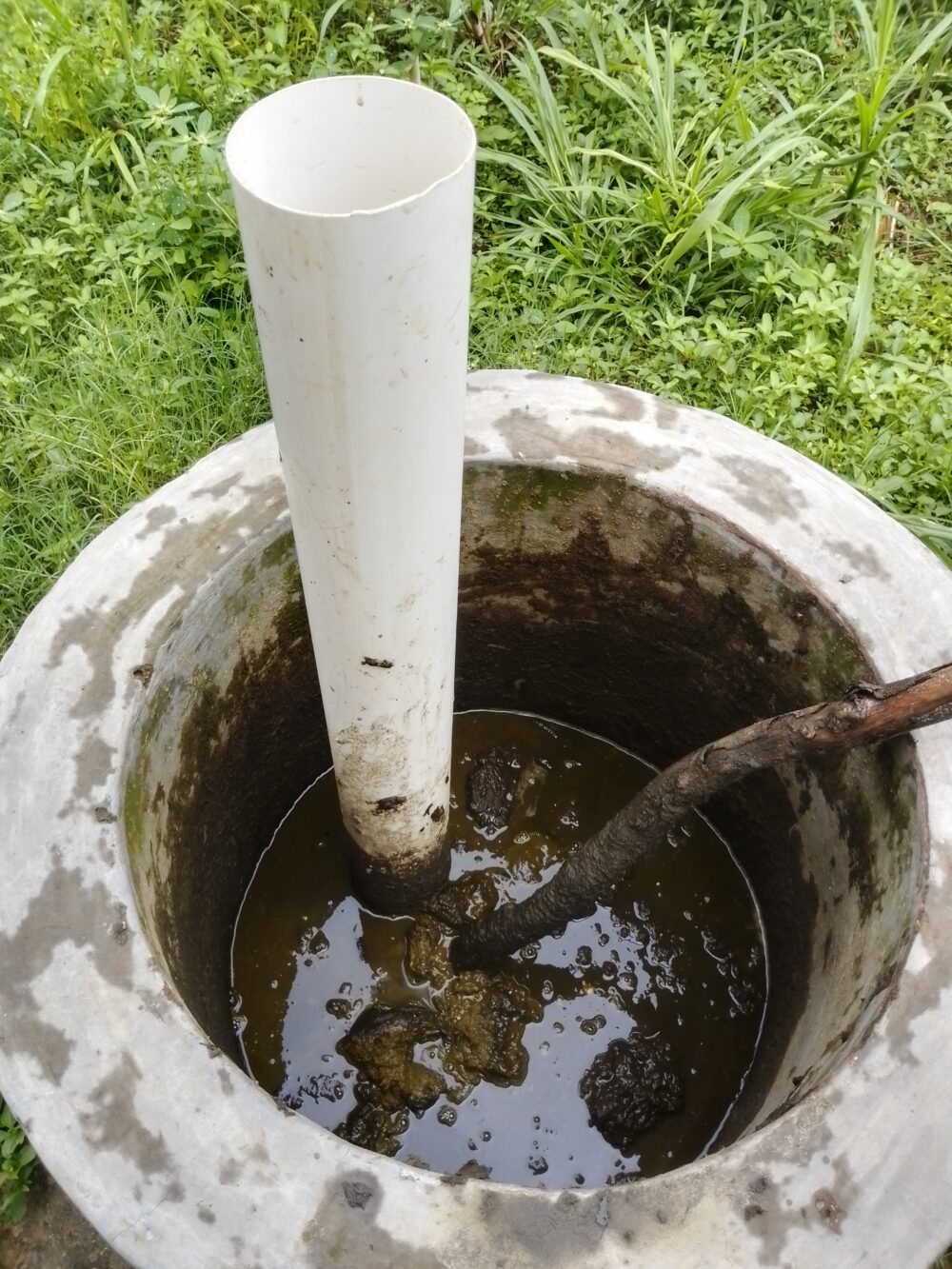
Biogas digester where cow dung and water are mixed to generate methane. Photo/Amondi Arika.
According to Kenya’s Ministry of Energy, over 80,000 households across the country now utilise biogas, and this number continues to grow due to increased awareness and innovation.
Cleaner Homes, Healthier Families
Traditional cooking methods in rural Kenya, primarily open fires or charcoal stoves, expose women and children to harmful levels of indoor air pollution, leading to respiratory illnesses like asthma and pneumonia.
Dr. Innocent Oluoch, a clinical officer at Tingare Dispensary, states: “Switching to biogas drastically reduces exposure to harmful smoke and particles, protecting families from chronic lung damage.”
Kenya’s 2010 Constitution enshrines the right to a clean and healthy environment (Article 42) and access to health and social benefits (Article 43).
The adoption of biogas represents a step toward realising these rights.
Supported by national frameworks such as the Energy Act (2019) and the Climate Change Act (2016), clean energy has become a policy-backed priority.
The biogas movement also aligns with Sustainable Development Goal 7, which promotes affordable and clean energy, and supports Kenya Vision 2030 under its environmental pillar.



 Radio Baraza