


By Rebecca Wangari, DevReporter, Murang’a County

Key Highlights
- Most women in Murang’a are logging in for the first time, learning how to use computers, navigate the Internet, and discovering new avenues for financial independence.
- Digital empowerment is recognised as a crucial factor in unlocking economic opportunities in the digital realm.
- Men in Kenya have significantly higher digital literacy rates than women, with this disparity particularly pronounced in rural areas.
- Addressing this digital gap requires a multifaceted approach to bring women, girls, and marginalised communities into the technology space.
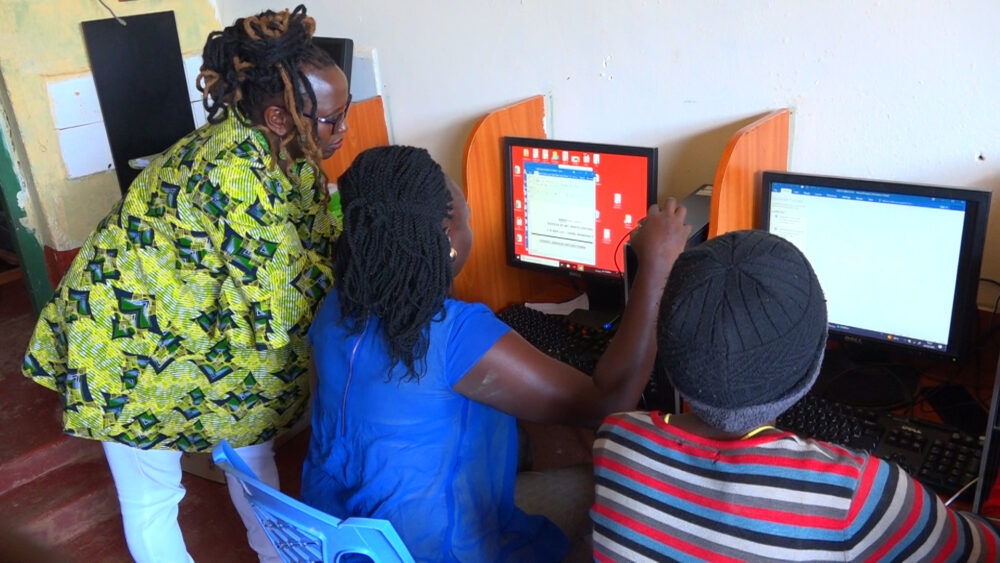
In the hilly villages of Murang’a, most women are logging in for the first time, learning how to use computers, navigate the Internet, and discover new avenues for financial independence.
The Centre for Women Empowerment in Technology (CWE-TECH), a non-governmental organisation, is leading this initiative to enhance digital skills among women in rural areas by offering free computer lessons.
Judy Wanjiku, one of the programme’s beneficiaries, recalls having no prior knowledge of computer operations.
After completing the training, she can now perform basic tasks and independently explore the Internet—something she previously needed assistance with.
“I am very excited to have acquired these skills. I will use this knowledge to navigate the digital space because there is so much to learn,” she said.
Seeking Online Jobs
Stella Kabura, who completed secondary school last year, has enrolled in the training to gain skills that will help her seize opportunities and earn income.
“I plan to use these skills to look for online jobs that can support me while I attend college, as I do not want to burden my parents,” she explained.
Digital empowerment is recognised as a crucial factor in unlocking economic opportunities in the digital realm.
However, men in Kenya have significantly higher digital literacy rates than women, with this disparity particularly pronounced in rural areas.
Bridging the Digital Gap
Addressing this digital gap requires a multifaceted approach to bring women, girls, and marginalised communities into the technology space.
Judy Makira, the organisation’s Chief Executive Officer, emphasises that women are trailing behind men in technology, highlighting the urgency to bridge this divide.
A survey conducted by CWE-TECH two years ago revealed that the ratio of digital skill disparity between men and women stands at 80:20.
Makira noted that the programme, which offers free basic computer skills training, aims to empower women to explore the digital landscape and secure online jobs.
“We recognised that women in rural areas lack fundamental digital skills, which led us to develop this programme,” she remarked.
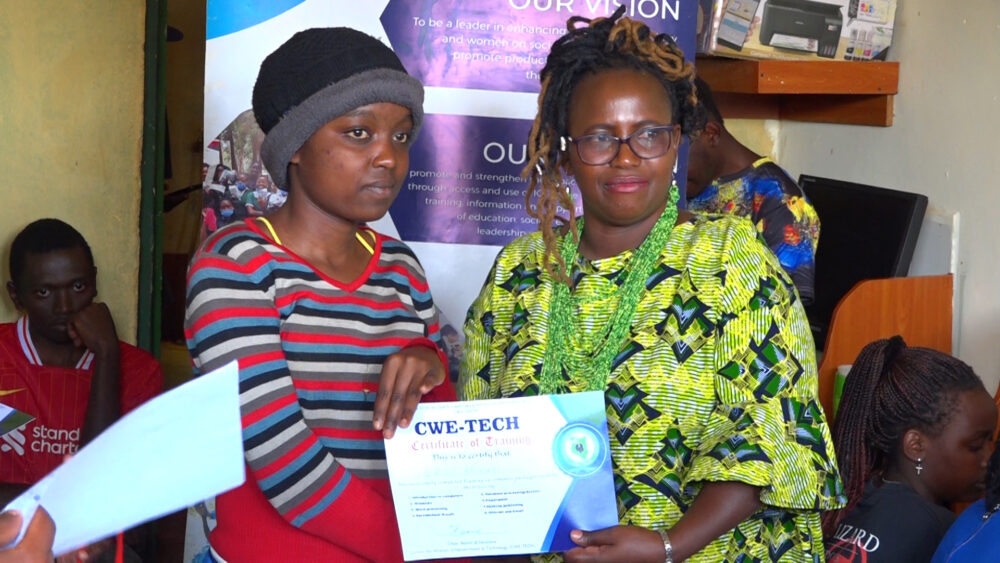
The training lasts two months, after which participants receive a certificate to help them further their technological skills.
“Our primary goal is to ensure that women understand technology and its dynamics, enabling them to explore, learn, and seize opportunities,” Makira concluded.
Sustainable Development Goals
Bridging the digital divide is essential for achieving the Sustainable Development Goals (SDGs), serving as a vital pillar that intersects various sectors. This effort can significantly contribute to multiple goals, including quality education (SDG 4), gender equality (SDG 5), and innovation and infrastructure (SDG 9).
By equipping rural women with digital skills, CWE-TECH is helping advance Kenya’s Vision 2030 goal of creating a digitally empowered nation while also contributing to the SDGs.
Kepha Githinji, an ICT officer, emphasises the abundance of opportunities in the digital space, highlighting the necessity for individuals to possess basic digital skills.
Githinji notes that acquiring digital empowerment skills can significantly address the country’s high unemployment rate, enabling individuals to earn a living in the digital economy.
The government has been working to create various platforms for digital empowerment, aiming to bridge the digital gap for marginalised and minority communities across the nation.
Digital Inclusion
Initiatives such as the digital literacy programme and Ajira, along with the establishment of digital hubs nationwide, are designed to promote digital inclusion.
Principal Secretary for Broadcasting and Telecommunications, Mr. Stephen Isaboke, stated that the government plans to establish 1,450 digital hubs and 25,000 Wi-Fi hotspots for public use.
For women like Judy and Stella, navigating the digital world is not just a skill; it is a pathway to independence.
As Kenya moves towards a digital economy, the quiet clicks of women in Murang’a are helping to bridge one of the country’s most persistent divides.