


By Rebecca Wangari, DevReporter, Murang’a County

Key highlights
- Plastic waste pollution is one of the most pressing environmental issues, including in Murang’a county
- Several measures have been proposed to help deal with the menace
- Use of alternative bio degradable materials can be a solution to the plastic waste
As plastic pollution clogs drainage systems and chokes the planet, a Murang’a innovator is turning the crisis into a solution- one litre of fuel at a time.
The Murang’a based innovator has found a promising solution to Kenya’s plastic pollution crisis – converting waste into diesel fuel.
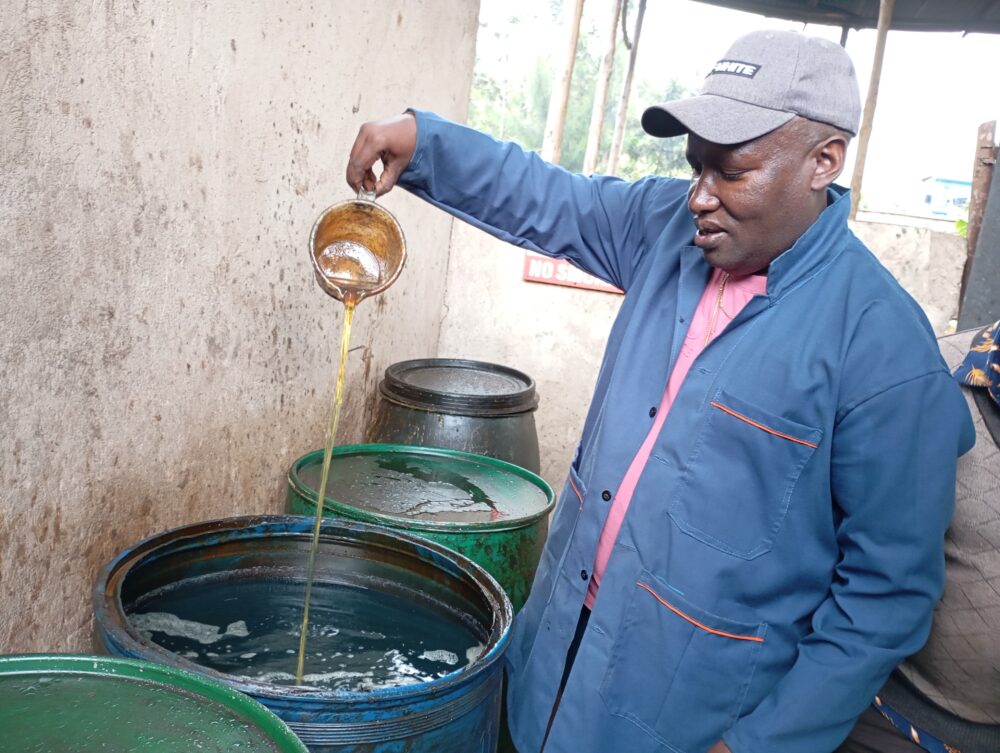
James Muritu has been producing diesel from plastic waste, an innovative idea that came through after thorough research conducted over a period of two years, with an additional one and a half experimenting it for fuel production.
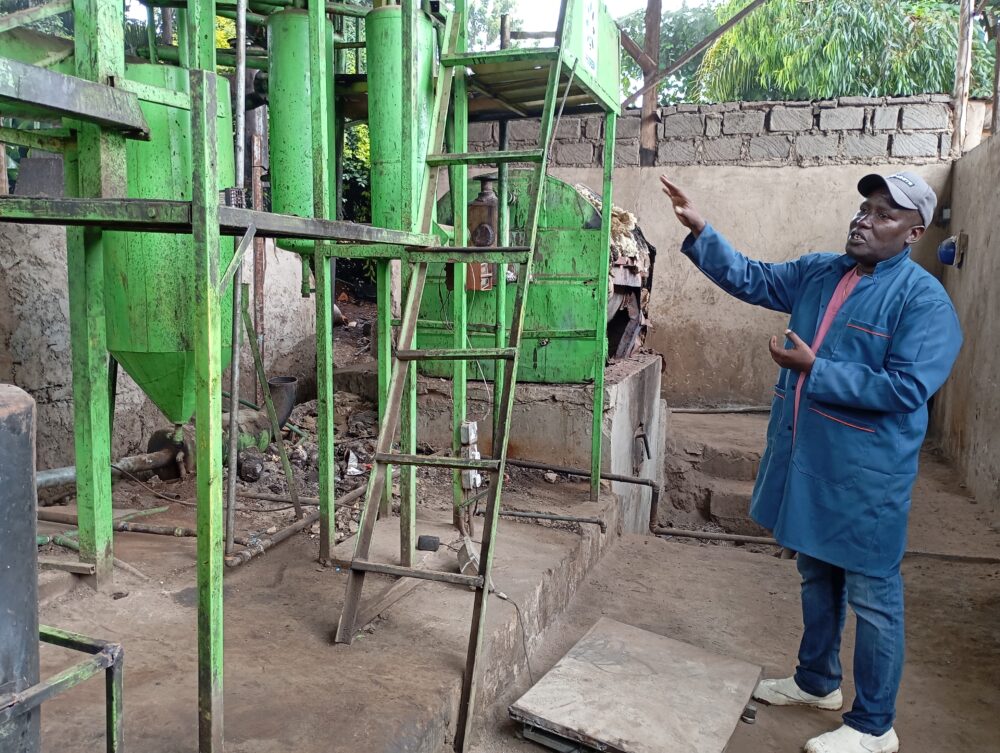
With a background in software and hardware engineering, Muritu designed a system to convert plastic waste into fuel.
“The project is capital intensive with regulatory compliance also proving costly due to the many certifications required,” remarked Muritu.
“It took me a lot of time to perfect the idea, after which I registered my company dubbed ‘Progreen’ in mid-2023. However, we only started trading in 2024 due to the long certification process required for the product,” he said.
Alternative fuel
He intimated that this was the period when fuel prices in the country had skyrocketed and he was excited to have found a way of producing alternative fuel.
James say that the Kenya Bureau of Standards (KEBS) has certified the product, which is largely being used in machinery.
The innovation saw him get an award from KEBS for the most innovative diesel product in 2024.
“I found a market niche in the industrial sector where a majority organisations use machines and hence the alternative fuel would help them cut the cost of production,” said Muritu.
Muritu further says that he has ensured that the entire process leaves no carbon prints. He does this by installing a scrubbing system, which ensures that there are no emissions, thus keeping the atmosphere clean.
Currently he is producing 4,000 litres of fuel, which is being used by one major manufacturer in the country. He says that if he got funding to expand his factory, he could produce at least 50,000 litres, which can be sold in the market.
Further, Muritu indicates that he is now targeting to increase the production of petrol to make it possible for the business to expand and go commercial with the product.
“We have 50 consumers who are helping us in piloting of the product, and once it certified, we shall start selling it in the market, particularly targeting boda boda riders, as well as farmers who have small machinery,” he added.
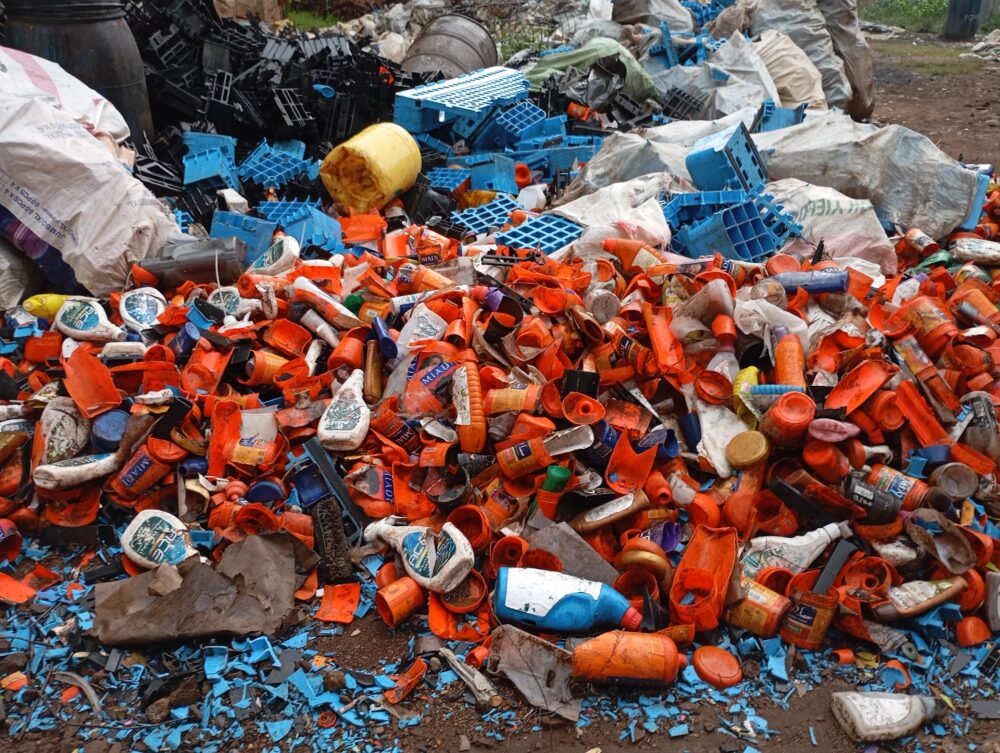
Muritu hopes that the initiative will play a significant role in getting the plastic waste off the environment, noting that since he started recycling, he has used over 80,000 tons of plastic waste. When converted into carbon rating, this amounts to 200 tons of carbon emissions.
“This is waste which could be clogging the drainage channels or be burnt in open air, producing the greenhouse gases which are hazardous to the environment,” he further remarked.
Cleaning the environment
Besides recycling the plastic, Muritu also uses organic waste to make heating blocks, which he uses to heat up his furnace.
He says that this ensures the environment remains clean and there are no piles of rotting bio waste, which produce methane gas. The residue from the plastic waste is further used as a binding agent, which is also used to makes the blocks
“Currently I am using waste from an avocado oil processing plant, and because they don’t have anywhere to dispose the waste, they bring it to me,” said Muritu
“The garbage collectors also bring to me the organic waste which we dry, grind and mix together to make the brick,” he added.
His plan is also to maximize on the production heating blocks, his target being the local tea factories, which rely heavily on firewood for their production.
He aims to produce up to 80 tons of heating block to be supplied to local tea factories, thus reducing on the need to cut down trees for the same purpose. This action will ultimately help in conserving the environment.
“I am looking for partners to fund my project so that we can expand it to industrial capacity and enable us to do the recycling in bigger volumes,” he remarked.
Job opportunities
The venture has seen him create job opportunities. For example, he has seven employees who work full-time at the factory. He has also engaged about 20 people who collect the plastic and organic waste as raw material for the venture.
To protect his products, he has patented the process with the Kenya Industrial Property Institute, adding that this will ensure that nobody duplicates his idea.