

By Ruth Mbinya, Student at Technical University of Kenya on attachment at DTM (2025)
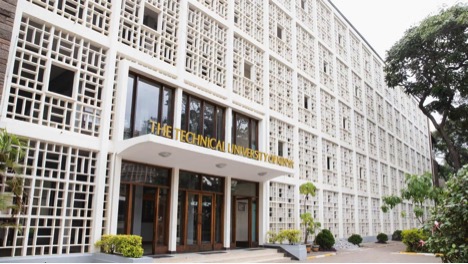
When lecturers in Kenya’s public universities went on strike on September 17, 2025, the ripple effects were immediate. Classrooms went silent, offices shut down, and entire academic calendars were thrown into disarray. At the Technical University of Kenya (TUK), it is graduating students who are feeling the sharpest pinch. What should have been weeks of final submissions, clearance, and preparations for graduation has now turned into uncertainty and frustration.
Students Caught in Between
For many finalists, the strike has disrupted critical steps needed to graduate.
Hendrique Makokha, a finalist at TUK, says her portal is blocked and she cannot clear her fees.
“I needed to reactivate my portal so that I could confirm how much I owe before clearance. But the finance and IT offices are closed. I tried going to administration, but the doors are locked. There is no one to help me, so I don’t even know what balance I need to pay,” she said.
Angela Ajwang’, also a finalist, has been left stranded after losing her student ID.
“You cannot graduate without your school ID. I was told I must first print a letter from the cyber, take it to the police for an abstract, and then return to the university for processing. But with the administration offices closed, I cannot move forward. I feel stuck and disappointed.”
Alpher Aromba, another finalist, has been working on his research project but says his supervisor is unreachable.
“I have been forwarding my work to my supervisor, but there is no feedback. When I tried to call, I was told lecturers are not attending to students during the strike. It feels like my effort is going to waste,” he lamented.
Dozens of other students echo the same frustrations. Some have printed and bound their projects but cannot submit them. Others, still finalizing research, have no supervision. Those on attachment cannot collect logbooks or insurance forms because departmental offices remain locked.
“We send emails, texts, even letters—but there is no reply,” one student said. “It’s like the whole institution is on pause.”
Lecturers’ Perspective
While students remain stranded, lecturers argue that the strike is about more being absent from duty.
Dr. Rhoda Nyambane, Chairperson of the Journalism and Media Studies Department at TUK, explained:
“We want to teach, and we want our students to finish on time. But the government must respect the Collective Bargaining Agreement (CBA). Until that happens, everything is at a standstill.”
Dr. Kidenda, Head of Department, noted that students on attachment face additional hardship:
“Many require logbooks and insurance letters for their internships. But with the department closed, they cannot access these documents. We understand their frustration, but staff cannot resume work until the matter is resolved.”
Other lecturers have voiced concerns about transport costs and unpaid loans.
“We cannot afford to come to campus for one or two students while we are unpaid. Fuel is expensive, fares are high, and we also have families to care for,” said one lecturer.
The exam office has also gone quiet. Students hoping to confirm their marks or clear discrepancies with the exam coordinator have nowhere to turn.
“The system is closed, and I cannot release results until the strike ends,” explained Dr. Orleans Onindo, TUK’s exam coordinator.
The National Standoff
The roots of the strike lie in billions of shillings in arrears from the 2017–2021 Collective Bargaining Agreement. Lecturers’ unions argue the government has not honored its commitments, while the state insists much of the money has already been disbursed.
Grace Nyongesa, National Chairperson of the University Academic Staff Union (UASU), has vowed that the strike will continue:
“We shall remain outside until the issues raised are addressed. There are no negotiations currently underway. Discussions on the 2025–2029 CBA must also begin immediately.”
On the government’s side, Prof. Julius Ogamba, Cabinet Secretary for Education, has disputed the unions’ figures. Appearing before the Senate, he said:
“The second issue was on the 2017–2021 CBA. Under that agreement, the lecturers argue that Sh7.9 billion was to be paid. However, SRC says Sh7.2 billion was paid, leaving a balance of Sh624 million. The team went to court, and the court ordered the strike to stop, pending reconciliation. The parties will return to court on October 6 to confirm the findings.”
But UASU has flatly rejected the CS’s position, insisting that no money has been paid and the entire Sh7.9 billion is still owed. The union however says that the amount is non-negotiable; it must be cleared in full, or lecturers will stay out of classrooms.
Between Court Orders and Empty Classrooms
The Employment and Labour Relations Court has ordered the strike suspended. However, UASU has ignored the ruling, contending that lecturers will not return to work until arrears are cleared.
Vice chancellors have threatened to withhold salaries for striking staff, but the unions dismiss this as intimidation. Lecturers remain firm that universities will stay shut until they are paid.
Where Do We Go From Here?
At TUK, the human cost of the strike is visible. Hendrique cannot clear her portal. Angela cannot replace her ID. Alpher cannot submit his research. Hundreds more face delayed graduations, stalled careers, and uncertain futures.
Lecturers, too, feel cornered—unable to teach, but unwilling to yield. Government, courts, and unions are locked in a cycle of blame and demands.
The longer the standoff drags, the more futures remain on hold. For students who have given years of effort and sacrifice, and for families who have invested their resources, education cannot be left in limbo.
As one finalist said simply:
“We must graduate after all. But right now, we don’t even know if that will happen this year.”
The strike is not just about money—it is about the futures of Kenya’s young people. And until a solution is found, those futures remain stranded.