


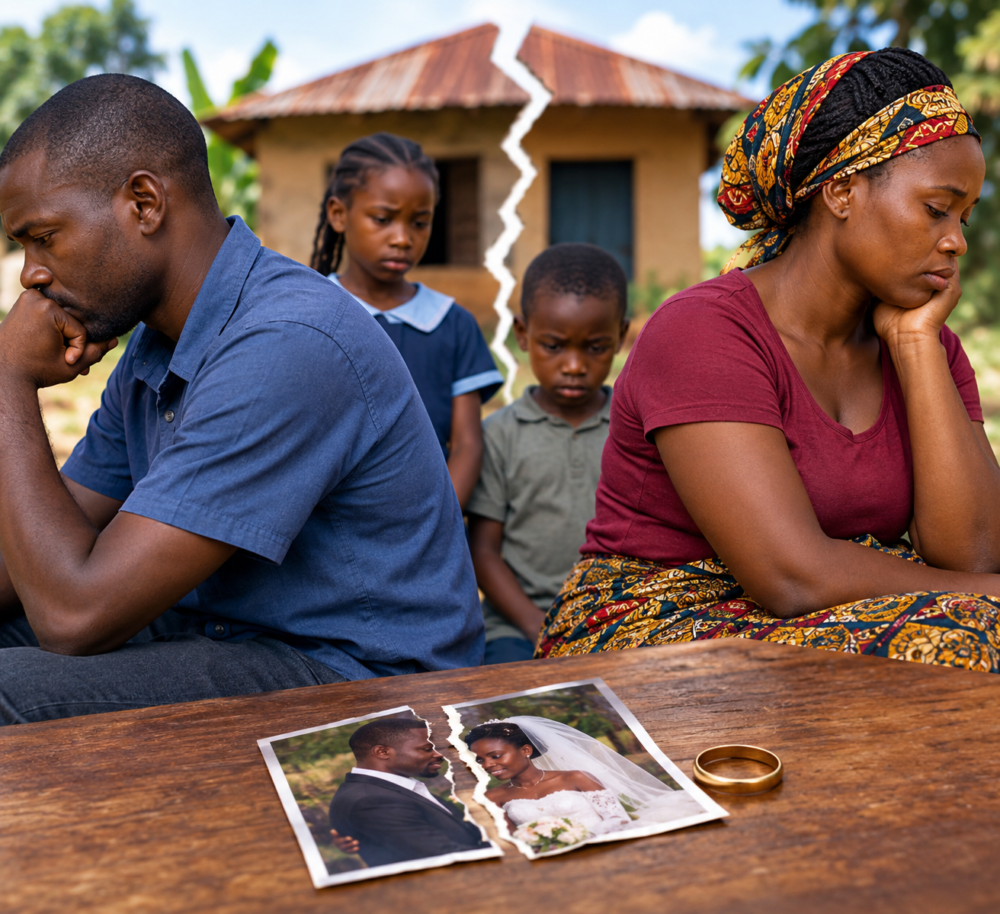
In Bunyala, Mary Khaemba remembers the day she walked away from her marriage with her two children. What began as a young relationship had become a source of financial strain and violence.
Mary married at 19. As money grew tighter, so did the tension within the marriage.
“We did not understand each other. When financial problems came, the violence started. I had to leave to protect my children,” she says.
Today, she supports her children through casual work and help from relatives. Her story offers a glimpse into what some families in Busia face as they juggle financial pressure, conflict and shifting relationships.
Nationally, marriage patterns have changed.
The Kenya National Bureau of Statistics’ Kenya Vital Statistics Report 2024 shows that the proportion of Kenyan women aged 15 to 49 who were married fell from 63.1 per cent in 1989 to 48.1 per cent in 2022. Those divorced or separated rose from 4.6 per cent to 9.3 per cent. Still, national figures do not prove marriage breakdown has increased in Busia. Interviews for this story point instead to pressures weighing on families in the county.
James Oundo, a boda boda rider in Nambale, says money troubles follow you home.
“When business is slow, stress follows you home. Small issues become big fights. Some men walk away because they feel they have failed,” he says.
Residents also pointed to alcohol abuse, infidelity, changing gender expectations and cross-border trade demands as factors that spark conflict in some households. Marriage counsellor, Sharon Nyangueso, says that couples often seek help too late.
“People come for counselling late, when communication has already broken down. Early dialogue could prevent many separations,” she says.
The effects reach children.
At Busende Primary School, teacher Jane Okiri says that teachers sometimes meet learners who seem emotionally affected by trouble at home.
“There is anger, resentment, and pain. In that situation, parents sometimes forget that children are also going through the separation,” she says.
These observations should not be read as evidence of a countywide trend among children. But they highlight why children’s wellbeing matters when families face prolonged conflict.
Family disputes can also raise questions about parental responsibility. A legal expert explains that financial responsibility for children is not automatically placed entirely on one parent after separation. It is shared, with decisions focused on the best interests of the child. Separation does not end a parent’s responsibility. Parents may need to work out proper arrangements through available legal processes.
Government officers and community actors also have a role.
The response requires awareness of family rights and responsibilities, and access to appropriate support. Churches remain an important source of guidance. Pastor Edwin Muruka of Nangina says that religious leaders must consider the example they set.
“When leaders fail in their marriages, it can influence the congregation. People begin to normalize separation,” he says.
He believes that stronger family teaching and honest counselling, are needed to help couples address problems before they become hard to resolve.
The experiences gathered here suggest that responding to family breakdown takes more than telling couples to stay together. Couples in persistent conflict need early, affordable counselling, before problems become crises.
Economic support can ease financial pressures that strain relationships. Churches, schools, local leaders and community organizations can help families spot problems early and seek the right support. Children affected by prolonged conflict need greater attention, with schools and families offering emotional and social support. For families facing violence, support must also prioritise safety and dignity. Leaving an abusive relationship should not be framed as a failure to preserve a marriage.
For Busia, the real question is not simply why some marriages end. It is whether families in conflict can access timely, affordable and safe support, and whether those affected by separation can rebuild their lives and protect their children’s wellbeing.


 Radio Baraza
