


By Edwin Wanjawa and Dommie Yambo-Odotte
Sextortion — the coercive use of intimate images to demand money, sexual favours, or silence — has rapidly become one of the most insidious forms of technology-facilitated gender-based violence in Kenya. While women across all ages are targeted, high-school and university girls now bear the greatest burden, caught at the intersection of growing digital access, social pressure, and a culture of silence around sexual harm.
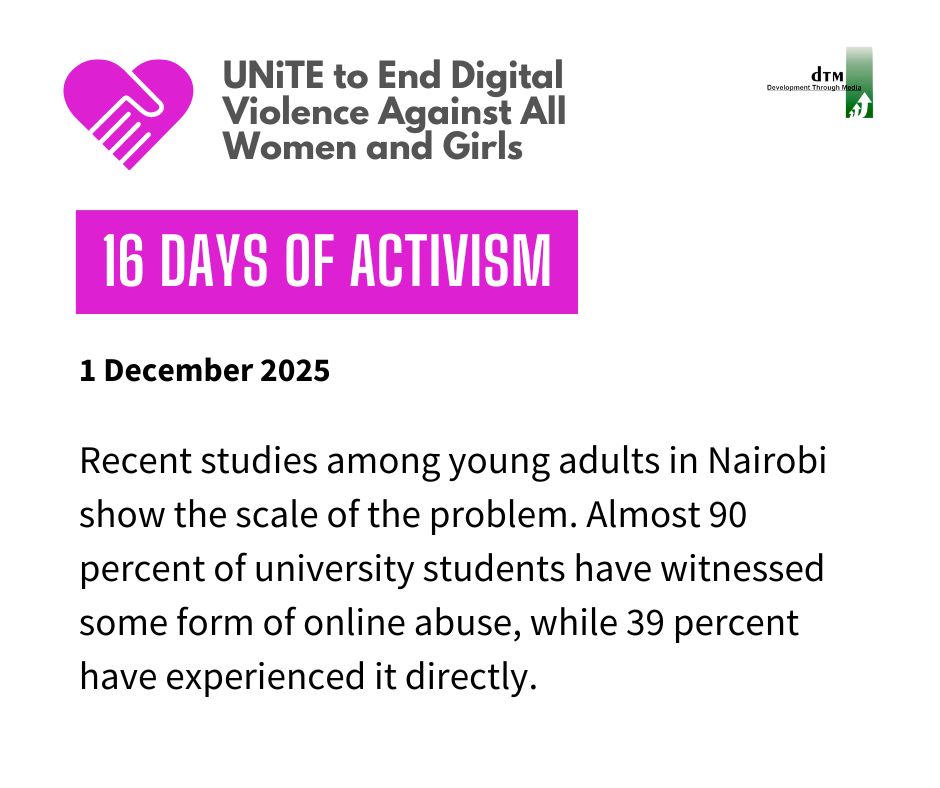
Recent studies among young adults in Nairobi show the scale of the problem. Almost 90 per cent of university students have witnessed some form of online abuse, while 39 per cent have experienced it directly. Non-consensual sharing of intimate images is disturbingly common, affecting roughly one in four young adults. Sextortion, although measured at 1.3 per cent, is widely believed to be heavily underreported — not because it is rare, but because victims fear blame, punishment, and shame.
Kenya’s expanding digital footprint has made girls more vulnerable. With over 13 million Kenyans active on social media, predators have found new ways to infiltrate young people’s lives through platforms they use daily — WhatsApp, Telegram, Instagram and increasingly, TikTok.
How Sextortion Happens
On WhatsApp and Telegram, perpetrators exploit encrypted channels, private groups, and forwarding features to circulate images rapidly and anonymously. Some groups operate like underground markets, where stolen photos are exchanged or bought for blackmail.
On Instagram, grooming is the favourite tactic. Abusers pose as models, photographers, influencers, or romantic prospects. They build trust slowly, encouraging girls to share photos or join private video calls. What begins as harmless communication quickly turns into coercion once the perpetrator captures compromising material.
Cross-platform threats intensify fear. A young woman may send a photo on Instagram, receive threats on WhatsApp, then be shown screenshots of her relatives’ Facebook profiles as proof that exposure is inevitable. The psychological pressure is deliberate — fear paralyses victims into silence, and silence empowers perpetrators.
Real Lives, Real Harm
Consider Ciku (not her real name), a 16-year-old student from central Kenya. A boy she believed admired her convinced her to send private photos. When she resisted meeting him, he threatened to post them in her school’s WhatsApp group. Terrified of being labelled immoral or expelled, she suffered in silence, her grades slipping as anxiety took over.
Or Zawadi (not her real name), a 21-year-old university student from Mombasa. She was approached by a supposed modelling agent on Instagram. Once she sent photos, he demanded money and threatened to tag her parents, lecturers and church leaders. She paid twice before seeking help through a campus legal clinic.
These are not isolated stories — they reflect a widespread pattern in schools, colleges, and universities across the country. Sextortion thrives on one powerful tool: the manipulation of shame. In a society where girls are judged harshly on sexuality, perpetrators know they can silence victims by threatening exposure.
The Hidden Toll
The impact is profound. Survivors report depression, anxiety, social withdrawal and, in severe cases, suicidal thoughts. Some skip classes or drop out entirely. Others lose money through repeated blackmail payments. Once images are circulated in closed digital groups, they may resurface months or years later, reopening wounds.
Families also grapple with emotional and, at times, financial strain. The social consequences — stigma, gossip, judgment — can linger long after the digital harm occurs.
Where the Law Stands
Kenya’s Computer Misuse and Cybercrimes Act (2018) criminalises cyber harassment, extortion, and the distribution of intimate images without consent. Survivors can report cases to the DCI Cybercrime Unit, the National Computer and Cybercrimes Coordination Committee (NC4), or local police stations.
But gaps remain. Many victims fear hostile questioning or moral judgement from officers. Investigations often lack technical capacity, and tracing perpetrators behind fake accounts or VPNs is slow. Platform takedowns can take weeks.
For the law to work survivors must feel safe when reporting — and officers must be trained to respond sensitively, professionally, and desist from blaming the victim.
What Schools, Parents and the Media Can Do
Fighting sextortion requires a united societal response.
Schools must equip students with digital literacy, recognise grooming patterns, and create safe reporting mechanisms free from punishment or ridicule.
Parents must adopt open, empathetic conversations with children about online risks. Fear of parental anger is one of the strongest barriers preventing young people from seeking help.
The media, including organisations like Development Through Media (DTM), must demystify sextortion through public education, break the silence that protects predators, and amplify information on where survivors can seek help.
Breaking the Silence
Sextortion is not just a digital crime; it is especially, a social one. It flourishes where shame is weaponised, where institutions are unprepared, and where girls fear judgment more than the crime committed against them. Protecting young women requires more than law enforcement — it demands cultural change, open dialogue, and proactive digital safety education.
By breaking the silence, strengthening survivor-centred reporting, and holding perpetrators accountable, Kenya can reclaim digital spaces as places of learning, connection and empowerment — not fear.
Edwin Wanjawa is the Programmes Associate, DTM and Dommie Yambo-
Odotte is the Executive Director and Producer, DTM