


By Kimondo Maina, DevReporter, Murang’a County

Key Takeaways
- Murang’a contributes 31% to Kenya’s avocado production, making it the country’s leading zone.
- Farmers face rampant theft of avocados, often harvested at night before they can sell, even as brokers exploit farmers by buying immature fruit at throwaway prices
- Significant enforcement gaps in existing avocado regulations, leaving farmers vulnerable despite strong laws on paper.
Murang’a’s Greeen Gold
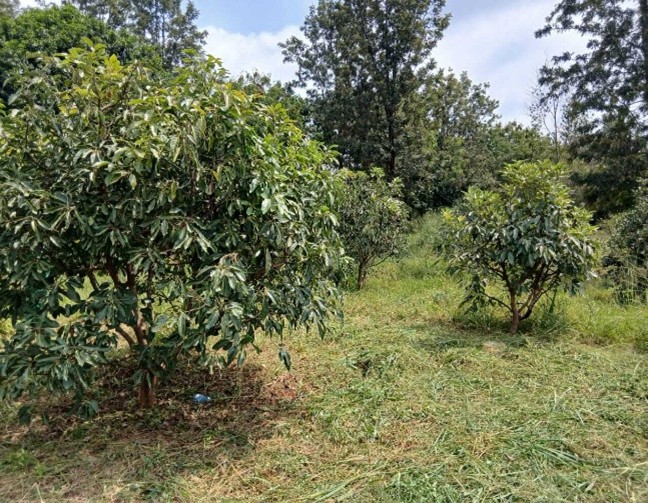
Avocado faming in Murang’a county has emerged as a significant economic activity rivalling traditional cash crops like tea and coffee. According to the Kenya institute for Public Policy Research and Analysis, in 2021, 31% of all Kenyan avocados came from Murang’a county making it the main leading zone.
Exploitation in the shadows
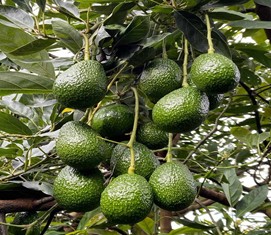
Despite this boom, farmers in Murang’a face challenges, from nighttime theft to exploitative prices. Young men sneak into farms and take the fruits, leaving farmers with nothing to sell. It has become a major issue threatening their hard work and livelihoods.
“You go to sleep at night, and by morning the avocados are gone,” Jacob Muchiri, avocado farmer.
But theft is only part of their problem. Farmers are also grappling with exploitative pricing by brokers, who take advantage of their desperation. Fearing that their fruit will be stolen, farmers are often pressured to sell avocados at a throw away price.
“Brokers show up at farms even before the avocados are ready, claiming the market is open, and buy the fruit at exploitative prices.” Jacob Muchiri.
The exploitation is partly driven by the fact that many farmers lack direct access to reliable markets, exposing them to dependency on brokers and middlemen.
“We don’t have a ready market. Brokers offer as little as KSh 2 or KSh 3 per avocado.” Julia Wairimu exoplains
According to farmers, the stolen harvest goes back into the market through brokers and unscrupulous traders who buy without asking questions.
“The stolen avocados often end up in ‘tumiiri’, small kiosk-like collection points, who then sell the avocados to processors,”says Pius Kimani, farmer in Kiiri, Murang’a County.
Grassroots Solutions
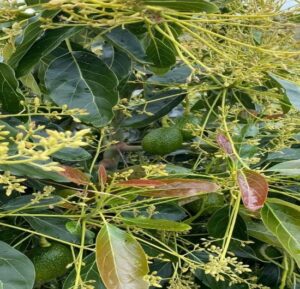
Faced with the double threat of theft and exploitation, the farmers have adopted an approach, ‘being your neighbor’s keeper’. Under this system, farmers watch over each other’s farms, and if a suspicious activity is spotted, they immediately alert the owner to confirm whether the visitors are authorized. If not, the local administration police are called in to arrest the culprits.
Yet, despite these efforts, farmers are often left disheartened as those caught are released within just a few days.
“In truth, you can never fully protect yourself. Only God can.” Julia Wairimu.
To address exploitative prices, farmers are beginning to organise themselves into cooperatives. By coming together, they strengthen their bargaining power, get better prices and gain direct access to markets. A good example is Gatuura Horticultural Farmers Cooperative.
The cooperative was formed in 2019 with the aim of making farmers wealthy from their produce. While marketing has been their major issue, the cooperative is getting into contractual arrangements with licensed dealers for the supply of the avocado fruit.
“We have tried working with different partners in terms of contract farming with the farmers. We want a partner who will guarantee a reliable market for our farmers,” says Lawrence Kiguro- VC Gatuura Horticultural Farmers Cooperative.
While some farmers have turned to cooperatives to get better prices, others like Pius Kimani prefer selling directly to licensed dealers.
“Since I planted my avocados, I have never dealt with brokers, I sell my produce directly to established buyers. Companies such as Kakuzi and Olivado purchase my fruit.” Pius Kimani.
The difference is clear, those working with cooperatives or licensed buyers enjoy more stable prices and a sense of security, compared to farmers who remain at the mercy of brokers.

Regulation without Teeth
In a move to strengthen regulation and enforcement in the sector, the Murang’a County Assembly amended the Murang’a County Avocado Act of 2019 with the aim of curbing rampant theft and preventing the export of substandard or immature fruits. In addition, Murang’a County adopted the Horticultural Crops Regulations, as outlined in Legal Notice No. 118 of 2020. In doing so, the county seeks to safeguard quality, enhance traceability, and strengthen the competitiveness of its avocados in the global market. Despite the adoption of these laws and regulations, enforcement has remained weak.
Our request for an interview with the Murang’a County Executive Committee Member (CECM) for Agriculture, Trade, and Industrialization, Hon. Paul Mugo, to shed light on these issues was unsuccessful.
Towards sustainable Green Gold
Under the Economic and Macro Pillar of Kenya Vision 2030, agriculture is recognized as a key driver of growth, with the objective of achieving and sustaining a 10% annual economic growth rate. The avocado industry in Murang’a has shown and proved that with the right policies and support systems, avocado fruits has a huge potential for uplifting rural households and transform livelihoods. By providing income for rural households, avocado farming supports SDG no 1 on poverty eradication while sustainable cultivation contributes to SDG no 2 on Zero Hunger. Tackling the exploitation of farmers by brokers and improving market access, advances SDG goal no 8 on Decent Work and Economic Growth, while enforcing quality standards and preventing premature harvesting promote SDG no 12 on Responsible Consumption and Production. At the same time, stronger regulation and enforcement reflect the aspirations of SDG goal 16: Peace, Justice and Strong Institutions, ensuring that the sector not only creates livelihoods but also does so in a fair, transparent, and sustainable way.
In conclusion, avocado farming in Murang’a carries immense potential for transforming lives, offering farmers a path to prosperity and positioning Kenya as a global leader alongside producers like Peru and South Africa. Yet, as the voices of Njuguna, Julia, Jacob, and Pius reveal, that promise remains restrained by theft, exploitation, and weak enforcement of the regulatory frameworks. While cooperatives and county initiatives point toward solutions, without strong and enforceable regulation, fairer markets, and robust farmer protection, the cycle of vulnerability and frustration will persist holding back what could truly be Murang’a’s green gold.