

By Christine Wangoi, DevReporter, Kajiado County

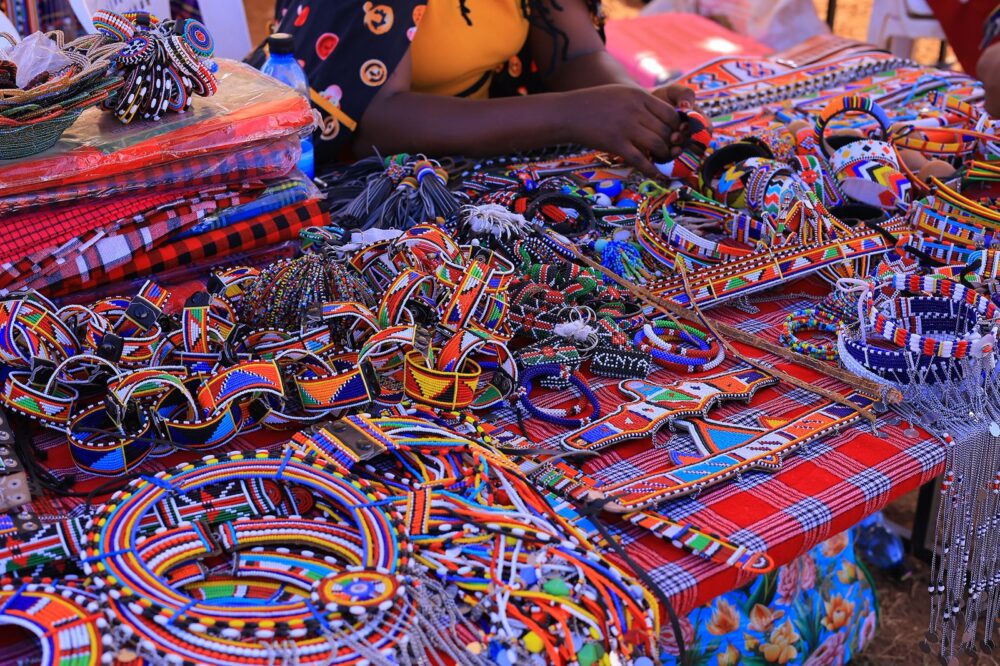
Quick facts about beadwork.
- It is majorly done by women, because they the one who ordinarily remain at home to look after the children
- It is a cultural leisure activity passed to women and a way of ensuring that a woman is always busy
- It has now turned into a profitable venture beside preserving culture. Women now understand that the skills can earn them quick cash
- Women involved in beadwork have begun venturing to international markets as registered groups. Traditionally, women used to bead and market ornaments as individuals.
- Beadwork artifacts now have a touch of modernity and come with a range of colors. Beside the red, white and blue colors of bead that were dominant in the past, it is now an all-colors enterprise.
Why women have embraced communal beading
For generations, Maasai beadwork was done individually as a way of preserving culture. Today women are joining groups to access training, expand markets, and produce high quality items that reach international buyers.
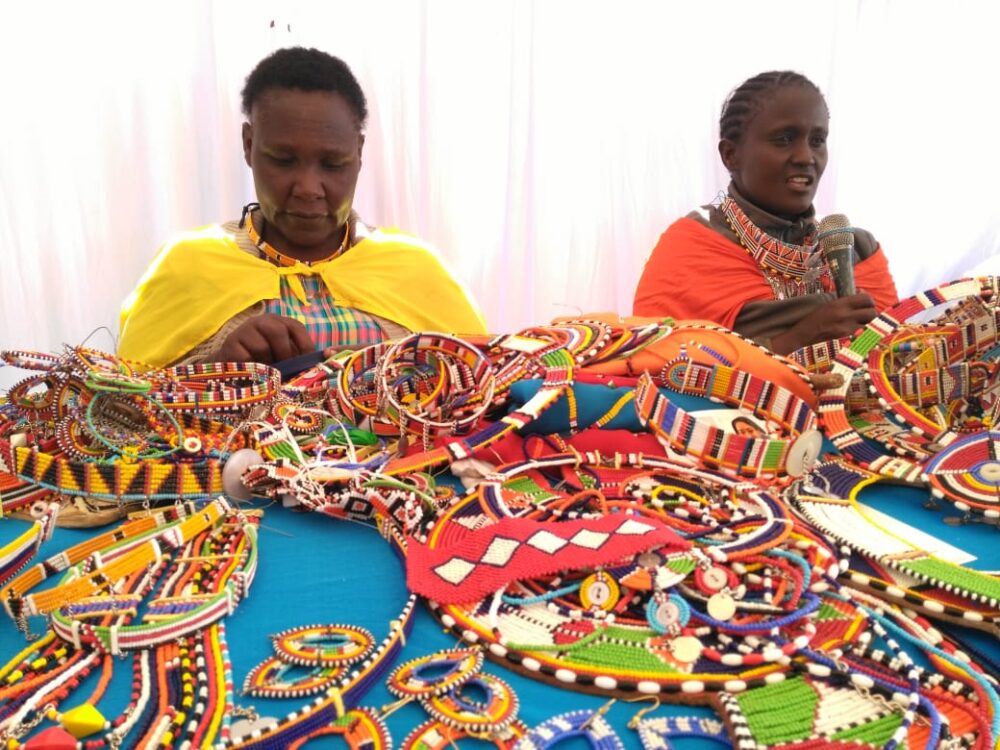
On a sunny day, under an acacia tree in Kajiado, a group of women sit in a vibrant circle, their hands weaving colors into intricate bead patterns. What begun as a cultural practice has now become a powerful engine for women’s economic empowerment.
Access training
Joyce Naserian, 67, is among the elderly in the group. She says working alone was tough. Lack of a ready market and limited skills made her work less profitable.
“The bead artifacts business performed very poorly in the past. Our products only attracted natives. We had a limited range of products, which we mainly beaded, using red, blue and white coloured beads. As the Maasai culture continues getting expressed beyond our borders, we began seeing people approaching individuals to enlighten them to give the artefacts a touch of modernity. The entrepreneurs who were eager to market the products rallied women to join hands and undergo training,’’ narrates Naserian, chairlady of Nadupa women group.
She says the 2014 sensitisation programme by a non-governmental organization across the County marked the beginning of a transformation that also gave rise to products diversification.
“We were trained on colour-blending on both artefacts and clothes. Experts in the fashion industry volunteered to train us. Training was only offered to those who worked in groups,’’ she added.
Collectively, they women agree that the training has sharpened their skills on diversifying their investments and savings at individual level.
Growth and expansion
The women also say that legally registering their groups has enabled growth and expansion. This makes it possible for them to access loans form women’s enterprise and grants, thereby making it possible for them to expand their business.
“The communal beading has been an eye opener. We used to have merry-go-round chamas, but now we have registered groups that qualify for government funding. Illiterate women have gotten a golden learning opportunities, which have improved their self-esteem,” adds Naserian.
The joint ventures have also helped women to expand the marketing of their ornaments, thus helping realize better profits.
“The joint profits realised from sales have largely improved livelihoods in family units. It has created financial freedom for women who had before now, depended entirely depended on the milk business to earn for income,’’ said Jane Naisoi, of Naresho Pamoja Initiative.
Bulk and quality production
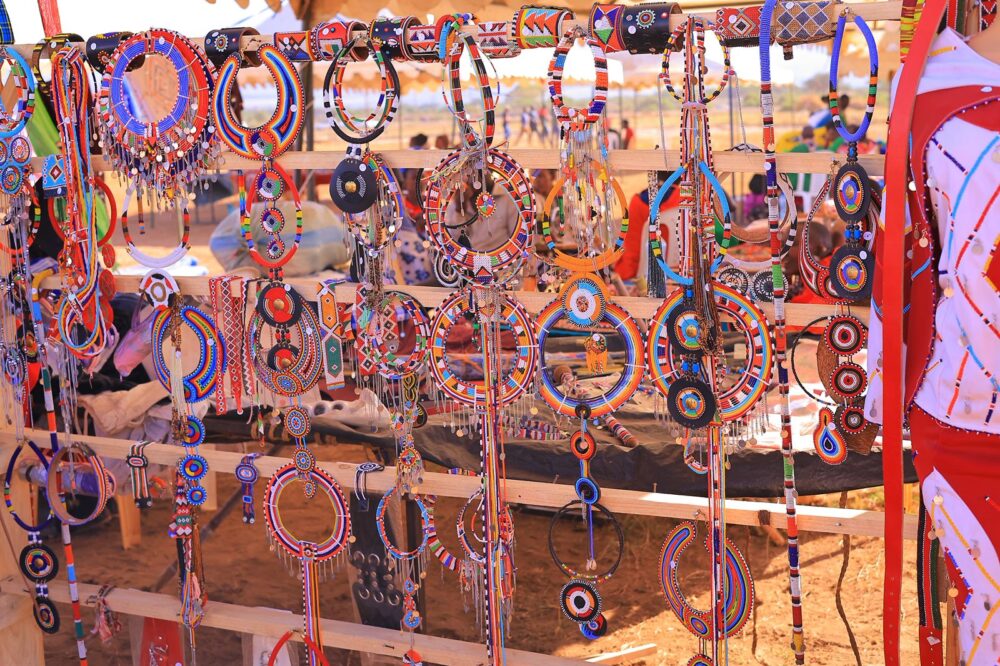
“Working in teams has enabled us to be more productive. We are able to deliver more products within a given period. The quality has also been enhanced because every woman in a group focuses on a specific area,’’ added Naisoi.
Men acknowledge witnessing tremendous transformation in the communal ventures.
“When my wife was beading alone, she never brought anything meaningful to the table. Since she joined a women’s group in 2023, she has taken up some roles including paying her chamas and buying food for our family,’’ says Joel Legis.
David Muthoka, an economic expert, said the enterprise has a potential of rapid growth.
“The bead enterprise has the capacity to expand further. The nurture of business is sustainable. The ornaments and artefacts are in demand across the world. Enhancing the women’s skills, giving them start-up capital and marketing the products is key,” says Muthoka.
The main challenge that has slowed the attainment of Kenya Vision 2030 of promoting women enterprise, remains rogue middlemen who have dominated the market. Article 55 of the constitution of Kenya guarantees youth and women economic empowerment.
“Majority of us have no digital skills to sell online. The rogue brokers take advantage of that. They sell our products at higher prices but give us peanuts. They claim the money goes to taxes and online licenses. We have cases where we have had to involve the administration and security officers to intervene in saving us from being conned,’’ says Agnes Tuukuo.
Among the efforts the government has put in place is the on-going Ushanga Initiative. The 2018 initiative targets six pastoral counties with the aim of commercialising women’s beadwork.
“The Ushanga initiative provides women with training, linking them to markets and providing access to financial services. The government has partnered with development partners to create an alternative livelihood,’’ says the initiative CEO Dorothy Mashipei.
Uwezo Fund and Women Enterprise Funds at the constituency level and National government affirmative action fund (Ngaaf) have also been instrumental in boosting the bead-work enterprise.
“If we keep learning and working together, beadwork will take our daughters further. This is more than a craft, it is our pathway out of poverty,’’ adds Tuukuo, threading a red bead.
With more concerted efforts, such enterprises will be key to alleviate poverty and attain gender equality as spelt in the Sustainable Development Goals (SDGs).