



By Christine Wangoi Musa, DevReporter, Kajiado County

Key Highlights
- At least 2,000 cases of teen pregnancies have been reported within the first three months of 2026 in Kajiado alone
- Many of the reported cases of teenage pregnancies in Kajiado is linked to poverty
- The County government of Kajiado is collaborating with schools to enhance Counseling among learners
- Various stakeholders are calling for men’s involvement in the fight against teenage pregnancies
- Teen mothers are encouraged to go back to school.
In Kajiado County, teenage pregnancies continue to raise concerns among health and education stakeholders.
According to statistics attributed to the County’s Ministry of Health, about 2,000 girls were reported pregnant between January and March 2026. Additional figures cited in the Kenya National Bureau of Statistics Economic Survey 2026 indicate that Kajiado recorded 936 pregnancies among girls aged 10–14.
Why the surge in cases
Stakeholders say that poverty is a major driver of teenage pregnancy, pushing some girls into transactional relationships for survival, such as the need for food, money, and sanitary products.
14-year old Naneu (not her real name) from a village Kajiado, is three months pregnant. She is living with her Aunty after being rejected and chased away by her parents.
Overwhelmed by emotions, tears freely flowing, Naneu says that an adult neighbor lured her to intercourse in exchange for pads.
Just like Naisoi (not her real name) whose story is narrated further below, she confesses that the engagement was not out of love or affection.
“My family is struggling financially. Getting sanitary towels is a big challenge. At times, I am forced to skip school while I use rags as pads. The man offered me Ksh500 for every intimacy session. Over time I become addicted and it became a frequent act. I could even now afford to buy other things including foodstuff for my family. I just told my mother that the food and gifts were being offered by a well-wisher who visits our school. She has always been grateful and prayed for the ‘well-wisher’. I thought it would take long for her to know the truth. She does not visit school and she has no phone to contact any teacher,” says Naneu.
Naneu’s account is further testimony to this vulnerability, where basic needs become a form of leverage in exploitative relations.
This situation is directly linked to the Sexual Offences Act (2006), which criminalizes all forms of sexual violence against children. The Act clearly defines a child as any person under the age of 18 years, and makes it an offence for adults to engage in a sexual activity with a minor, including through coercion, regardless of any real or imagined consent.
“Eight in every ten girls we interrogate over what transpired, acknowledge that they engage in sexual activity for favors and money. They clearly understand the act is wrong but continue to gamble while putting their health at risk. We also have isolated cases of defilement and sexual violence,” says Catherine Mwanza, Gender officer, Kajiado.
Three kilometers from Naneu’s home, we catch up with thirteen-year-old Joyce (not her real name), who is seven months pregnant. She has just dropped out of Grade Seven.
She describes the emotional impact of her situation and how family support has helped her cope.
“I was despaired, angry and confused but embraced the outcome after sometime. The reason I just appear okay is the emotional support I received from my family,” Joyce says.
She adds that disclosing her situation to her teacher led to medical confirmation and family engagement. Despite the setback, she hopes to return to school after delivering.
“I look forward to being an ambassador against underage risky sexual behaviors. I am not proud of my situation but I thank my parents for the psychological support they have chosen to offer me,” she adds.
Health Risks and Medical Concerns
Medical experts warn of rising health risks linked to adolescent pregnancies.
“The pregnancy surge means unprotected sex. That practice increases prevalence of STIs and HIV among teenagers. Over time the high infections cause a strain on access to healthcare. There is also a danger of mother to child HIV transmission in cases where the girls do not seek or delay in accessing antenatal services. Giving birth at home under the care of traditional birth attendants increases the risk,” says Dr. John Lusasi.
County health officials admit that hospitals are increasingly handling both medical and psychosocial needs arising from teenage pregnancies.
“Hospitals have now been forced to have counseling departments for reconciling the girls and parents. We are encouraging parents to give the girls a second chance in school and also mentoring the young mothers to-be, on how to cope with stigma,” says Health CECM, Alex Kilowua.
He adds that reintegration into school remains a priority.
Education Response and School Reintegration Efforts
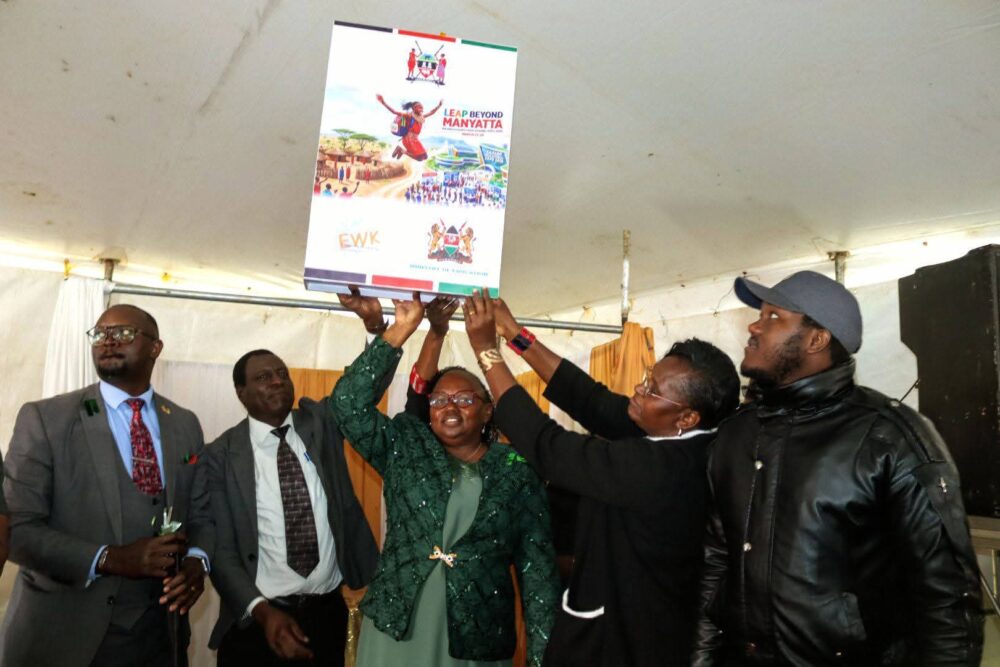 The education department has introduced interventions aimed at reducing teenage pregnancies and supporting affected learners.
“The school dropouts present a hard reality we are facing. We have brought together education stakeholders and community elites to intensify counselling within learning institutions. Such pregnancy cases are dominant in rural set-ups,” says Education CECM, Janet Sereu.
She adds that community involvement is central to prevention efforts.
“We have brought together Morans to be part of the initiative since they also play a major role in the cases. When it comes to embracing the affected girls, men are an integral part of this sensitization,” she notes.
Under Article 53 of the Constitution of Kenya (2010), every child has the right to protection from abuse, exploitation, harmful cultural practices, education, and dignity. The Constitution also places responsibility on the State and all relevant actors, to ensure that children are not subjected to any form of violence or degrading treatment.
Challenges in Outside-court settlements
County officials have also been keen in monitoring perpetrators of the cases.
“We are very keen to arrest and prosecute those found guilty of impregnating the girls. We will not negotiate with any parent or guardian who seeks to negotiate marriage for a pregnant minor. We will deal with perpetrators precisely and take them to court,” warns Kajiado County commissioner, Michael Yator.
The situation in Kajiado highlights a widening gap between legal protections and lived realities for adolescent girls.
As the can be discerned by the experiences of Joyce and Naneu, coordinated action is urgently needed from families, schools, health systems, and community leaders to break the cycle of poverty, exploitation, and early pregnancy.
“Offering money or basic necessities such as sanitary pads in exchange for sex with a minor fall within the scope of child sexual exploitation under the law. Such acts are not only violations of morality but also serious criminal offenses under Kenyan law. It is high time that people embrace the rule of the law as opposed to resolving cases traditionally. Using traditional mechanism to resolve sexual offenses does more harm than good, it encourages the trend, creating more abuse,” says Lawyer Daniel Kanchori.
Call to Action
To close the gap between law and reality, urgent and coordinated actions by key stakeholders is critical if the rights of the girl child are to be effectively protected.
Law enforcement agencies must strictly enforce the protection against Sexual Offences, by investigating and prosecuting cases of child sexual exploitation and abuse without delay.
Effective enforcement of laws, community awareness, and survivor support of girls like Joyce and Naneu will ensure that their education and future ambitions are not shuttered.
 Radio Baraza