


By Brian Gitonga, DevReporter, Meru County
Key Highlights
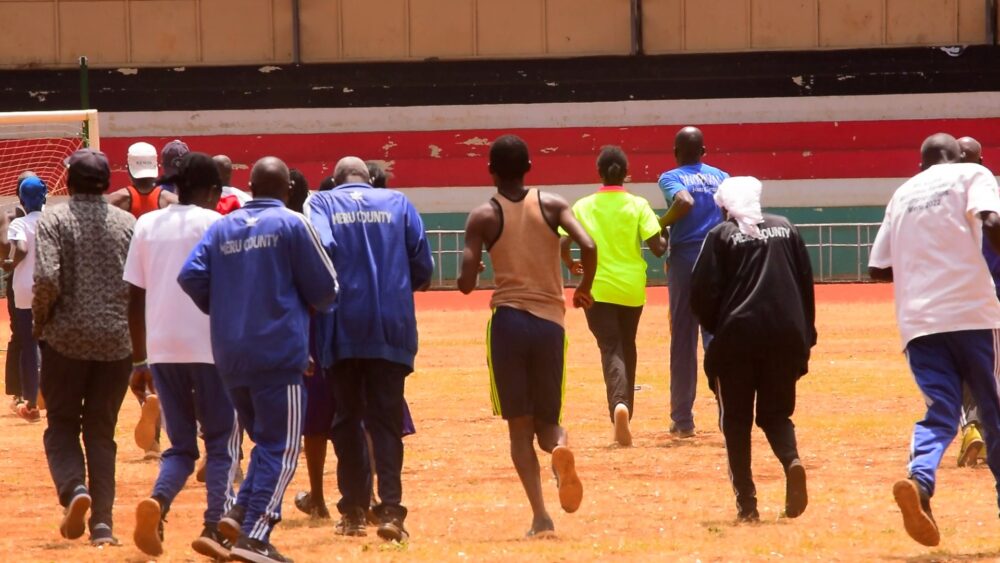
- The athletes cover about five kilometres three times a week.
- Meru’s Masters Athletics chapter has about 80 members, including international competitors and a visually impaired runner.
- Some athletes travel up to 50 kilometres for training and pay their own fares.
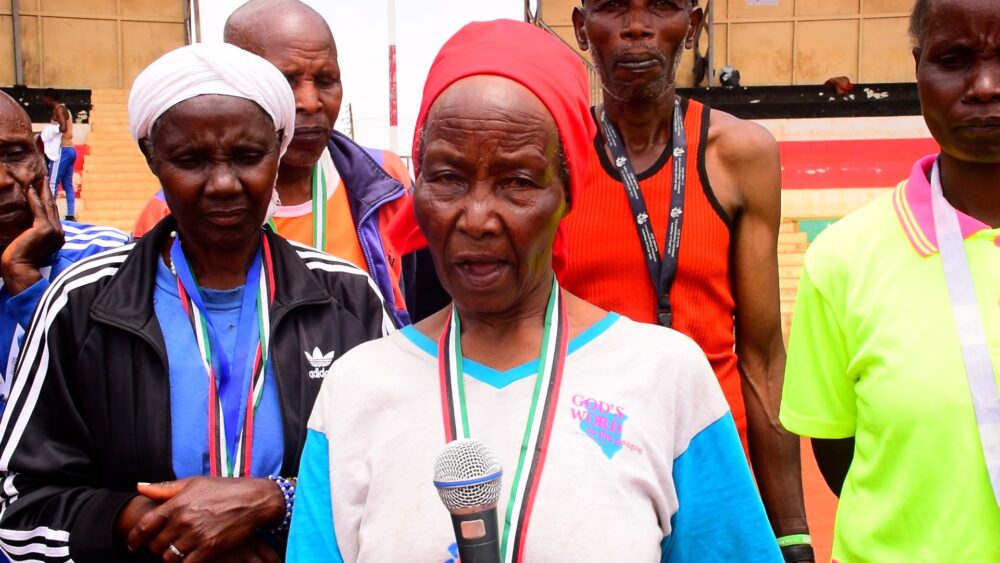
At 82, Wanjiru Kamau has grown accustomed to people questioning why she is still running.
Three mornings a week, she joins other athletes at a training ground in Meru County, eastern Kenya, covering about five kilometres each session.
When she started, the sight of a woman her age running drew ridicule.
“At first, people laughed at me, saying that what I was doing was foolish,” Kamau recalls.
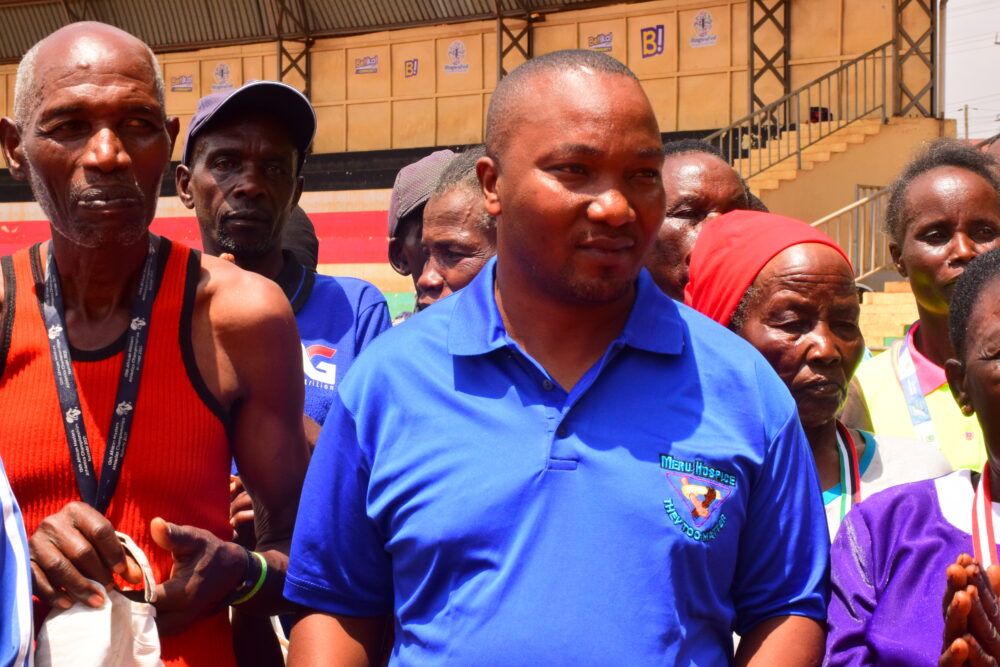
Kamau is among about 80 members of the Meru chapter of Masters Athletics Kenya, established in 2015 to bring older athletes together to exercise, train and compete.
Running for health
Kamau says that she started running after experiencing high blood pressure and muscle spasms in her legs.
“Since I began exercising and drinking water, my blood pressure is now normal, and I no longer get muscle spasms,” she said.
The World Health Organization says that physical activity can benefit cardiovascular, mental and cognitive health, and help prevent falls. It recommends at least 150 minutes of moderate-intensity physical activity a week for adults aged 65 and above.
The athletes are ageing against a wider national health backdrop.
Running without sight
For years, 52-year-old Protasio Mutuma Lichoro had wanted to run, but his visual impairment presented a major challenge: he needed a sighted guide to run alongside him.
Lichoro says that before joining the group in 2017, finding someone to guide him was difficult.
“Before, I could never find a guide when I needed one. Now, training with such a crowd, I even help train others to be guides,” he said.
Some members are now learning to guide him, creating a support network beyond exercise.
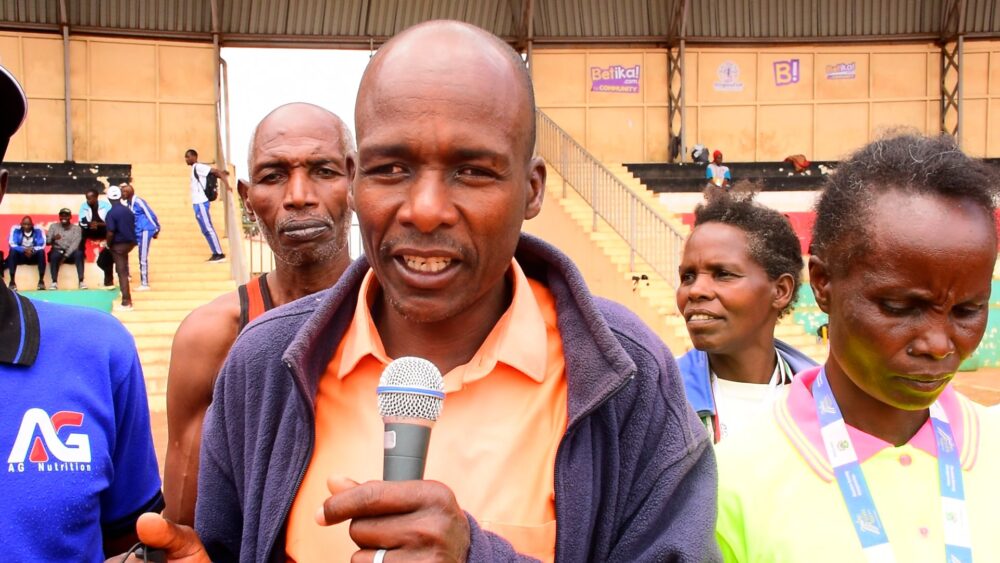
Stephen Michubu Linguya, the group’s founder, says that he established the chapter after seeing older people struggle with health problems and, in some cases, alcohol. He hoped that athletics could keep them active while also creating a sense of community.
Medals, but at a cost
The members say that running has had a significant impact on their lives, with some going on to compete internationally.
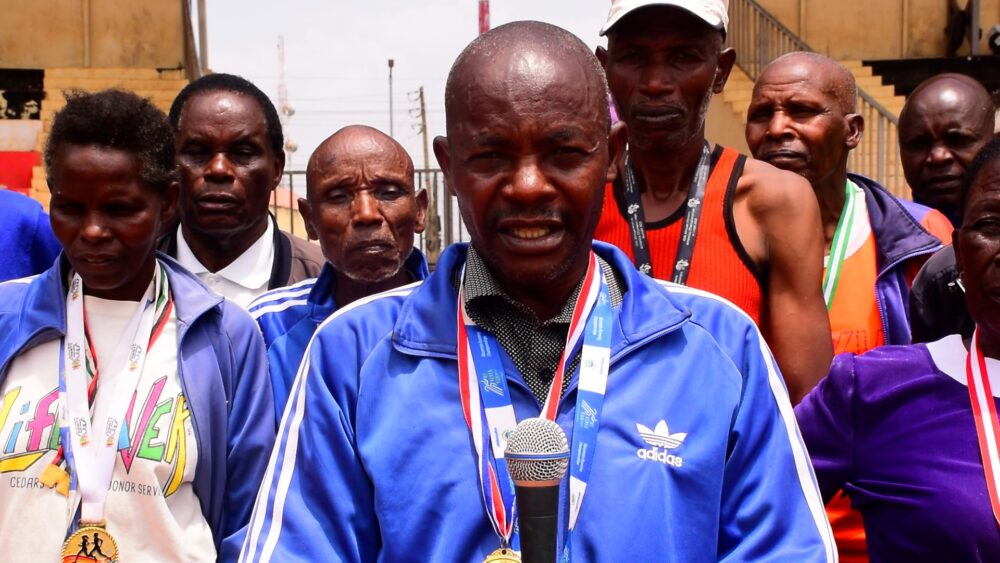
James Mworia, 73, competed in Tunisia in 2019, where he returned with medals. But despite such achievements, he says that getting to regular training can be a challenge.
Mworia says that some athletes travel between 10 and 50 kilometres to attend training three times a week. With no team transport, they pay their own fares.
“During our training days, we use our own means to get to the training ground and pay the fare ourselves,” he said.
Government promises support
Elias Murega, the County Executive Committee Member for Youth, Sports, Gender and Social Development says that the county government intends to support the athletes by creating platforms where they can showcase their talents.
“We have seen many successful athletes from this group who have gone on to compete at the international level. We are here to continue supporting them, and one way is creating platforms where they can showcase their talents,” Murega said.


 Radio Baraza