

By Hendric Makokha, Student at Technical University of Kenya on attachment at DTM (2025)
As Kenya moves closer to the 2027 general elections, the realities of Nairobi’s grassroots—market traders, boda boda riders, casual workers, and Gen Z students—are shaping the conversation. Rising food prices, new taxes, and high unemployment have fueled frustration. Will 2027 finally deliver development that ordinary Kenyans can feel?
Daily Survival in the Market
At Kenyatta Market, traders say that the high cost of living is already influencing their political choices.
“I used to sell a bunch of sukuma wiki for 40 shillings. Now my supplier wants 80. Customers complain every day, but I can’t sell at a loss,” says Margaret Akinyi, a vegetable vendor and mother of three.
“When politicians come in 2027, they must explain how they’ll bring down food prices,” she adds.
Her frustration is backed by data. According to the Kenya National Bureau of Statistics (KNBS), annual inflation stood at 4.1% in April 2025, up from 3.6% in March. A December 2024 report by Pulse Live Kenya indicated that food items like sugar, maize flour and cooking oil, had the sharpest increases in late 2024.
Gen Zs: From the Streets to the Ballot?
A June 2024 article in the People Daily newspaper published a projection by Kenya’s Independent Electoral and Boundaries Commission (IEBC), indicating that 70% of registered voters in 2027 will be below 35 years of age. This suggests that young people will be the single most powerful voting bloc.
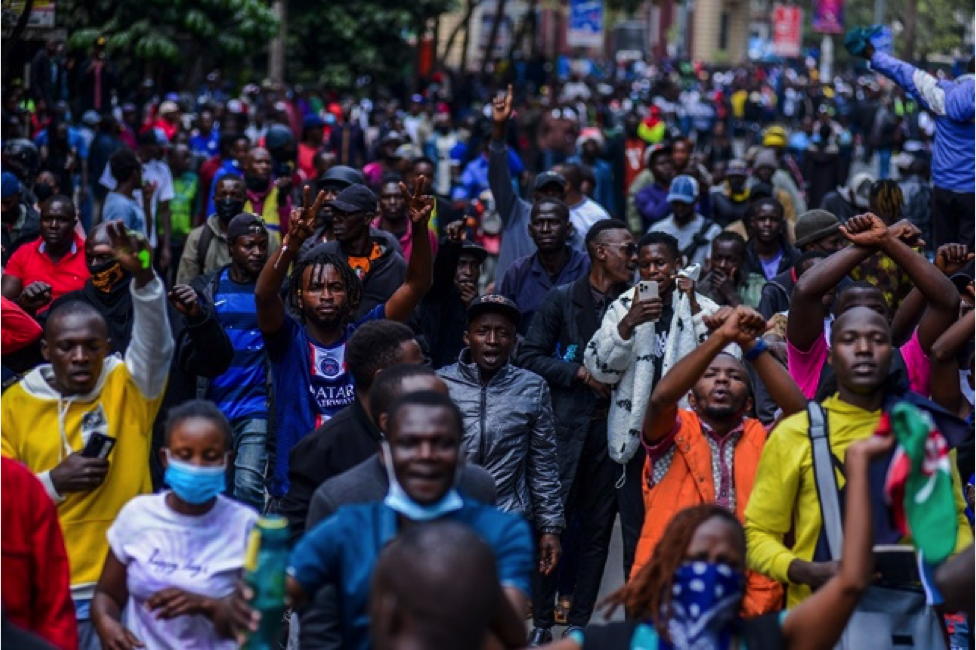
But for many, the memory of the 2023–2024 protests still lingers. In estates like Kayole and Umoja, Gen Zs organized demonstrations against high taxes, SHA deductions, and the housing levy.
“We marched because everything is expensive—rent, food, even transport,” says Kevin Njoroge, a 22-year-old boda boda rider in Githurai.
“Tear gas won’t stop us. In 2027, we’ll show our anger through votes,” he added.
Political analyst, Dr. Mercy Wambui, a lecturer at the Technical University of Kenya, warns that online activism and protests alone will not be enough.
“The missing link is grassroots organizing. Young people must register to vote, demand issue-based campaigns, and stay engaged after elections. Otherwise, their frustrations will be recycled by the same political class.”
Kibra’s Broken Promises
In Kibra, residents say that promises of better housing and healthcare remain unfulfilled.
“Every election period, politicians come here talking about jobs and houses. But once elected, they disappear,” says Samuel Omondi, 29, a casual laborer.
“If the youth push harder this time, maybe we’ll get leaders who deliver, not just handouts.”
This skepticism reflects a wider problem: Kenyan elections often revolve around personality politics and ethnic alliances instead of concrete development issues such as food security, healthcare, and jobs.
Civic Education: Beyond the Ballot
Civil society groups are stepping in. The Kenya Human Rights Commission (KHRC) and youth-led platforms like Siasa Place and Power254 are conducting voter education in Nairobi estates. Their aim is to prepare young people for active participation beyond Election Day.
“Democracy doesn’t end at the ballot,” says Faith Chebet, a civic educator who has been running sessions in Umoja and Dandora.
“We tell young Kenyans: track budgets, attend ward barazas, and hold MCAs accountable. If you wait until 2027 alone, you’ll be disappointed.”
A Development Lens on 2027
For grassroots communities, the 2027 election will not be about flashy rallies but about survival. Prices of unga, transport, and housing remain top on their minds. Healthcare costs under the new Social Health Authority (SHA) deductions are another concern.
For Nairobi’s Gen Zs, the challenge is to turn their digital creativity and protest energy into structured political influence. With their numbers, they could change Kenya’s political culture—but only if they organize beyond hashtags.
Conclusion
The 2027 elections are not just about who becomes president; they are about whether ordinary Kenyans—market vendors, boda boda riders, students, and casual workers—finally see policies that make daily living affordable.
Grassroots voices are loud and clear: survival cannot wait for campaign slogans. Leaders will be judged not by rallies and promises, but by whether they listen and act on the cries from Nairobi’s estates.