


By Edwin Wanjawa and Dommie Yambo-Odotte
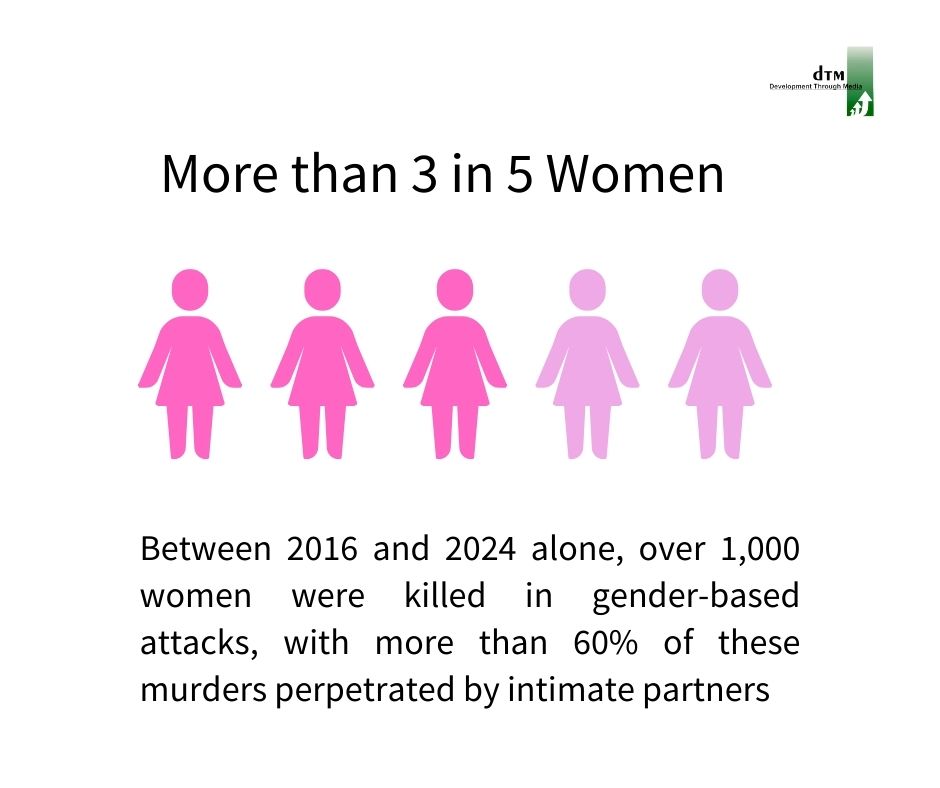
Kenya is witnessing an alarming rise in femicide and intimate partner violence (IPV), and the data—though fragmented—draws a painful and urgent picture. Civil society, journalists, and health facilities estimate that the country records more than 500 femicide cases each year. Between 2016 and 2024 alone, over 1,000 women were killed in gender-based attacks, with more than 60% of these murders perpetrated by intimate partners. The Kenya Demographic and Health Survey (KDHS 2022) is equally stark: a third of ever-married women have experienced physical violence, 14% have experienced sexual violence, and one in every three Kenyan women faces violence in her lifetime.
The crisis is national, but certain counties consistently report higher numbers of incidents—Nairobi, Nakuru, Kisumu, Kiambu, Kakamega, Kilifi, Machakos, and Mombasa stand out. Urban centres see more femicides, while rural areas mask their burden under layers of silence, cultural expectations, and chronic underreporting. The most affected victims are young women aged 18 to 34, though cases involving teenage girls, especially those entangled in dating or transactional relationships, are rising at an unsettling pace.
Behind the growing numbers is a web of structural and relational factors that form the perfect storm. Patriarchal norms still position women as subordinate or even as property. Economic dependency traps many in abusive relationships, while unemployment, urban stress, alcohol and drug abuse among young men create additional layers of vulnerability. At the relationship level, jealousy, control, financial disputes, and possessiveness regularly escalate into violence. Culturally, women are still encouraged to “endure” abusive marriages while families and religious spaces sometimes reinforce silence over safety.
Modern and digital realities have introduced new forms of danger. Meeting strangers online has led to targeted attacks in private rentals and Airbnbs, while online harassment—bullying, stalking, revenge porn—has become another tool for controlling and terrorising women. Social media spaces have normalised misogyny, giving new life to harmful ideologies that glorify dominance and trivialise violence.
The rise in femicide also reveals deeper systemic failures. Kenya’s once-strong social fabric—families, neighbours, communities—has weakened, leaving many women isolated. The criminal justice system remains painfully slow and inconsistent: cases stall, convictions are rare, and survivors are often told to “settle it at home.” Health systems lack adequate GBV recovery centres and forensic capacity and survivors still face stigma even when seeking life-saving care. Meanwhile, sections of the media continue to sensationalize violence with trivialising headlines that reduce brutal killings to “love triangles gone wrong.”
Femicide does not erupt out of nowhere. It is the tragic end of a long continuum of violence that begins with controlling behaviour, isolation, emotional abuse, financial sabotage, and physical assaults. The most dangerous moment for a woman is after a breakup—when a controlling partner feels his power slipping away.
The social cost is immense, but the economic cost is equally devastating. Kenya loses billions annually through healthcare, legal processes, lost productivity, and the long-term trauma carried by children who grow up orphaned or exposed to violence. These cycles of trauma reproduce themselves, feeding violence into future generations.
Yet men are not only part of the problem—they are essential to the solution. Challenging toxic masculinity, refusing to normalize violence, holding other men accountable, supporting emotional wellness, and joining GBV prevention efforts are vital steps toward shifting the tide.
There is progress to acknowledge. Laws such as the Protection Against Domestic Violence Act and the Sexual Offences Act provide a strong legal framework. Counties like Makueni and Nairobi have invested in shelters and GBV policies. Major hospitals now host GBV recovery centres. And civil society and media actors—such as Development Through Media (DTM)—are filling critical gaps: offering survivor-centred storytelling, evidence-based reporting, and advocacy that pushes institutions toward accountability.
But we need deeper, sustained action. Kenya must strengthen its justice system through fast-track GBV courts, enforce restraining orders, and ensure police follow survivor-centred procedures. Prevention programsme targeting boys and men, investments in mental health and substance abuse interventions, and the expansion of shelters and referral pathways are essential. Schools and universities must integrate GBV education and support structures. The media must commit to ethical, non-sensational reporting. County and national governments must budget for GBV prevention and care—and report GBV data systematically and transparently.
Femicide and IPV are not isolated tragedies; they are symptoms of a deep social, cultural, economic, and moral crisis. The rising numbers tell a story of a country in pain—but also a country capable of change. Accountability, prevention, and collective action remain our strongest tools.
When a woman is killed, it is not a private domestic issue.
It is a national emergency
Edwin Wanjawa, Programmes Associate, DTM
Dommie Yambo-Odotte, Executive Director and Producer, DTM