


By Edwin Wanjawa and Dommie Yambo-Odotte
As Kenya deepens its digital transformation, a darker reality shadows our progress: the alarming rise of online violence against women and girls. What was once seen as a fringe problem is now a widespread crisis affecting schoolgirls, content creators, women in politics, journalists, and ordinary citizens navigating an increasingly hostile online world.
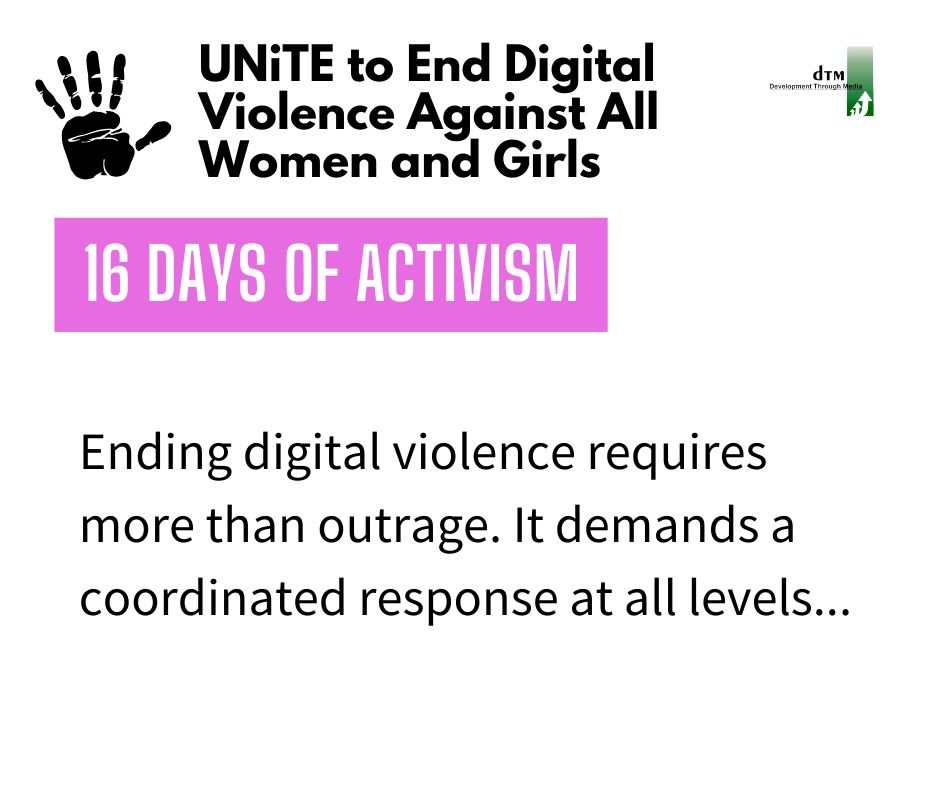
This year’s global theme for the 16 Days of Activism — “UNiTE to End Digital Violence Against All Women and Girls” — could not be more urgent for Kenya. Digital spaces are now public spaces. And in these spaces, women and girls are disproportionately targeted through cyberbullying, sexualised deepfakes, trolling, stalking, doxxing, blackmail, and the non-consensual sharing of intimate content. This online abuse is not virtual harm. It is real violence with real consequences.
Across the country, young women are withdrawing from online platforms, self-censoring, or retreating entirely from public conversations because of relentless hate. Female politicians and journalists are subjected to coordinated harassment that aims to silence them. Teenagers, especially in coastal and urban counties, fall prey to sextortion schemes that degrade, traumatise, and sometimes push victims into depression.
Yet despite the scale of this crisis, Kenya’s legal and social responses remain scattered. The Computer Misuse and Cybercrimes Act and the Data Protection Act offer important protections, but enforcement is inconsistent, and many survivors don’t know where to turn. Reporting tools on global social media platforms are slow, inadequate, or outright dismissive. Meanwhile, police officers, teachers, and parents struggle to keep up with a rapidly shifting digital landscape where abusers often hide behind anonymity.
That is why organisations working at the intersection of media, rights, and civic engagement must step forward. Development Through Media (DTM)—a non-profit media civil society organisation—has begun taking leadership in this space. Through campaigns, policy dialogue, digital literacy programmes, and media advocacy, DTM endeavours to make digital safety a core part of Kenya’s national conversation on gender-based violence. Its campaign for 2025 and beyond will seek to amplify survivor voices, spotlight gaps in policy and Tech platform accountability, and rally communities to defend the dignity of women and girls online.
Ending digital violence requires more than outrage. It demands a coordinated response at all levels, driven by five pillars:
First, stronger enforcement of cybercrime and data protection laws
Second, digital literacy for students, parents, and frontline responders
Third, accountability from tech platforms whose systems often seem to reward hate and harassment.
Fourth, psychosocial support for survivors—because online abuse leaves deep psychological wounds
Finally, a cultural shift: Men and boys must be vocal allies in ending online misogyny.
This year’s 16 Days of Activism is a reminder that protecting women and girls is not optional — it is a national obligation. If we want a Kenya where women can lead, create, innovate, and participate fully in all areas of life, then they must be safe both offline and online.
The digital future cannot belong only to those who are loudest, cruelest, or most aggressive. It must belong to all of us — equally.
And ending digital violence against women and girls is a critical step in that direction.
Edwin Wanjawa is the Programmes Associate, DTM and Dommie Yambo-
Odotte is the Executive Director and Producer, DTM