


By Kimondo Maina, DevReporter, Nyeri County

Key Notes:
- High noise levels and demanding careers in Nairobi cause widespread burnout and significant economic loss
- Constant screen time and remote work often lead to deep loneliness despite being digitally connected
- Reclaiming health requires “analog” spaces where people surrender phones and avoid alcohol-centred socialising
- Practices like pottery, yoga, and nature-based reflection provide essential tools for emotional regulation and recovery.
In a city defined by long working hours, endless traffic, constant screen time and an alcohol-centred social culture, many young Nairobians are struggling to keep up. The pressure to remain productive, connected, and available at all times, is increasingly taking a toll on their mental health.
According to a Noise and Air Quality Monitoring in Nairobi 2023 report by ARCGis Story Maps, noise levels in Nairobi can reach up to 85 decibels during peak hours.
This urban “noise” is more than just a nuisance; it is a significant contributor to a growing national crisis. According to the Kenya Mental Health Action Plan (2021–2025), mental health conditions are estimated to cost the Kenyan economy roughly KES 62.2 billion annually, nearly 0.6% of the GDP, largely due to lost productivity and absenteeism.
“Mental health is no longer a silent epidemic; the statistics are stark,” notes a recent report from Amref Health Africa, highlighting that burnout and overwork now contribute to about 36% of work-related diseases in the country.
According to Mental health experts, stress, burnout and anxiety are especially rising sharply among urban youth, driven by demanding careers, social isolation and limited access to affordable wellness spaces.
For Wanjiru Wanjohi, that pressure once manifested in increased alcohol intake.
“I used to drink when I’m happy, when I’m sad, and even when I’m just there,” she says. “Socialising for me meant drinking, and it got to a point where I struggled to stop.”
Isolation in a connected city
After quitting alcohol, Wanjiru found herself isolated. For two months, she avoided the social spaces she associated with drinking, knowing how easily she could relapse. What gained instead, was was time and an unfamiliar silence.
“When I quit alcohol, I realised I didn’t even know how to sit with myself,” she recalls. “I didn’t have a space to connect with people on a genuine level.”
Her experience mirrors that of many young professionals in Nairobi, who are navigating the evolving work culture.
Alice Kimani, a programmes manager at AGIAN Solutions Ltd, works remotely, a setup that offers flexibility but often comes at the cost of human connection.
“When you work from home, you realise you don’t really have a social life, you’re always indoors, always on your computer, and you don’t have physical meet-ups with people,” she says.
For those in the tech industry, the challenge is even more pronounced as highlighted by Marvin Dennis, an IT expert who works more than 14 hours a day, including the weekends, and constantly moving between screens.
“I’m always on my laptop, my monitor or my phone, coding, debugging, answering calls,” he says.
A Community Led Approach
Instead of returning to old habits, Wanjiru sought healthier alternatives, hiking, walking, reading and spending intentional time alone. That personal journey inspired a broader community response.
In March 2025, she founded Serenity Social Club, an analog wellness community that encourages Nairobians to disconnect from screens, alcohol and the constant rush of urban life.
While currently serving a growing community of dozens of young professionals per session, the initiative highlights a massive gap in the market, the need for accessible mental health “third spaces.”
“We love doing things the traditional way. By disconnecting digitally, we create space to pause, rest, reset and genuinely connect with ourselves and others,” she says.
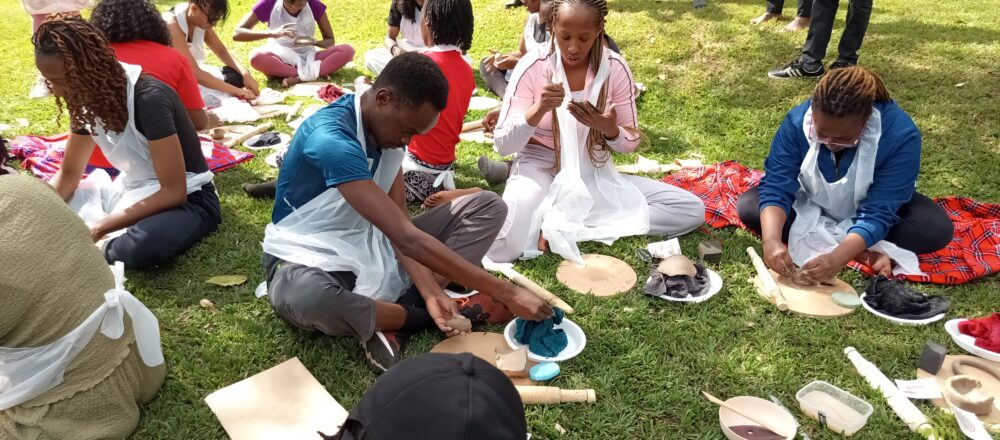
The events are held in green spaces around Nairobi. Phones are surrendered at the gate, alcohol and drugs are prohibited, and participants engage in yoga, solo reflection, art sessions and guided conversations.
“I was looking for a space to unwind, recover and de-clutter away from my phone and computer,” says Alice, who attended one of the sessions.
By creating these spaces, Serenity Social Club isn’t just offering a weekend hobby; it is contributing to Sustainable Development Goal (SDG) 3, which targets a reduction in non-communicable diseases and the promotion of mental health and SDG 11 on Sustainable Cities and Communities.
Healing Through Movement and Art
Yoga instructor Victor Alfayo says such practices offer more than physical benefits.
“Yoga is healing, physically, mentally and emotionally,” he explains. “It grounds you, especially in a chaotic world, and helps people age more gracefully.”

Art also plays a central role in Serenity’s approach.
Ceramic artist Lorine Otieno uses pottery as a form of art therapy, shaped by her own struggles with anxiety and emotional regulation.
“I struggled a lot with anxiety growing up,” she says. “Pottery became a way for me to calm my mind and understand my emotions.”
She emphasises process over perfection, teaching participants patience, mindfulness and emotional regulation.
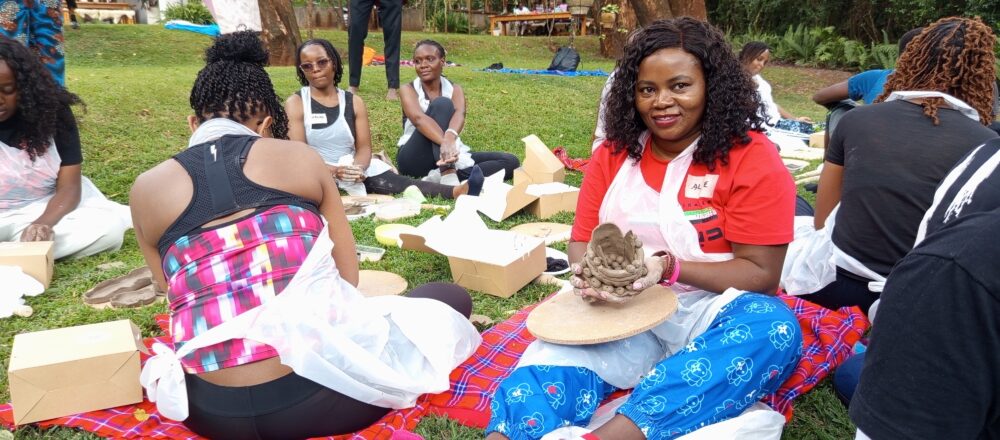
For participants like Marvin and Alice, these practices are reshaping daily habits and coping with mechanisms. For Marvin, the struggle to stay away from his phone is on-going, but the sessions provide a necessary “reset” button.
For Alice Kimani, the impact has shown up differently. The sessions have helped her slow down and reconnect with parts of herself she had gradually lost to being busy.
Alice has now been able to return to some of her favourite hobbies, including reading novels and journaling.
Insert: I used to read books but for a very long time I haven’t been able to read a book. Today, I got back to enjoy my hobbies, I have read a few chapters of Angela Duckworth’s GRIT and I will complete the remaining chapters.
As conversations around mental health gain momentum in Kenya, initiatives like Serenity highlight the importance of community-led, preventive solutions.
“I started this because I lacked such a space. When people came and said, ‘We are many,’ I realised that there was a real need for this,” says Wanjiru.
The stories of Wanjiru, Alice, and Marvin are not isolated; they represent a generation of Nairobians calling for change. While the Kenya Mental Health Action Plan 2021–2025 provides the framework, its success depends on the urgent implementation of its key recommendations.