

By John Mwilwatsi, DevReporter, Nairobi County

Key Highlights
- According to a 2024 report by United Nations Environment Programme (UNEP), at least 268 deaths in Nairobi each year are directly linked to polluted air.
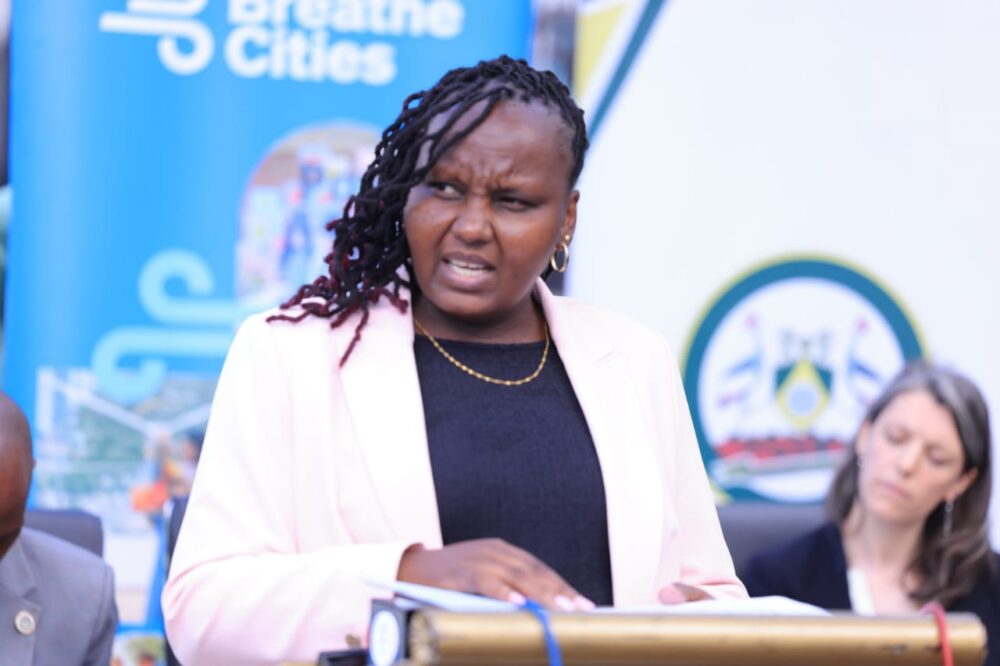
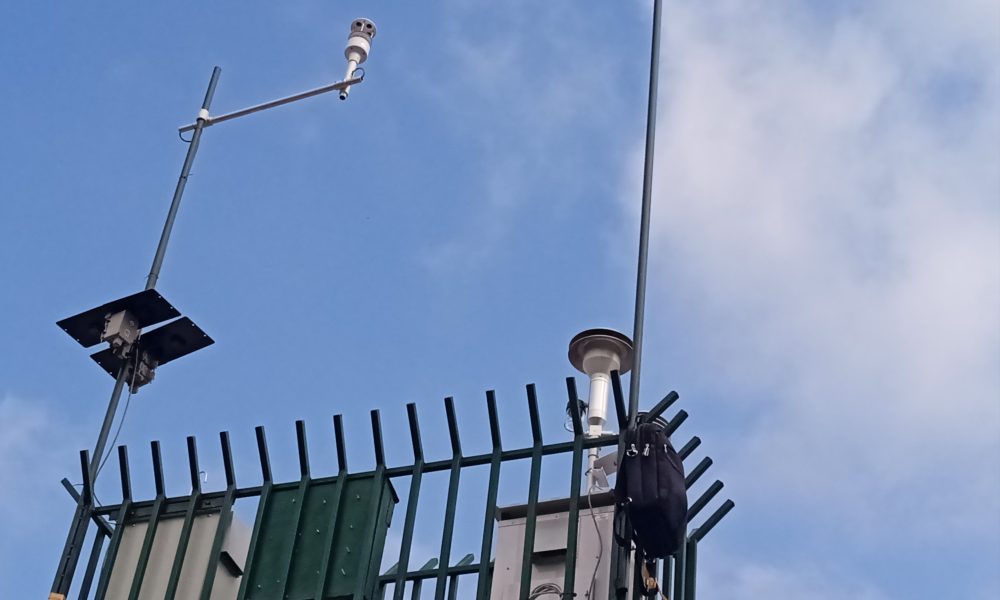
- Maureen Njeri, Nairobi County Executive for Green Nairobi, announced that air quality sensors have been installed throughout the city to monitor pollution levels.
Eunice Otieno, a mother of two, has over time, walked her children to school through Nairobi’s Central Business District (CBD), where she is often confronted by motor vehicle emissions and dust in the air.
When her youngest daughter began complaining of chest pains and a persistent cough, Eunice initially dismissed it—until the symptoms became too frequent to ignore.
“I never imagined the air we breathe every day could make my daughter this sick,” Eunice shared.
For many Nairobians, the cost of city living now includes protecting themselves from the very air they inhale.
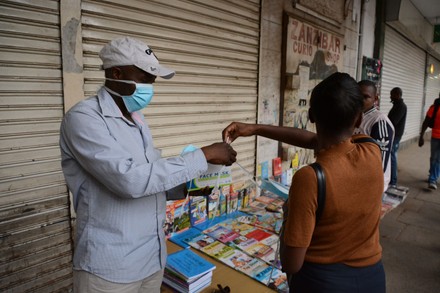
Herbert Mukwana, a mask vendor, noted a significant increase in demand for facemasks in recent years.
“I cannot go long before my eyes begin to itch and my throat dry up, but I still have to sell masks to earn a living,” he explained.
Nearby, Joseph Mwangi, a matatu tout, experiences similar struggles.
“By midday, my throat is dry, and by evening, I am coughing as if I have smoked a pack of cigarettes,” he said.
Around the Khoja Mosque roundabout, food vendor Margaret Achieng described how smoke and dust settle on her utensils throughout the day.
“We have endured this for a long time. I use plastic wraps and foils to cover food, and I bought a safe container for storing utensils, but I still find dust and smoke on them.”
Experts Caution
Health experts caution that Nairobi’s air pollution is silently threatening thousands of lives.
Sammy Simiyu from Vital Strategies and Co-Chair of the Health Committee in Nairobi County stated;
“PM2.5 particles are highly dangerous and life-threatening as they penetrate deep into the lungs and bloodstream. These particles are invisible to the naked eye and can appear as fog or smoke in heavily polluted areas.”
A 2024 United Nations Environment Programme (UNEP) report confirms that at least 268 deaths in Nairobi each year are directly linked to polluted air.
Government Response
Maureen Njeri, Nairobi County Executive for Green Nairobi, announced that air quality sensors have been installed throughout the city to monitor pollution levels.
She emphasised that these efforts align with Sustainable Development Goals, especially Target 3.9, which aims to reduce pollution-related deaths, and Goal 11.6, which advocates for cleaner and healthier cities.
These goals, along with SDG 13, call on governments to reduce pollution-related deaths and enhance urban livability.
“Cleaner air is not just about the environment; it is about saving lives, lowering health costs, and improving quality of life,” Njeri stated.
Article 42 of the Kenyan Constitution guarantees all citizens the right to a clean and healthy environment. This provision empowers residents like Eunice to demand cleaner air, a right that the country’s Vision 2030 has transformed into a development obligation for both county and national governments.
For families like Eunice’s, the promise of clean air must translate into action, with policies developed with the aim of yielding visible change.