


By Christine Wangoi Musa, DevReporter, Kajiado County

Key Highlights
- The Kajiado Alternative Justice System (AJS) chapter was established in October 2021.
- AJS offers an accessible, affordable, and culturally sensitive justice system that combines mediation, reconciliation, and traditional dispute resolution
- 376 land disputes have so far been successfully resolved reducing case backlogs in formal courts.
- Majority of cases resolved through AJS are cases involving widows disinheritance.AJS has promoted women’s land rights, promote social cohesion, and improve access to justice in Kajiado County.
- The AJS services are free saving the vulnerable expensive unaffordable court system expenses.
- Mary Naipanoi a widow from Kajiado County regained her 156-acre land through (AJS) after her late husband’s family attempted to disinherit her.
- The Constitution of Kenya (2010), the Law of Succession Act, and the Matrimonial Property Act, 2013 protect widows’ inheritance and property rights.
When Mary Naipanoi lost her husband in September 2020 at the height of the COVID-19 pandemic, she not only faced grief but also the sudden loss of security, land rights, and social protection.
For 19 years, Naipanoi had lived in what she describes as a stable marriage, raising five children and maintaining cordial relations with her husband’s extended family.
With dowry paid and her role culturally recognized, she believed her place in the matrimonial home was secure.
That sense of security quickly eroded after her husband’s death.
Within two months of the burial, suspicions began to emerge among her in laws, with some informally suggesting she may have been responsible for her husband’s death following a short illness.
The allegations later escalated into claims of neglect, despite medical reports confirming he succumbed to severe pneumonia while receiving treatment at a private hospital.
Four months later, Naipanoi was summoned to a family meeting convened by a brother-in-law, where the accusations were formally raised.
“I was shocked and devastated. I was asked to surrender all his documents and told that my role was only to take care of the children and follow instructions from my in laws. I complied because I had no option,” she recalls.
Her in-laws declared that she would not inherit any of her late husband’s property and demanded that her firstborn son, then 22, leaves the home, with claims that he was not biologically related to their late brother.
She was also pressured into handing over key documents, including the title deed to their 156-acre parcel of land.
The in-laws also took control over the livestock and finances and sold the animals without her consent under the pretext of raising money to support the children.
Disinheritance
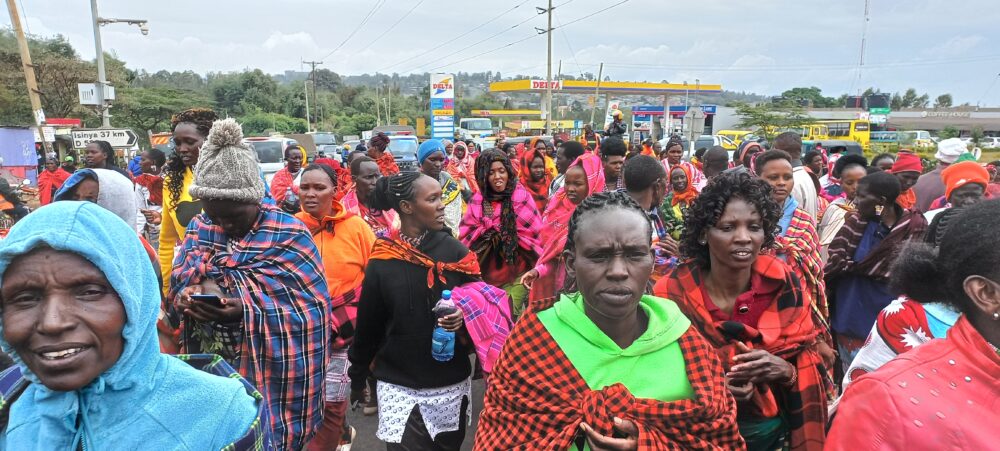
Naipanoi’s experience reflects a broader pattern of what affects widows in pastoralist communities, where customary practices often override formal legal protections.
Such actions contravene the Constitution of Kenya, 2010, which guarantees equality and property rights. Article 45(3) further affirms equal rights within marriage, including at its dissolution through death.
Despite these protections, enforcement remains a challenge, particularly in rural settings where access to formal justice systems is limited.
“If a woman has only given birth to girls, the extended family tends to discriminate against her more. They claim the girls should be married off. They also express disagreement with the idea of a woman owning land and getting married elsewhere, claiming that the property of their kin would end up benefitting a different family. More advocacy needs to be carried out among community members to forego the retrogressive gender discrimination. Article 40 of the 2010 Kenya constitution protects the right to property, including the right not to be arbitrarily deprived of it and affirms the equal rights of spouses during and at the dissolution of a marriage, including through death,” expounds Daniel Kanchori, a lawyer.
Turning to Alternative Justice Systems
About a year after her husband’s death, Naipanoi learned of plans to sell at least 100 acres of the land.
Distressed and uncertain of her next steps, she sought help from a friend, who referred her to the Ministry of Lands, Kajiado County.
Her case was first handled through Alternative Dispute Resolution (ADR) before being escalated to the Alternative Justice System (AJS), a community-based mechanism supported by the Judiciary.
AJS Kajiado chapter was launched in October 2021 and is categorized in 10 clusters that comprising ten committee members.
Through multiple hearings, home visits, and engagement with family members, the AJS committee examined Naipanoi’s case.
“February 9, 2026, is a day I will never forget. The committee ruled in my favour and returned the title deed to me. My in-laws accepted the decision and apologized,” she says.
Anchored in Article 159(2)(c) of the 2010 Kenya Constitution, AJS promotes reconciliation, mediation, and traditional dispute resolution, which align with the Bill of Rights.
The resolution of Naipanoi’s case highlights the growing role of AJS in bridging the gap between formal legal systems and community realities.
The Law of Succession Act (Cap. 160) provides that a surviving spouse has priority in administering and benefiting from a deceased person’s estate, while the Matrimonial Property Act, 2013 safeguards spousal rights to property.
However, for many widows, accessing formal courts is often hindered by cost, distance, and complexities.
The AJS Kajiado chapter, established by the Judiciary in October 2021, brings together elders, religious leaders, and Court Users Committee members to deliver accessible and culturally relevant justice.
According to AJS committee member, Mzee Rashid, most disputes brought before the system involve widows facing disinheritance.
“Many cases involve widows on the verge of losing everything. Some relatives give unproven reasons to exclude them, yet these claims lack legal grounding,” he says.
Kajiado County Land Registrar, Jonathan Oseur, notes that the system has resolved at least 376 land disputes, significantly reducing case backlogs in formal courts.
“Land disputes are common and very emotive. AJS and ADR have made it possible to resolve cases quickly, amicably, and at no cost,” he says.
Limitations
Oseur also says that the system best works in cases involving members of the local community because they have similar beliefs, cultural practices and can easily compare their history based on facts.
“When it comes to disputes involving other communities, they prefer the court process. It is tricky to resolve non-native cases because of the varied backgrounds, and the disputed parcels are normally of third-party ownership acquired through financial transactions. There are only a few cases involving non-locals that we have resolved using this system, especially involving boundary disputes,” narrates Oseur.
Restoring Dignity and Social Cohesion
Beyond legal redress, AJS emphasizes reconciliation, an outcome that has helped restore relationships within Naipanoi’s family.
“We are now on good terms. Reconciliation was at the centre of the process,” she says.
Women in the community have welcomed the outcome, describing it as a step forward in advancing gender equality and access to justice.
“Such interventions are critical in ensuring justice is accessible to all, regardless of gender or financial capability,” says Agnes Tumaroi from Oloosirkon in Kajiado East.
Naipanoi’s case underscores the importance of localized justice systems in advancing development outcomes, particularly for vulnerable groups.
By protecting land rights, AJS not only safeguards livelihoods, but also strengthens household stability, supports children’s welfare, and promotes social cohesion.
As Kenya continues to integrate alternative justice mechanisms into its broader legal framework, cases like this demonstrate their potential to deliver timely, inclusive, and rights-based solutions at the community level.



 Radio Baraza