


By Philip Barasa, DevReporter, Busia County

KEY HIGHLIGHTS
- Over 65,000 teenage pregnancies have been recorded in Busia County in the past eight years.
- Girls as young as 10 years old are becoming mothers, often dropping out of school permanently.
- Poverty, stigma, and lack of reproductive health information continue to fuel the crisis.
- Community programs are helping some girls return to school and rebuild their futures.
- Experts warn that without sustained support, the cycle will continue across generations.
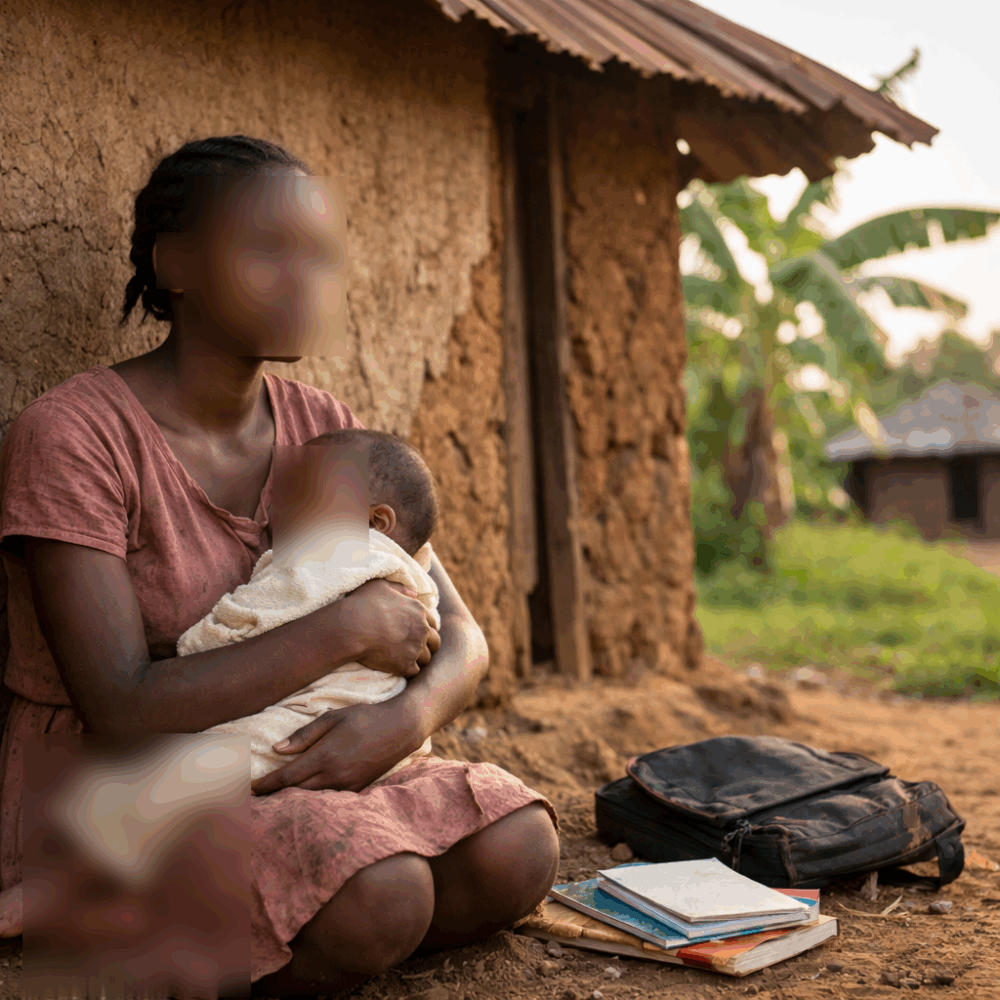
Teenage pregnancy remains one of the most persistent development challenges facing Busia County, cutting short childhoods and limiting the futures of thousands of girls. For many, the transition from girlhood to adulthood comes abruptly—often before they fully understand the consequences.
In villages across the county, girls as young as ten are becoming mothers. What should be years of learning, growth, and protection are instead marked by early responsibility, stigma, and lost opportunity. For families already grappling with poverty, a teenage pregnancy often deepens vulnerability rather than offering hope.
One such story is that of Mama Namulanda, a 35-year-old mother whose second-born daughter became pregnant at just fourteen. Her experience reflects a wider reality across Busia, where early pregnancy frequently interrupts education and reshapes entire family trajectories. For many girls, returning to school after childbirth becomes nearly impossible due to stigma, lack of support, and economic pressure.
According to health officials, teenage pregnancy is one of the leading causes of school dropout in the county. Jane Rose Musumba, a clinical officer in Busia, notes that once a girl becomes pregnant;
“The odds of continuing her education reduce drastically. Many never return to school at all.”
This educational disruption often leads to long-term consequences, including limited employment opportunities and intergenerational poverty.
Nationally, Kenya records more than 240,000 teenage pregnancies each year. In Busia County alone, over 65,000 cases have been reported in the last eight years, with sub-counties such as Bunyala, Butula, Matayos, and Nambale recording the highest numbers. These figures, drawn from county health records and national reproductive health data, highlight the scale of the crisis and the urgency for action.
Despite the challenges, signs of hope remain. Community-Based Organisations (CBOS) such as the Hope for Young Mothers Initiative, are working to support young mothers through counselling, mentorship, and school reintegration programmes. Girls like Mary Wetosi and Rose Opiyo, once forced to abandon their education, are slowly rebuilding their lives with the support of these initiatives.
Community health advocates emphasise that addressing teenage pregnancy requires collective responsibility. Families, schools, religious institutions, and local governments all play a role in ensuring that girls remain in school and have access to accurate reproductive health information.
As Eunice Namkhuna, a community health advocate, explains,
“When families support their daughters and talk openly about reproductive health, the cycle of early pregnancy begins to break.”
Beyond individual stories, teenage pregnancy in Busia reflects broader development challenges. It intersects with national commitments to education, gender equality, and child protection, as outlined in Kenya’s development frameworks and the Sustainable Development Goals. Addressing it requires sustained investment in education, youth-friendly health services, and community awareness.
Ultimately, teenage pregnancy is not merely a personal or moral issue—it is a development issue that demands collective action. Until girls are protected, educated, and empowered to make informed choices about their futures, the cycle will persist.
Ending teenage pregnancy in Busia will result in safeguarding the future of an entire generation.


 Radio Baraza