


By Christine Wangoi, DevReporter, Kajiado County

Highlights
- Kitengela Stadium sits on approximately five acres.
- It is the only public playing field serving the rapidly growing town.
- The stadium has no toilets, changing rooms or spectator facilities.
- It also hosts community events such as medical camps and children’s immunisation outreaches.
In August 2025, Kenya co-hosted the Africa Nations Championship (CHAN), a tournament that united citizens across political and regional lines as they rallied behind the national football team, Harambee Stars. The event renewed interest in grassroots football and reignited young players’ hopes of talent orientated professional careers.
This enthusiasm ties with the nation’s development frameworks. Kenya Vision 2030 identifies sports as a tool for youth empowerment and economic growth. Investment in sports infrastructure is included under the broader goals of expanding employment opportunities, strengthening social cohesion, and enhancing Kenya’s cultural and creative sectors.
At the county level, Kajiado’s Third Generation County Integrated Development Plan (CIDP) 2023–2027 is a five-year blueprint with a budget of Kshs133.6 billion. The guide’s resource development plan aims to create liveable towns by having proper sanitation, sports and recreation, under its social services and town development themes for the well being of its residents.
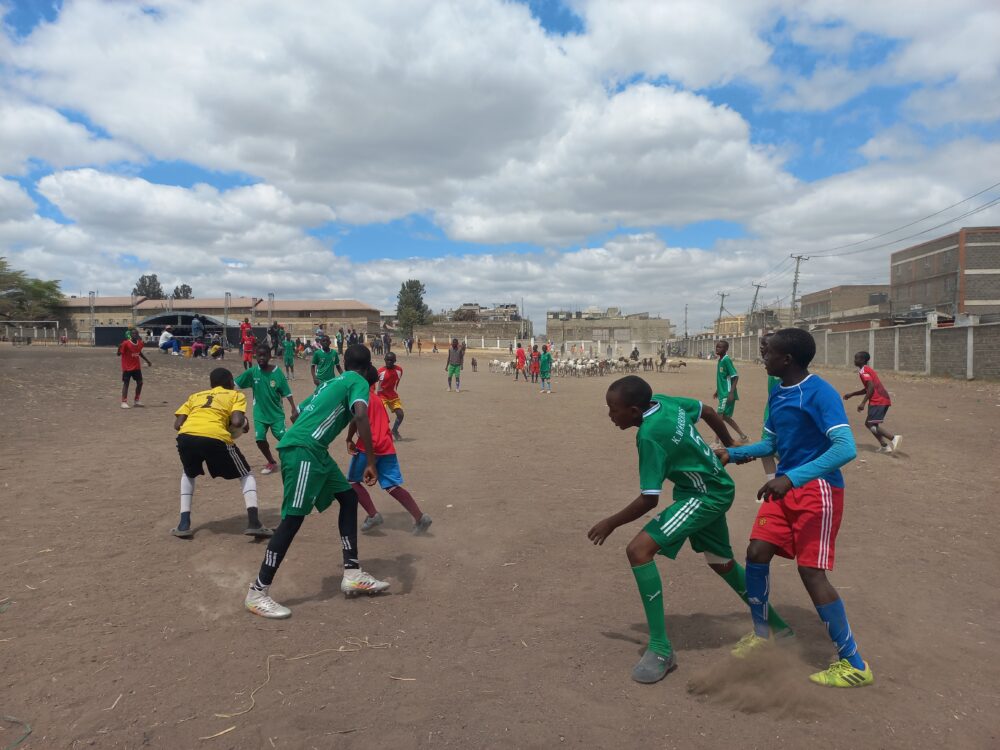
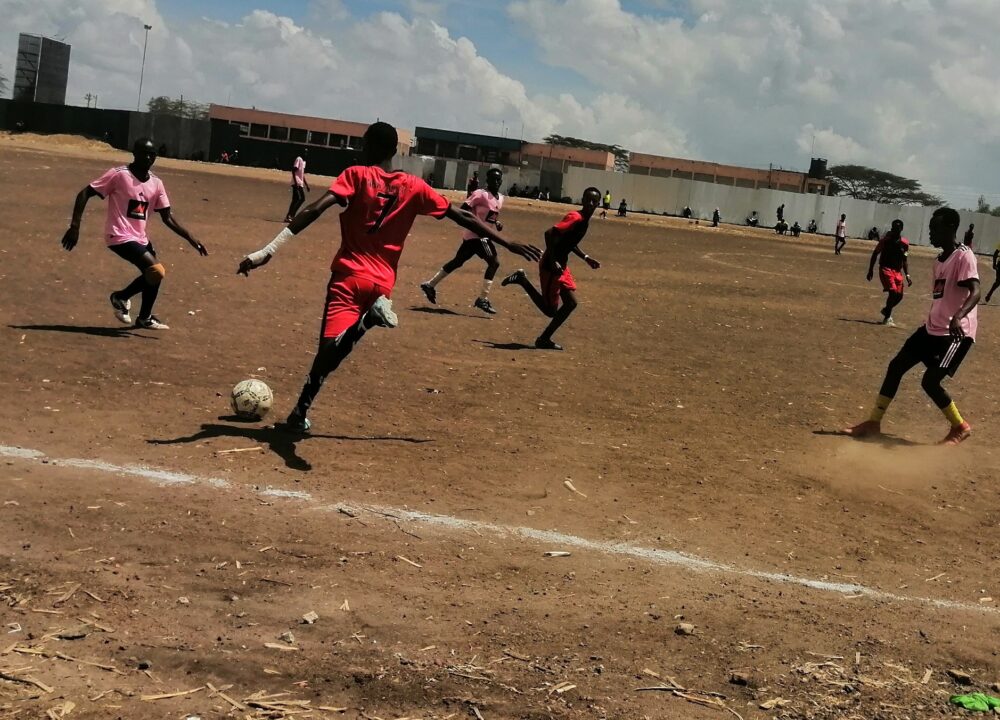
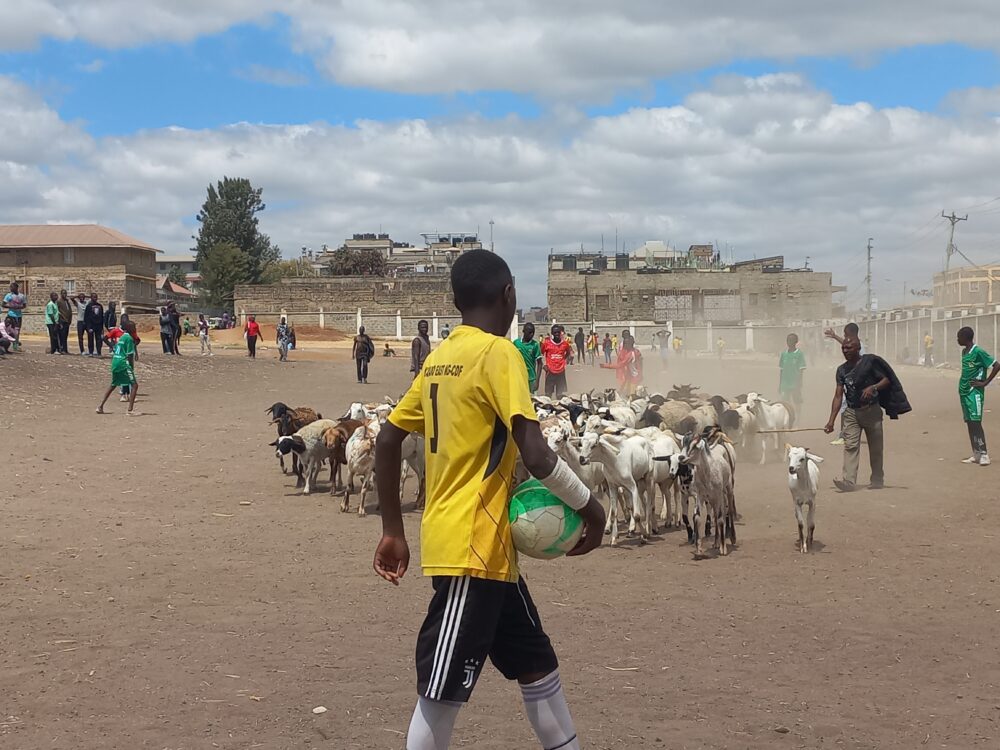
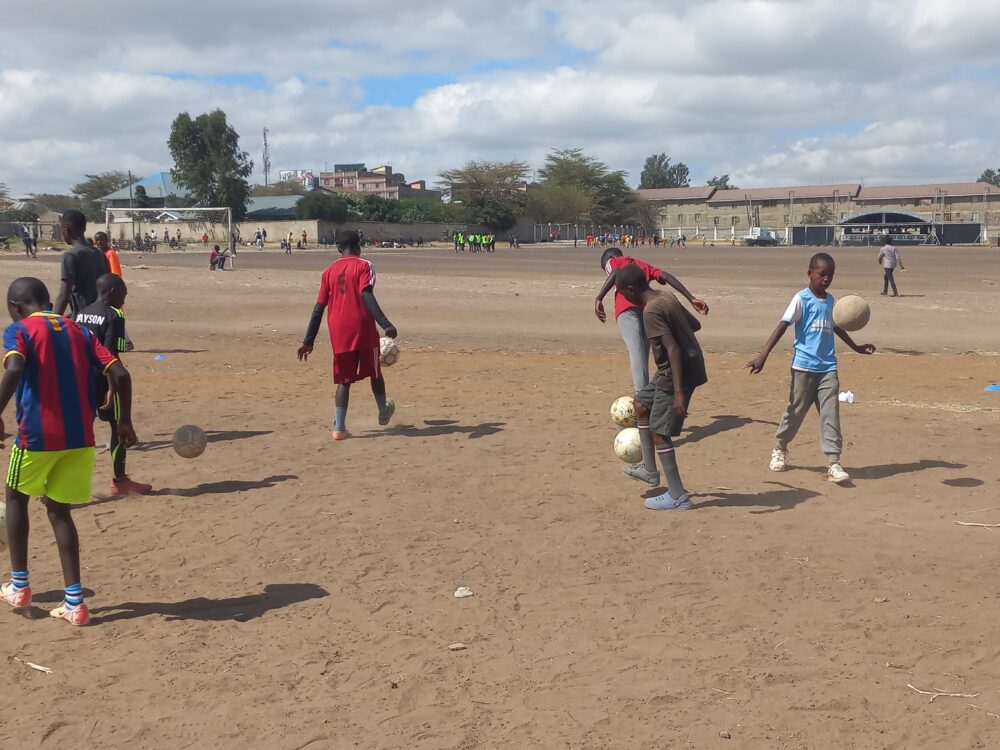
Despite these policy commitments, Kitengela Stadium remains without basic facilities. The ground is dusty, lacks toilets, changing rooms and seating area for spectators. Public health experts warn that constant exposure to dust increases the risk of respiratory illness, particularly for young athletes engaged in training.
Under the Sports Act, 2013, county governments are mandated to promote, develop and maintain local sports facilities — a responsibility that includes ensuring basic amenities to support participation and safety.
 According to local coaches who train footballers at the stadium, up to 20 teams use the stadium daily, with at least three teams playing at the same time.
“The number of teams here shows that our youth are eager to develop their talent. Most of them are serious about football, but the environment limits what they can achieve,” says Elijah Njoroge, the head coach.
Crowds gather over weekends, many bringing their own seats or have to stand throughout matches.
The absence of sanitation disproportionately affects female participation.
“Male players can answer the call of nurture in the bushes, but female players cannot. That is why there are no women’s teams training here. It goes against Article 27 of the Constitution, which guarantees equality and non-discrimination; as well as Sustainable Development Goal (SDG) 5 on gender equality,” adds Njoroge.
The Football Kenya Federation (FKF) Grassroots Development Framework recommends minimum facility standards including toilets and secure-changing areas to promote inclusive participation, especially for women and girls.
Players say that the conditions take a toll on their health and morale.
“Sometimes the dust is too much that I train while wearing a mask. I get colds often due to the fine choking dust but I have no alternative playing ground. I am limited to choose between struggling in a bad field and forgoing my passion for football,” says Wasike Wanyama, a footballer.
Rose Muthoka, a football fan, says that lack of toilets at the facility largely affects the dignity of women.
“I come here every weekend to cheer for football teams but I am so embarrassed. I have to get out of the field to go and use a washroom for which I pay Kshs20. If this stadium’s infrastructure is improved, especially to have proper sanitation, more fans will get to use it as recreation facility,” says Rose.
Kajiado East Sports Coordinator, Charles Koge, sees the state of the stadium as a governance issue.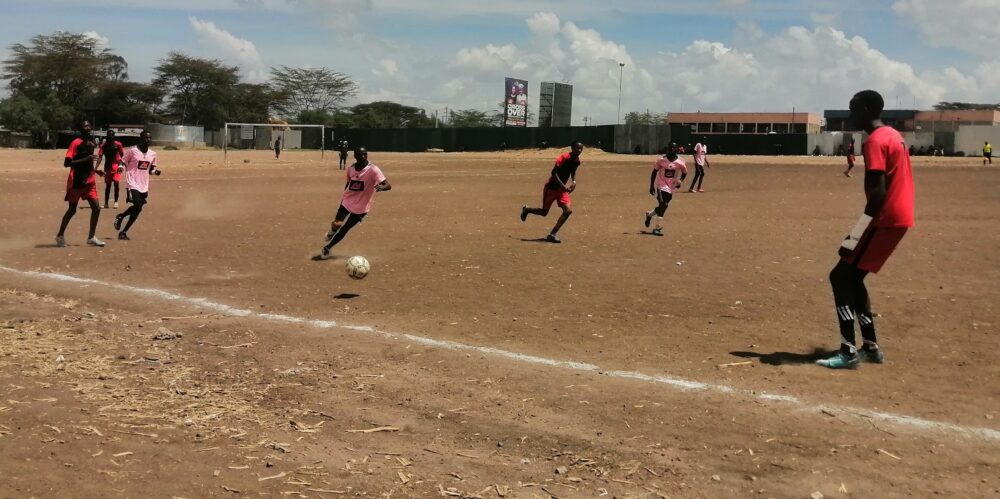
“This stadium has been reduced to a political tool. Every election cycle there are promises to upgrade it, but after elections, nothing is done. We are wondering why the stadium always misses out on sports allocation every financial year,” says Koge.
The county budget documents show that Kajiado County allocated funds under its Programme Based Budget for “Construction, Equipping and Renovation of Sports Facilities,” with amounts ranging from Kshs7 million to Kshs8.47 million over sequential fiscal years, but the stadium remains unattended.
Koge further says that improving the stadium would align with broader county priorities including youth engagement and crime prevention as reflected in both the CIDP and the National Crime Prevention Strategy, which emphasise sports and recreation as positive alternatives.
“We frequently have counsellors who volunteer their services to our youth. It is a good initiative that goes a long way in addressing mental health challenges,” adds Koge.
Attempts to get a comment from the county government through the Ministry of Education, Sports and Youth, were unsuccessful by publication time.
Until Kitengela Stadium is upgraded to meet basic safety and sanitation standards, young people will continue to face barriers to talent development. This undermines Article 55 of the 2010 Constitution of Kenya, which obligates the state to ensure youth access to opportunities for association and participation in social and economic life.
“I am a disappointed and disadvantaged footballer because of lack of a conducive playing environment. But I have not given up. I will not give up. The county government of Kajiado and other concerned stakeholders should intervene in growing and supporting talent,” pleads Wanyama.
 Radio Baraza