


By Philip Barasa, DevReporter, Busia County

Key Highlights
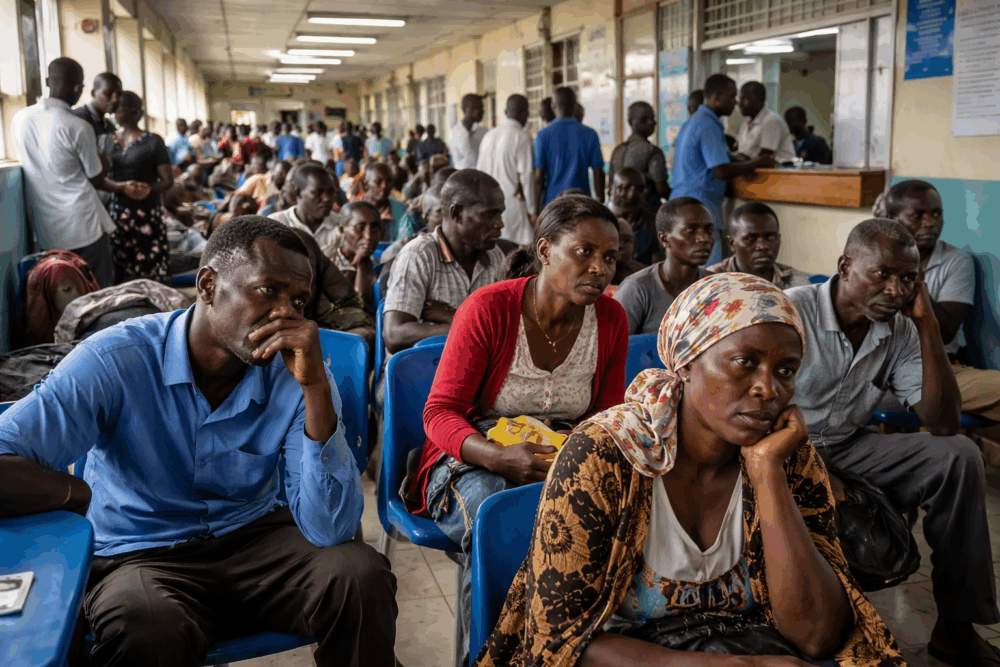
- Residents report long queues and system downtimes at public hospitals
- Patients say SHA access often fails despite early arrival and active accounts
- Civil society questions government commitment to universal health care financing
- Private hospitals claim SHA claims are delayed or rejected.
- County officials cite eligibility and incomplete registration as the main challenge.
- Some facilities report smoother services once registration is complete.
Introduction: A New System, Familiar Struggles
It is a busy morning in Busia. Border riders weave through traffic, traders open their stalls, and health workers prepare for another demanding day. As Kenyans transition from the National Hospital Insurance Fund (NHIF) to the new Social Health Authority (SHA), the promise is clear: better, affordable, and more inclusive health care. But for many residents on the ground, the question remains — is SHA working?
Patients at the Centre of the Crisis
At Busia County Referral Hospital, Margaret Buluma lies in a ward with her arm in a sling after a recent accident. While grateful for her recovery, she says the SHA system has tested both her patience and finances.
“I come here from 6 a.m. so that I can be first in line. You queue the whole day, and when it reaches 5 p.m., they tell you the system is not working and ask you to come back tomorrow,” she says.
For patients in pain, going home often means buying medicine out of pocket to cope, undermining the promise of affordable care.
Frustration Beyond the Ward
Outside the wards, Mary Wanjala, a mother of two, stands in the payment queue, visibly frustrated. She says she has attempted to use her SHA account for weeks with little success, adding that the system seems responsive only when payments are required.
Civil Society Raises the Alarm
Civic groups in Busia are questioning whether SHA represents genuine reform or a rebranding of longstanding systemic challenges. Activists Moses Okumu and Stephanie Njeri, argue that universal health care cannot be achieved without sufficient and sustained public financing.
“We cannot achieve universal health care if the state is not committed to funding it. Efficiency should not focus only on revenue collection but on how that money delivers care to citizens who seek treatment as a right,” Okumu says.
Private Facilities Feel Side lined
Private health care providers are also raising concerns. Dr Kingsly Otieno, who runs a private facility in Busia County, claims that private and faith-based hospitals are being deliberately side-lined.
“If a private facility records many patient visits, instructions are issued to hold or reject its claims,” he says.
County Explains the Eligibility Gap
County health officials, however, attribute many of the challenges to eligibility issues. Dr Samuel Oduor, the Deputy Director of Medical Services in Busia, says that patients are sometimes turned away because contributions have not been remitted.
“If employers fail to submit employee details or remit deductions, the system automatically rejects the patient,” he explains.
When SHA Works
At St. Paul’s Community Health Centre in Marachi South, experiences are more positive. Patient Joanne Wamalwa says she received treatment smoothly after completing registration.
“I was worried it would not work, but once I registered, it worked,” she says.
Facility management confirms that SHA has improved payment consistency over the past year, helping sustain service delivery.
Conclusion: A System Still on Trial
County officials insist SHA is still stabilising, but residents say success will be measured by what happens inside hospital gates, not policy statements. Whether positive experiences become the norm across Busia remains a question only time will answer.

 Radio Baraza