


By Kipkorir Tarus, DevReporter, Trans Nzoia County

Key Highlights
- Trans Nzoia women ditch maize farming, embrace poultry
- Poultry farming more profitable than maize farming
- Mortality, animal feed and lack of markets termed major challenges to poultry farming
- County Government of Trans Nzoia supports poultry farming, builds value addition factory
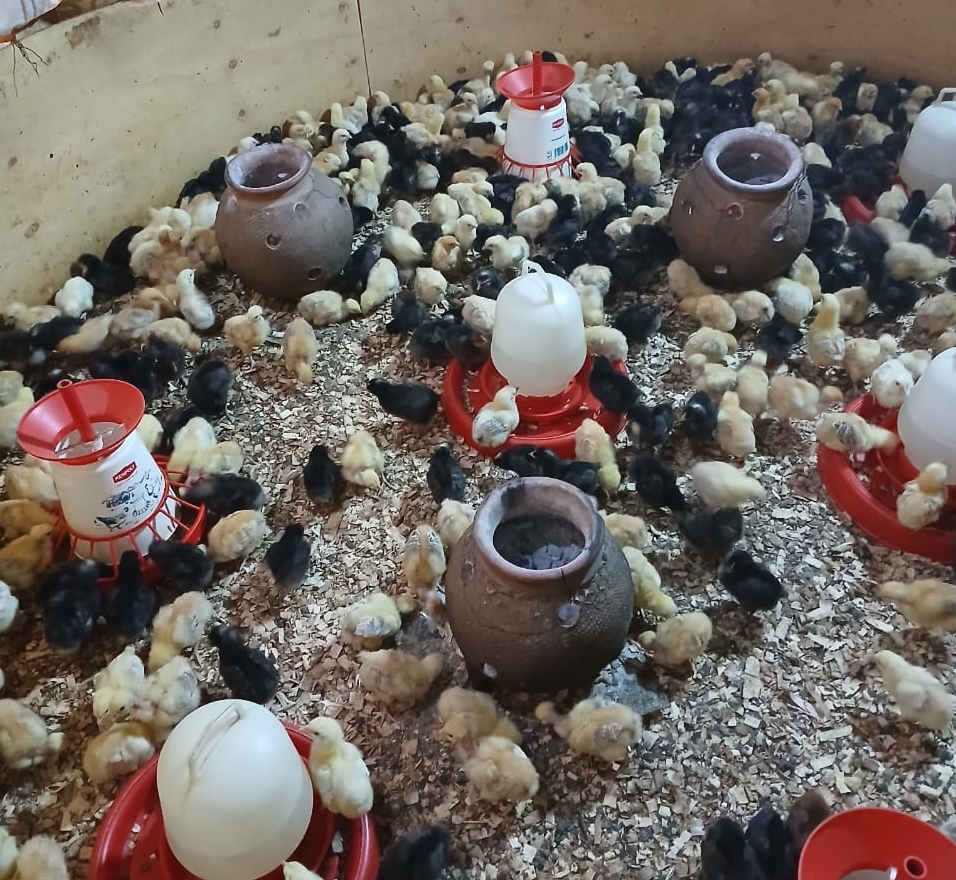
Every dawn in Mitoto village, Trans Nzoia County, the soft chirping of 2,000 chicks welcomes Silvia Khisa into a world she never imagined possible – one where poultry, not maize, puts food on her table.
In an exclusive interview with Radio Baraza, Khisa, a widow, said poultry farming contributes to zero hunger (SDG 2) while creating employment in line with SDG 8.
Why are Farmers Shifting from Maize?
The passionate brooder ditched maize faming because maize is less profitable. She stated that the high cost of fertilizer, invasive pests, unpredictable maize prices and post-harvest losses pushed her out of maize farming.
“In a month, I make up to 200,000 shillings in a space of about 15 by 45 meters. An acre of maize cannot give you such an amount even after waiting for over six months,” Khisa stated,
In Naisambu village, Terry Nyongesa, said that she is able to comfortably pay school fees for her children and provide for them unlike before shifting to poultry farming.
While feeding her 250 birds, she said she does not regret embracing poultry farming. She started her lucrative venture with 20 chicks.
“I have two years in poultry farming. By January 2026, I should have expanded this space to accommodate 1,000 birds. While doing maize farming, I always struggled with school fees,” Terry told Radio Baraza.
How Poultry Is Changing Household Economies
Besides selling eggs to buy other basic needs, the eggs and meat has improved their family’s nutritional needs. The birds’ droppings and feathers are used as organic fertilizer in their vegetable farms.
Through their ventures, the two women have so far created employment to five youths. This is in tandem with the Kenya Vision 2030.
The employees are engaged in daily routine practices like maintaining hygiene, observing and feeding the birds, providing water and ensuring the chicken houses are well lit and ventilated.
What Poultry Farmers Struggle With
Just like any other business, poultry farming has a myriad of challenges. Khisa stated that sometimes, chicks die mysteriously and added that animal feed is very expensive whereby a 50kg bag costs Ksh. 4,900.
Other threats include, Newcastle disease, coccidiosis, fowl typhoid, Gumboro, mites and fowl pox.
“Mortality is one of the challenges. We need an animal feed manufacturing industry in this county so that we can have the feed at an affordable price,” Nyongesa said.
The County’s Investment in Value Addition
Due to the rising number of poultry farmers, Trans Queens and Kings Cooperative Society has constructed a poultry slaughter house. The cooperative society serves as the first market for farmers’ chickens.
The founder of the cooperative society, Julia Ngeiywo said that they chose to establish the slaughter due to the high demand for chicken meat.
“Some of the chicken meat you find in supermarkets’ shelves are imported because our farmers cannot meet the markets demands through local production. That is why we encourage our farmers to be more aggressive in poultry farming. Here, we do value addition,” she said.
What Experts Recommend
Brian Suruti, an agronomist and Amos Wasai, a farmers’ trainer, said that farmers should focus on raising quality chicks. The duo urged youths to venture into poultry farming arguing that the venture will address unemployment crisis in the country.
Trans Nzoia Agriculture, Livestock and Cooperatives County Executive Committee Member (CECM), revealed that the slaughter house needs at least 3,000 chicken per day once it is fully operational.
“The slaughter has a capacity of over 100,000 birds per month. Our farmers should embrace poultry farming so that we can get full value from this slaughter facility,” Khatundi appealed.
Call to Action
For two farmers, poultry farming is more than income – it is dignity restored, nutrition improved and source of independence. As demand grows and county policies evolve, Trans Nzoia’s women hope their poultry houses will be the incubators of a more secure future.
Related stories
- https://www.kenyanews.go.ke/meet-a-kiambu-woman-who-has-thrived-in-poultry-farming/
- https://kilimonews.co.ke/agriculture-politics/four-companies-dominate-animal-feed-market-in-kenya-raising-food-prices-and-hurting-farmers-says-report/
- https://www.youtube.com/watch?v=nOKPNaa_fdg
- https://youtu.be/y1noniwzteI?si=xoq3NrPjnaItKEgX
- https://www.kenyachamber.or.ke/2025/02/21/cracking-the-egg-crisis-kncci-champions-sustainable-poultry-farming/
Ends.



 Radio Baraza