


By Edith Otieno, DevReporter Kisumu County
On the 5 December 2021 I attended the rural development reporters’ training session organized by Development Through Media, under its project, Empowering Rural Communities Through Media, which it is implementing jointly with Vikes of Finaland
The training aimed at bringing together members of Development Reporters (DevReporters) from the Lake Region in order to build their capacity to identify key development related issues of concern and meaningfully report on them, highlighting their impacts on the lives of the rural communities in the various counties within lake region. The training activities included both theory and fun filled practical sessions.
But what is rural reporting?
When I saw the word rural reporting, it appeared to me that this is when a journalist is mainly stationed upcountry (rural areas) and informs on the occurrences there. Well the joke is on me because rural reporting has a greater meaning.
I attended the training of course to be stationed back in my village Kaila, Seme Sub-County, and report on the newsworthy occurrences there, just the way other journalists normally do. But with every passing day of the training I realised how mistaken I was.
“Being a rural development reporter is not simply about talking about issues happening back in the village. It also involves building on the happenings in an effort to tackle issues right from their root causes. Rural development reporting is thus an awakening call to the individual journalists about their responsibilities to rural communities,” said Dr Rosemary Nyaole-Kowuor, a media trainer.
A development reporter is more mindful of changing the situation rather than just informing of its existence. In order to do so, some guidelines have to be followed and measures taken.
What it takes to be a development reporter
The media and the society play the role of mirror and image interchangeably, and they can be shaped by each other.
Tenets of journalism was an important lesson. We were reminded that a journalist should always be guided by four major rules: seeking the truth and reporting it, minimising harm, acting independently and being accountable and transparent.
The question of journalistic integrity was talked about a lot during the training. As a newly recruited DevReporter, following the training, I realised that one should strive to meet the public’s interest no matter the circumstances. A journalist must try as much as possible to toss aside personal and other conflicting interests, which will likely influence how the story is told. Once integrity is compromised, there is no turning back – the story is lost and the integrity of the individual journalist and the media establishment is eroded.
At any given reporting time, a development reporter has three main points to focus on: to inform, interpret and promote.A development reporter should do more than just broadcast the existence of an issue.
Changing with change
When we hear of the rural areas, the specific image or picture that comes in mind is mostly stereotypical: poor hygiene, underdevelopment, low facilities and poverty.
But according to International Fund for Agricultural Development (IFAD), “What we fail to realise is that these rural places are the backbone of every country’s economy. This is an especially pressing concern for the world’s small-scale farms. Despite their size, these farms make an enormous contribution to our global food supply: farms of 2 hectares or fewer collectively produce 31 per cent of the world’s food on less than 11 per cent of its farmland.
“They also tend to produce a greater richness and diversity of nutrition compared to larger-scale farms. But despite their contribution to feeding the world, small-scale farmers are especially prone to suffering from poverty and hunger.”
Although people move to the cities to search for employment, they get their raw materials from the rural areas. But on the other hand, people in rural areas are self-reliant on daily food provision. They can eat farm produce. They do not necessarily need cash for absolutely everything they need, yet they are branded as beggars. Yet a city resident is more likely than not, to go hungry if not paid, so who is poor now?
The perception of the rural areas being the manufacturer of low life and poverty is what development reporting strives to change.
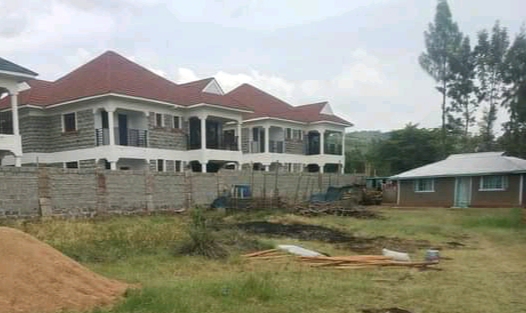
Apart from Agriculture, rural areas are now a perfect places for affordable housing. More people are now more than willing to commute everyday to work in the town and back to the village after work.
“Instead of paying rent, I decided to buy a motorcycle and now all I need is to recharge the fuel. This is more affordable than I thought,” says Maurice who commutes everyday from his home village in Holo to work in Kisumu, a distance of about 21 kilometres.
Rural reporting can change the narrative of the normalised way of telling our stories, and thereby pave way for progressive change in rural areas.

 Radio Baraza